

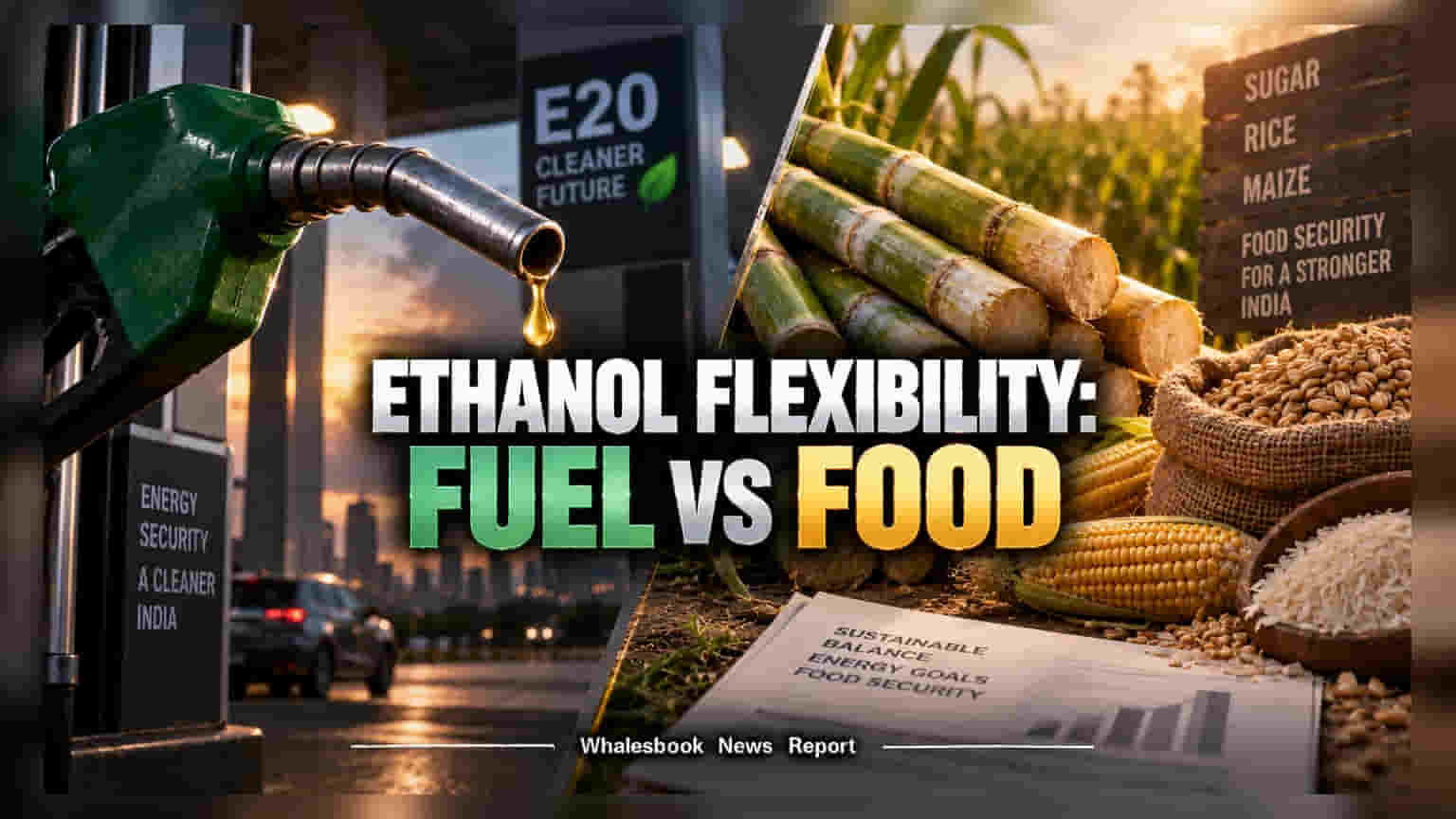
A new ICRIER report suggests India should allow flexible ethanol blending, reducing targets from 20% (E20) to 15% (E15) during supply shortages. The move aims to combat rising food inflation caused by heavy reliance on sugarcane and rice for fuel production. Investors should track how the government balances energy goals with food security, as policy shifts could impact revenue for sugar and biofuel companies.
A new research paper by the Indian Council for Research on International Economic Relations (ICRIER) has recommended a shift in India’s ethanol blending strategy to better protect food security. While the report supports the long-term goal of 20% ethanol blending in petrol (E20), it argues that the policy should be flexible. Specifically, it suggests that the government should allow blending targets to drop to 15% (E15) during periods of agricultural volatility, supply shortages, or high food inflation.
This recommendation highlights a growing conflict between India's energy goals and domestic food prices. Over the last six years, the demand for ethanol has grown at an annual rate of approximately 38%, fueled by the government’s aggressive blending program. However, the production of raw materials used to make ethanol—such as sugarcane, rice, and maize—has not kept pace. This mismatch has started to affect the food market, with retail sugar prices reportedly climbing from around Rs 45 per kg in July 2026 to Rs 65 per kg by late August 2026.
For investors in the sugar and biofuel sectors, this report brings policy risk to the forefront. Many sugar companies have invested heavily in distillery capacity to meet the government's E20 mandate. A shift toward a more flexible or lower mandate during food supply crises could lead to a sudden reduction in the amount of sugar or grain required for ethanol. This could force companies to adjust their production mix and might impact the high-margin revenue that distilleries currently contribute to the financial results of many sugar millers.
Beyond just changing blending rates, the ICRIER report advocates for a strategic pivot toward using more maize as a feedstock, rather than rice or sugar. It also suggests that the government could utilize ethanol and sugar imports as a safety net during domestic shortages to keep prices stable. These proposals represent a call for the government to move from a volume-chasing directive to a more adaptive policy that accounts for agricultural cycles.
Going forward, the key monitorable for market participants will be whether the central government adopts these recommendations or maintains the current rigid targets. Investors should watch for any official announcements regarding agricultural procurement, changes in the permitted feedstock mix, or revisions to the annual blending targets. If the government prioritizes food inflation control, it may result in temporary curbs on feedstock diversion, which would be a critical factor in forecasting the short-term earnings and operational capacity utilization for companies in the sugar and distillery space.