

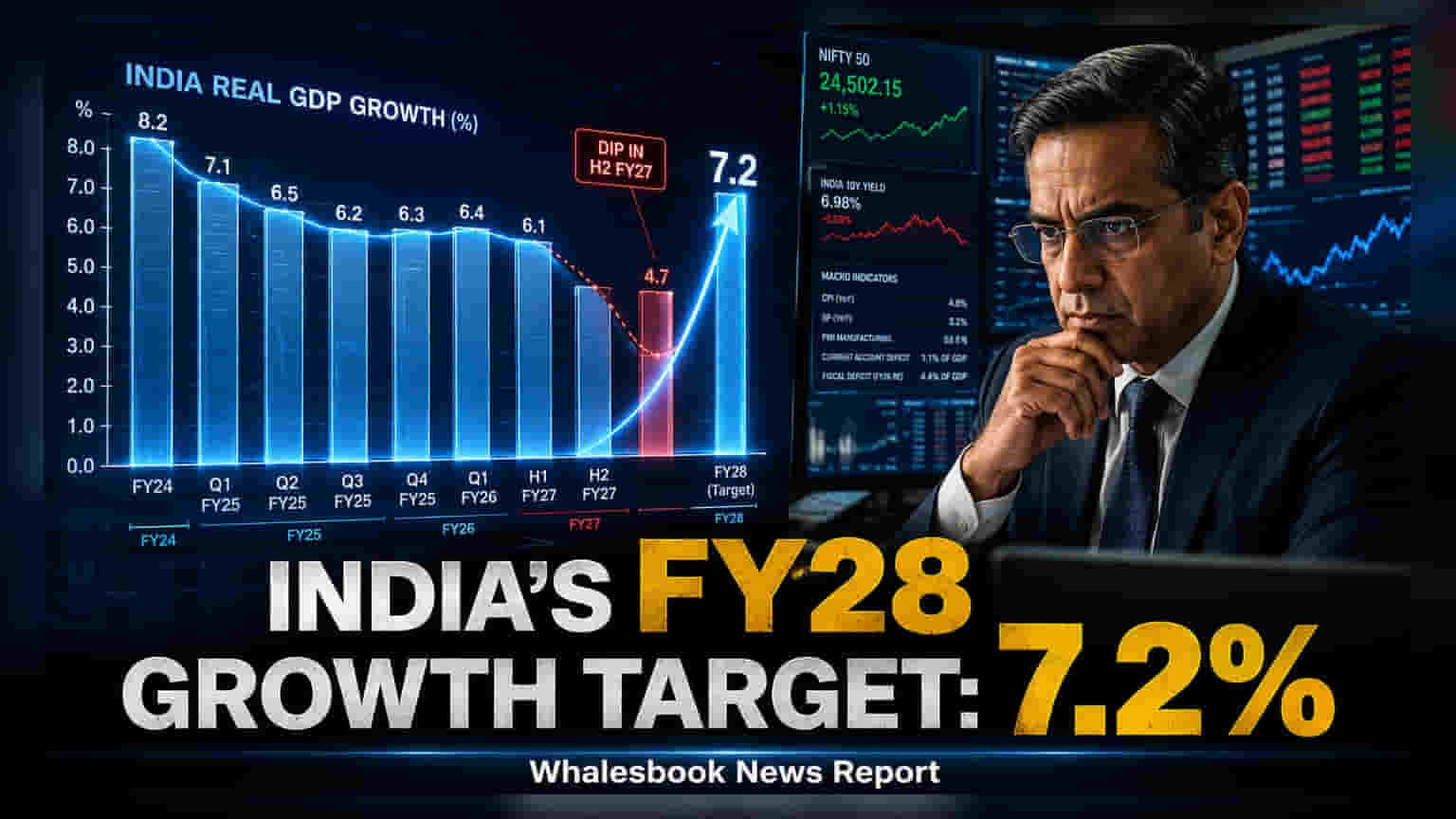
ICICI Bank expects India’s economic growth to rebound to 7.2% in FY28 after a expected moderation in late FY27. Meanwhile, the RBI has maintained the repo rate at 5.25% and raised its FY27 growth forecast to 6.7%. Investors are now monitoring how global energy costs and domestic monsoon patterns will influence bank margins and credit demand.
ICICI Bank has projected that India’s economic growth is set to accelerate to approximately 7.2% in the 2028 financial year. This positive outlook follows an expected period of moderate growth in the latter half of the current fiscal year, which is largely attributed to a statistical high base effect from the previous year. The bank’s analysis highlights that while the economy may see a temporary cooling, the underlying momentum remains steady.
Economic Outlook and RBI Stance
The Reserve Bank of India (RBI) recently reinforced this stability during its August 2026 policy review by maintaining the repo rate at 5.25%. The central bank has kept its policy stance neutral and has upwardly revised its real GDP growth forecast for the current fiscal year, FY27, to 6.7%. This decision reflects confidence in India’s economic resilience despite broader global volatility. The RBI is closely monitoring high-frequency indicators, which have shown robust performance through the first quarter of the year.
ICICI Bank’s Performance and Sector Risks
For investors monitoring the banking sector, ICICI Bank’s latest financial results provide a useful indicator of current credit conditions. In the quarter ending June 2026, the bank reported a 16% year-on-year increase in net profit, totaling ₹14,804.5 crore. Net interest income also grew by 12.7% to ₹24,384 crore, reflecting consistent demand for loans. The bank's asset quality has remained healthy, with the gross non-performing asset (GNPA) ratio at 1.38% and net NPA at 0.35% as of June 30, 2026.
However, the path to sustained growth faces specific challenges. ICICI Bank’s report points to global macroeconomic volatility, particularly rising energy costs and supply chain disruptions, as primary risks that could impact the broader economy. Domestically, the performance of the southwest monsoon is a key monitorable. Uneven rainfall can affect agricultural output and rural consumer demand, which in turn influences the broader retail and credit cycle.
Furthermore, banks are currently navigating a balance between credit growth and funding costs. While the demand for credit remains strong, there is a risk of profit margin pressure if funding costs rise faster than loan yields. As the RBI maintains a neutral stance, the market will look for cues on future policy rate movements, which depend heavily on how inflation and actual growth outcomes evolve over the coming months. Investors should continue to track management commentary on net interest margins and asset quality in upcoming quarterly updates.