

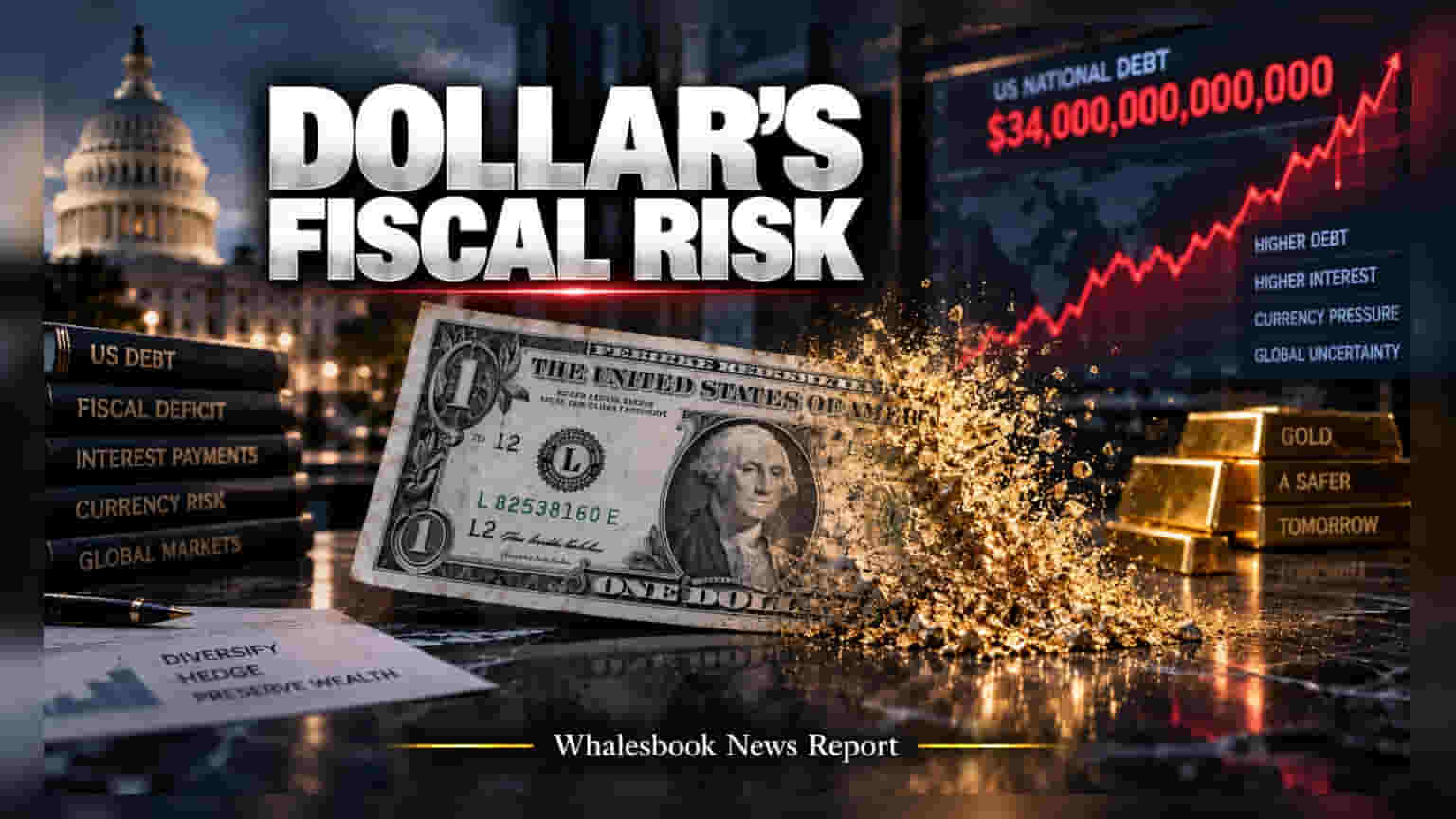
Howard Marks of Oaktree Capital notes the US dollar's global dominance remains strong but warns that high US deficits and rising interest costs threaten its long-term purchasing power. He suggests that shifting between US asset classes like stocks and bonds does not protect against currency risk, as the fiscal problem affects the dollar itself. For investors, this underscores the importance of true diversification.
Howard Marks, the co-chair of Oaktree Capital and a veteran investor, recently shared his views on the global financial system. He argues that while the US dollar remains the world's primary reserve currency, its long-term health is at risk due to the US government's fiscal management. The dollar currently dominates approximately 89% of foreign exchange transactions, a position secured by high liquidity and global trust in US institutions. Marks notes that while currencies like the euro and the Chinese renminbi exist, they currently lack the combined safety and reach required to replace the dollar in the global financial order.
The central issue Marks points to is internal fiscal decay rather than external competition. He describes the dollar as a golden credit card, granting the US the unique ability to fund its spending by printing its own currency. However, this privilege is reaching a limit. With the US fiscal deficit recently hovering around 6% of GDP during a period of economic expansion, and net interest payments projected to exceed $1 trillion annually, the sustainability of this path is being questioned. The risk for global markets is not necessarily an immediate default, but rather the slow erosion of the dollar's purchasing power, a process often referred to as debasement, as the government may eventually rely on currency expansion to pay its debts.
For investors, Marks warns that moving money from US stocks into US bank deposits, money-market funds, or domestic bonds may not offer protection. Since all these assets are tied to the dollar, they are exposed to the same fiscal risks. If the value of the dollar declines, the real value of these holdings will decrease regardless of whether they are in equities or fixed income. Marks suggests that true exposure reduction requires diversifying into assets that fall outside the US dollar system, such as foreign real estate, international equities, or alternative stores of value like gold.
This perspective has implications for Indian investors, particularly those who have increased their exposure to US technology stocks or global ETFs via the Liberalised Remittance Scheme. If the US dollar experiences structural weakness, the returns on these foreign investments, when converted back to Indian rupees, may be affected. Furthermore, major global shifts in currency strength often influence capital flows. When the dollar weakens, FII flows into emerging markets like India can sometimes become more volatile. Investors may want to track US debt-to-GDP ratios, central bank buying of gold, and statements from the US Federal Reserve regarding debt sustainability as key indicators of the dollar's future stability.