 Whalesbook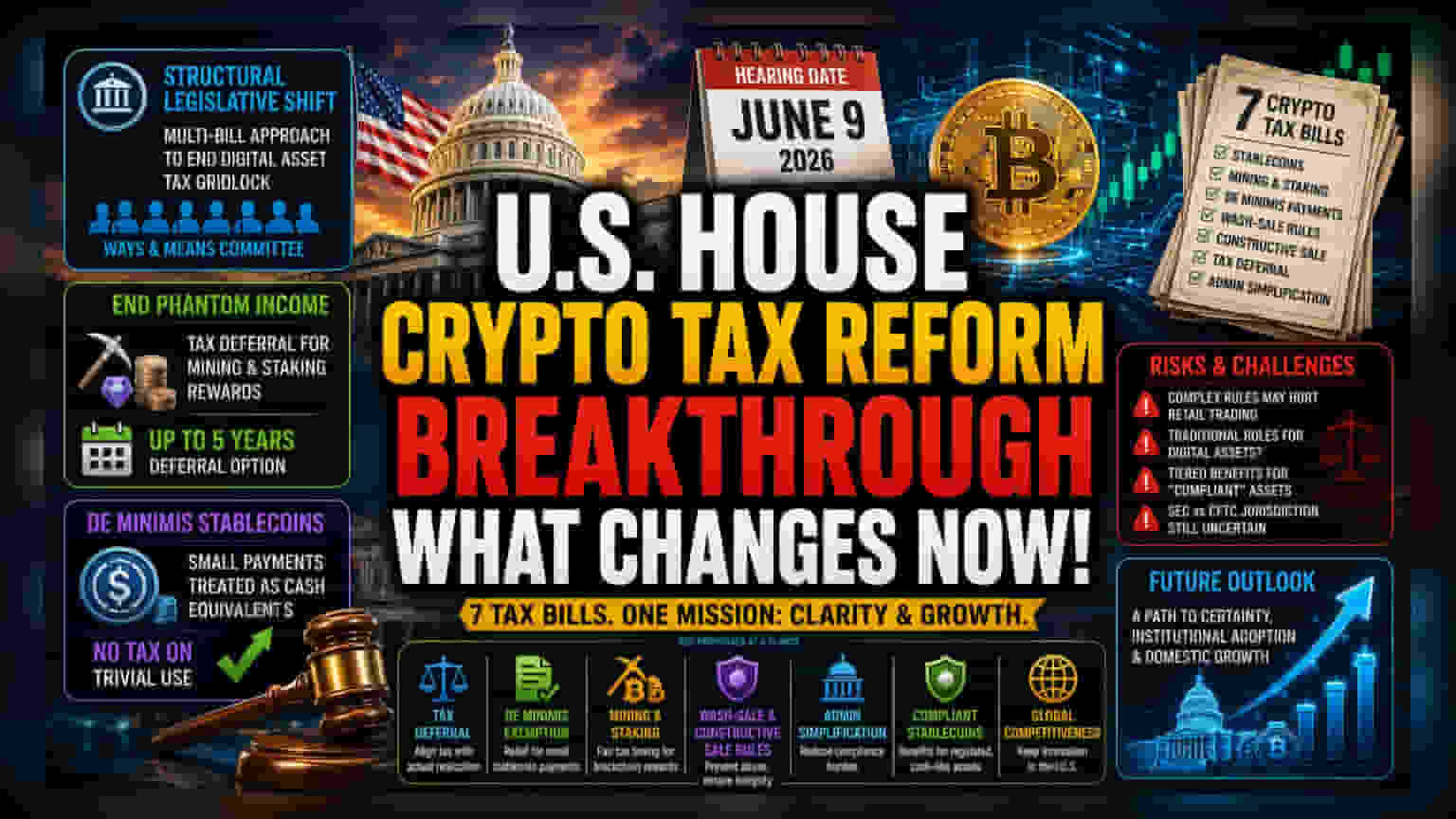


A Structural Shift in Legislative Strategy
The U.S. House Ways and Means Committee is moving to break the legislative deadlock on digital assets by introducing a multi-bill package designed to overhaul the federal tax treatment of cryptocurrency. The scheduled hearing on June 9, 2026, signals a clear tactical departure from previous attempts that sought to fold complex tax language into broader, often stalled, market-structure legislation. By isolating seven distinct issues—ranging from the status of stablecoins to the tax timing of mining rewards—the committee is prioritizing granular, administrative efficiency over grand-scale regulatory mandates.
Targeting the 'Phantom Income' Problem
A centerpiece of these drafts is the effort to reconcile the tax code with the technical reality of blockchain operations. For years, miners and validators have faced the burden of 'phantom income'—tax liability on assets received via staking or mining rewards at the moment of receipt, even before those assets are liquidated or converted to fiat. The proposed legislation would allow taxpayers to elect a deferral period for these rewards, potentially up to five years, aligning the tax event more closely with actual asset realization. Furthermore, the committee is examining a 'de minimis' exemption for small-value stablecoin payments, aiming to treat them as cash equivalents for routine transactions rather than triggering capital gains tax on every trivial use.
The Forensic Bear Case: Complexity and Compliance Risks
While the industry views these proposals as progress, deep structural risks remain. The introduction of wash-sale and constructive-sale rules—long established in traditional securities markets—could significantly dampen retail trading strategies and increase the cost of capital for active market participants. Critics note that by applying traditional securities frameworks to inherently different digital assets, regulators may be forcing a square peg into a round hole. Moreover, the focus on 'compliant' stablecoins suggests that only a subset of the market will enjoy these tax benefits, potentially creating a tiered ecosystem where innovation is constrained by rigid definitions of what constitutes a 'cash-like' asset. Additionally, the ongoing jurisdictional uncertainty between the SEC and CFTC leaves a shadow over these tax reforms; even with favorable tax treatment, the underlying classification of many assets remains contested, potentially exposing taxpayers to future litigation or retroactive regulatory scrutiny.
Future Outlook
Market participants and institutions are treating the upcoming hearing as a litmus test for the sustainability of U.S. digital asset innovation. While bipartisan momentum is high, legislative success depends on the ability to maintain a 'durable floor' for tax policy without introducing overly broad definitions that create new loopholes. Investors should monitor how the committee reconciles these drafts with existing Senate-side initiatives, such as the Digital Asset Market Clarity Act. Should these measures survive the transition into full committee markups, they could provide the long-awaited certainty needed to encourage institutional capital flows into domestic blockchain infrastructure, effectively ending years of regulatory ambiguity that have pushed critical staking operations and trading volume to overseas jurisdictions.