

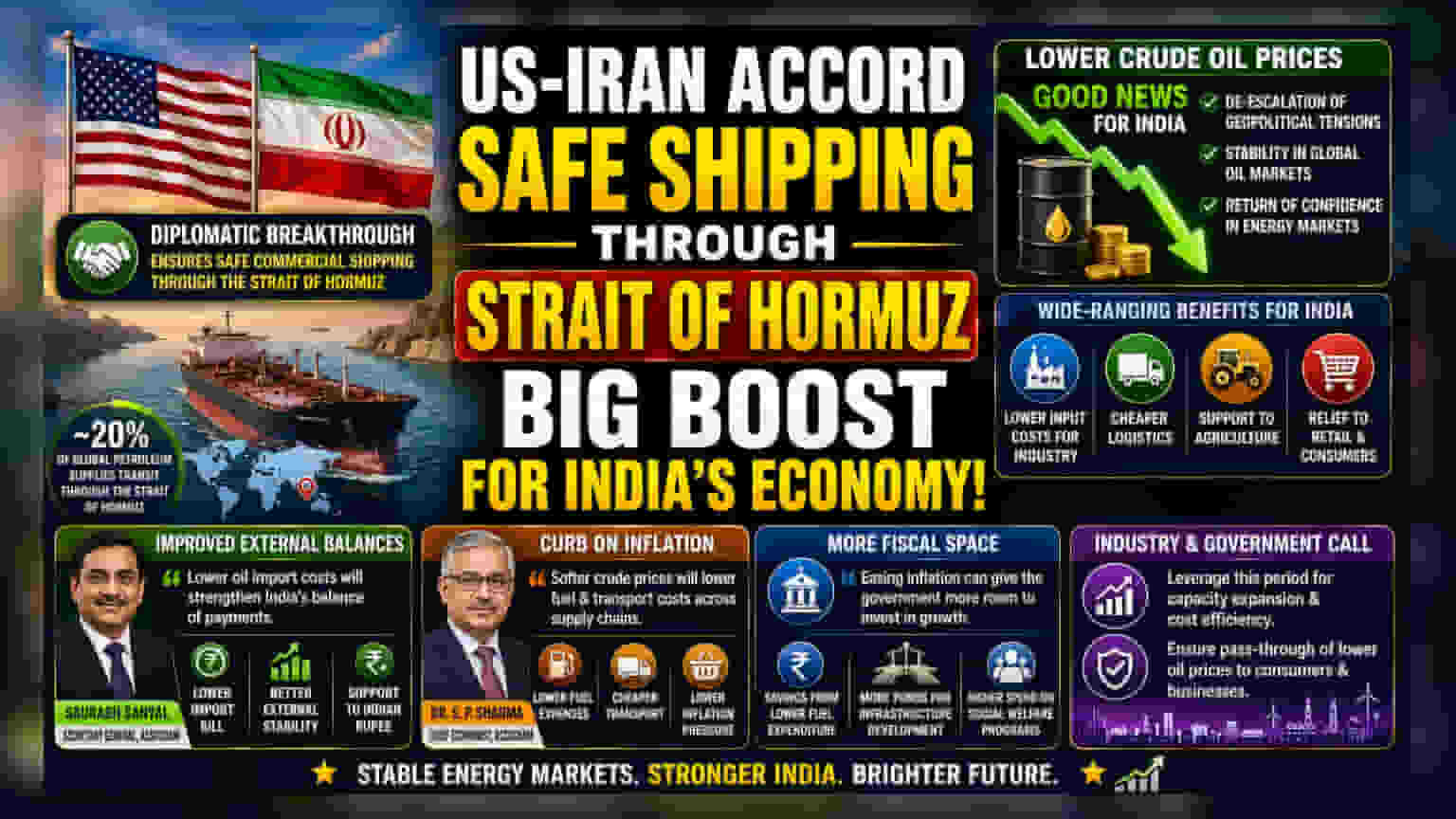
The Associated Chambers of Commerce and Industry of India (ASSOCHAM) welcomed the US-Iran diplomatic breakthrough regarding the Strait of Hormuz. This development is anticipated to significantly benefit India by lowering global crude oil prices, easing import bills, improving the balance of payments, and potentially moderating inflation.
Industry body ASSOCHAM has applauded the diplomatic agreement between the United States and Iran aimed at ensuring safe commercial shipping through the Strait of Hormuz. This breakthrough is seen as a major catalyst for economic benefits to India, primarily through a potential decrease in global crude oil prices.
Geopolitical Stability and Oil Markets
The chamber highlighted that the accord represents a crucial step toward de-escalating geopolitical tensions in a vital energy transit corridor. The Strait of Hormuz, responsible for transporting nearly a fifth of global petroleum supplies, has been a focal point of uncertainty and elevated energy costs. The agreement signals a return to stability for international oil markets.
Economic Implications for India
ASSOCHAM President Nirmal K. Minda emphasized the broad-ranging positive impacts for the Indian economy. "As one of the world’s largest importers of crude oil, India stands to benefit significantly from any sustained reduction in global oil prices," Minda stated. Lower crude prices are expected to decrease input costs across manufacturing, logistics, agriculture, and retail sectors.
External Balances and Currency Support
Lower oil prices could substantially improve India's external balances. Saurabh Sanyal, Secretary General of ASSOCHAM, noted that reduced energy import costs would strengthen the country's balance of payments. "A sustained decline in oil prices will significantly lower the import bill, improve external sector stability and ease pressure on the Indian rupee," Sanyal said. This could also bolster investor sentiment in domestic financial markets.
Inflation and Fiscal Space
Dr. S. P. Sharma, Chief Economist at ASSOCHAM, believes that softer crude prices will help curb inflation by lowering fuel and transportation expenses throughout supply chains. He also suggested that easing inflationary pressures could provide the government with additional fiscal maneuverability, allowing redirection of savings from lower fuel expenditure towards infrastructure and social welfare programs.
ASSOCHAM encouraged Indian industries to leverage this period of price moderation for capacity expansion and cost efficiency improvements. The chamber also urged the government to ensure that the benefits of reduced oil prices are transparently passed on to consumers and businesses.