

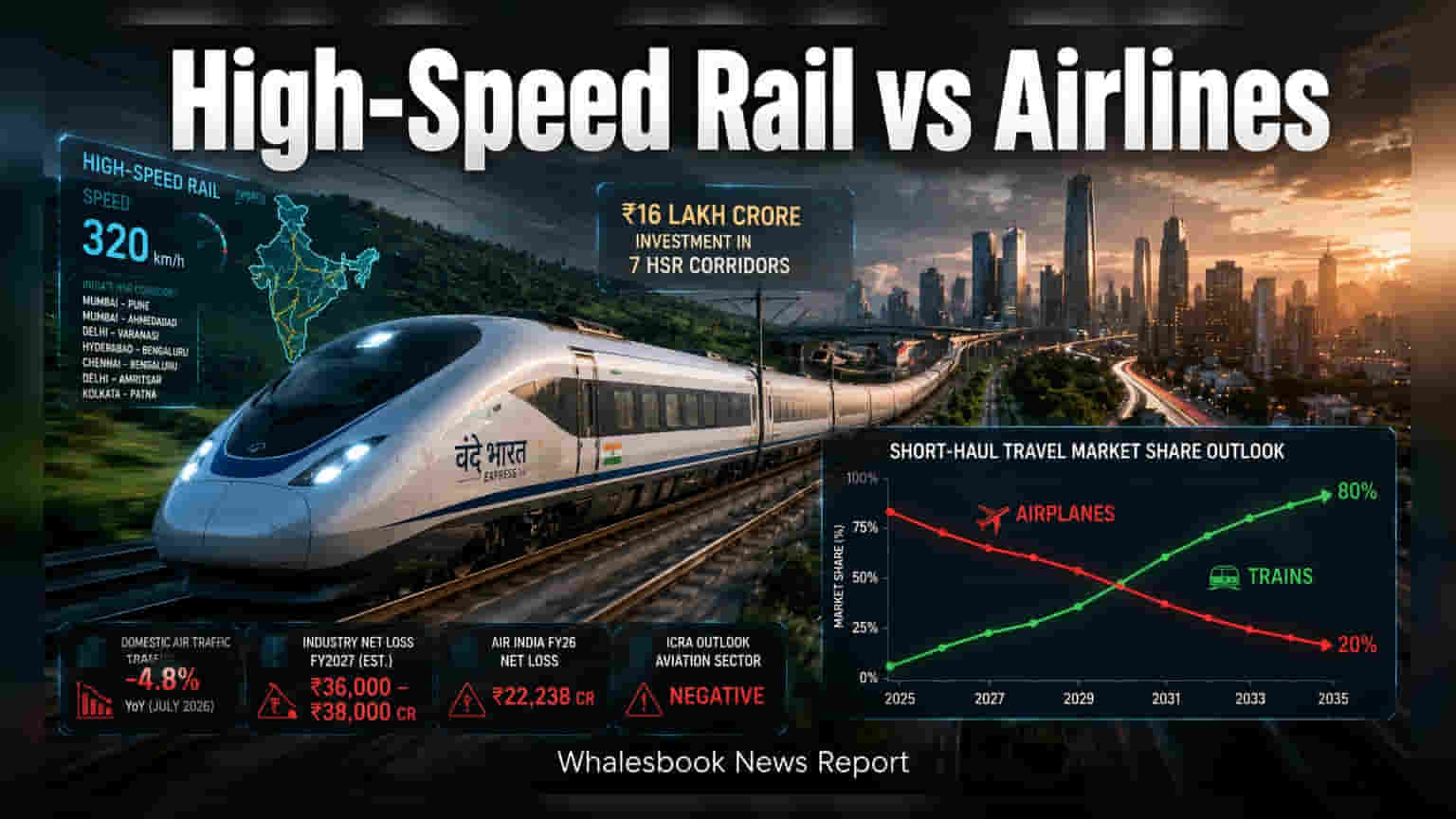
With a ₹16 lakh crore investment in seven high-speed rail corridors, India's short-haul aviation sector faces a structural competitive shift. As rail networks aim to connect major hubs like Mumbai-Pune, airlines must rethink their business models to counter reduced domestic demand. The aviation industry, currently facing a negative outlook due to high operational costs and sector-wide losses, is already looking toward international expansion to protect margins.
The landscape of domestic travel in India is undergoing a significant transformation as the government accelerates the development of seven high-speed rail (HSR) corridors. With a massive allocation of ₹16 lakh crore, this infrastructure push is explicitly designed to capture the high-density short-haul passenger market. Railways Minister Ashwini Vaishnaw has stated that these rail links—targeting routes such as Mumbai-Pune, Hyderabad-Bengaluru, and Delhi-Varanasi—are intended to make short-haul flight travel redundant on these sectors.
Aviation Financials Under Pressure
This development comes at a difficult time for the domestic aviation industry. Rating agency ICRA has maintained a 'negative' outlook for the sector, pointing to systemic challenges that go beyond infrastructure competition. Domestic air passenger traffic showed signs of cooling, with a 4.8% year-on-year decline reported in July 2026. Airlines are battling high operational expenses, driven largely by volatile Aviation Turbine Fuel (ATF) prices and the high cost of dollar-denominated aircraft leases and maintenance.
Financial performance across the industry remains uneven. While market leader IndiGo reported a Q1 FY27 net profit of ₹2,950 crore, a 56% increase, the broader industry is struggling. For instance, Air India reported a net loss of ₹22,238 crore for the previous fiscal year, and overall industry net losses for FY2027 are projected to range between ₹36,000 crore and ₹38,000 crore. These thin margins leave carriers with little room to absorb the impact of a permanent loss of market share to high-speed trains.
The Shift in Strategy
International experience offers a clear view of what domestic airlines can expect. In countries like Japan and parts of Europe, the introduction of efficient high-speed rail systems historically reduced air travel significantly on routes under 800 kilometers. As India’s rail project integrates these economic zones, domestic carriers are being forced to pivot. Many are already shifting their capacity toward international routes and longer-haul domestic sectors, where rail cannot compete. This strategic realignment is an attempt to mitigate the decline in passenger traffic on shorter routes.
Operational Risks and Future Monitorables
Investors tracking the aviation sector should note that the transition will not happen overnight. The Mumbai-Ahmedabad corridor has faced long-standing delays related to land acquisition, and the eventual impact on airlines will depend heavily on the project's execution timeline and final pricing. Additionally, the industry remains vulnerable to external shocks, such as geopolitical tensions and currency depreciation, which inflate the cost of imports and maintenance. For shareholders, the most important updates to monitor will be the pace of rail project completion, changes in airline route maps, and whether individual carriers can sustain profitability amidst these structural changes.