 Whalesbook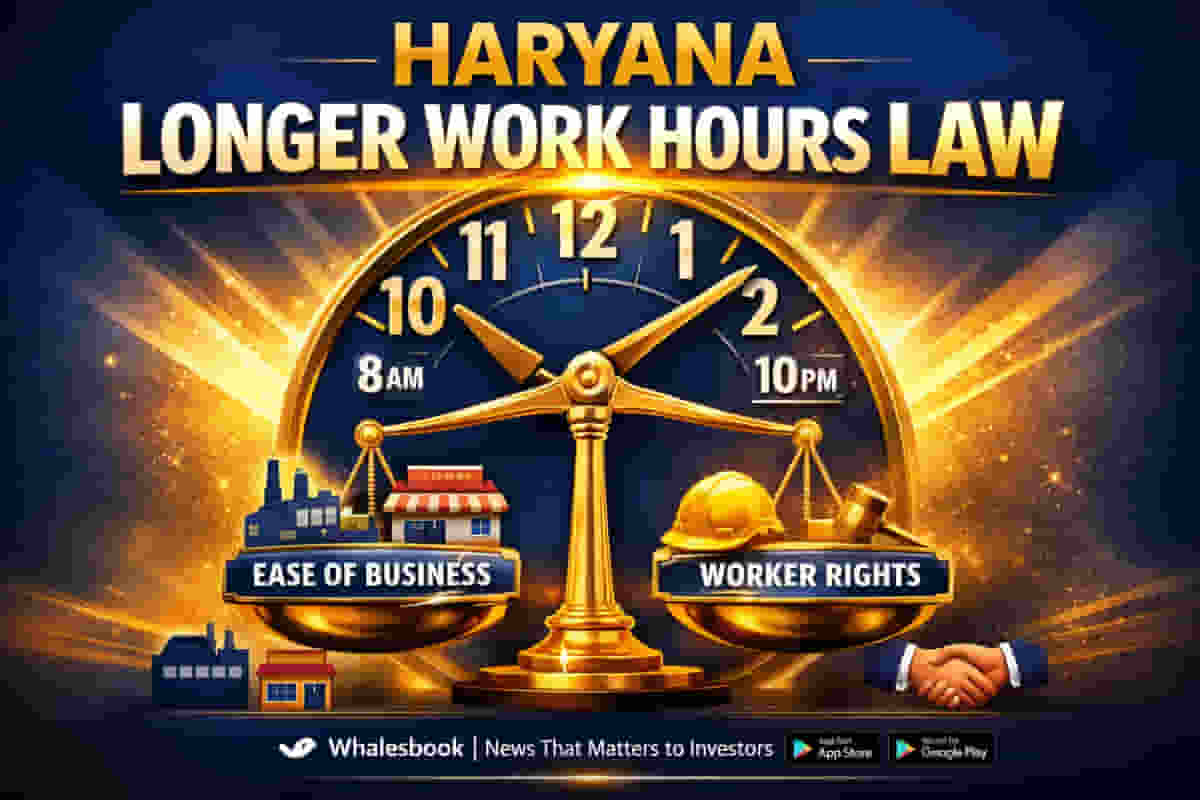
Haryana Assembly Approves Shift to 10-Hour Workdays
The Haryana Assembly on Monday enacted a significant piece of legislation, the Haryana Shops and Commercial Establishments (Amendment) Bill, 2025, which will extend the daily working hours for employees in shops and private commercial establishments from nine to ten hours.
This change, however, maintains the existing weekly working hour cap at 48 hours. The bill also introduces substantial increases in overtime allowances and streamlines regulatory processes for smaller businesses, a move the government states is crucial for economic advancement and operational flexibility.
The Core Issue: Shifting Work Hours and Compliance
The newly passed bill revises several key aspects of employment regulation. Daily working hours are extended from nine to ten, but this is explicitly stated to be inclusive of rest intervals and subject to the overall weekly limit of 48 hours.
Furthermore, the permissible overtime per quarter has seen a dramatic rise, from 50 hours to 156 hours. This aims to provide establishments with greater capacity to manage peak business demands efficiently. The maximum continuous work period without a break has also been extended from five to six hours.
Financial Implications and Economic Growth
Labour Minister Anil Vij championed the bill, asserting its dual benefit for workers and employers. He highlighted that the reforms are designed to reduce the compliance burden on smaller establishments, thereby promoting economic growth and encouraging job creation.
By removing the mandatory registration certificate requirement for establishments with fewer than 20 workers, opting instead for a simple intimation of business, the government intends to foster a more business-friendly environment and alleviate the fear of non-compliance among small enterprises.
Official Statements and Responses
While Minister Vij argued that the bill provides flexibility for emergencies, peak demand, or staff shortages without disrupting operations, the opposition voiced strong dissent. Congress MLA Aditya Surjewala proposed an amendment to retain the nine-hour daily limit, which was rejected by the House.
Surjewala critically questioned the legislation, asking if it represented 'ease of doing business' or the 'legalising of modern-day slavery', particularly noting that the combined daily work and overtime could lead to 12-hour workdays for employees.
Regulatory Changes and State Comparisons
Minister Vij emphasized that the threshold for registration has been raised to 20 or more employees, a move intended to simplify operations for micro and small businesses. He drew parallels with other states, noting that Haryana's new 10-hour daily work limit and the 20-employee registration threshold are consistent with regulations in Maharashtra, Punjab, Telangana, Andhra Pradesh, and Odisha.
Broader Legislative Context
The Haryana Shops and Commercial Establishments (Amendment) Bill, 2025, was among eight bills passed on the final day of the Haryana Vidhan Sabha's Winter session. Other notable bills included amendments to private universities and a bill aimed at decriminalizing minor offences to enhance governance ease.
Impact
This legislation could lead to increased operational flexibility for businesses in Haryana, potentially boosting efficiency during peak periods and aiding in managing labor shortages. For employees, it means longer potential workdays, raising concerns about work-life balance and fatigue, despite the adherence to the weekly hour limit. The reduced compliance burden may encourage the formalization and growth of smaller enterprises. The debate highlights the ongoing tension between fostering economic activity and ensuring robust worker protections.
Impact Rating: 7/10
Difficult Terms Explained
- Compliance burden: The effort and cost required for businesses to follow legal and regulatory rules.
- Decriminalisation: Removing criminal penalties for certain actions, often replacing them with fines or administrative sanctions.
- Rationalisation: Making a system or set of rules more logical, efficient, and less complex.
- Civil penalties: Fines or sanctions imposed in civil cases, distinct from criminal punishments.
- Administrative actions: Measures taken by government agencies, such as warnings or license suspension, rather than legal prosecution.
- Penal provisions: Clauses in a law that describe the punishments for offenses.