

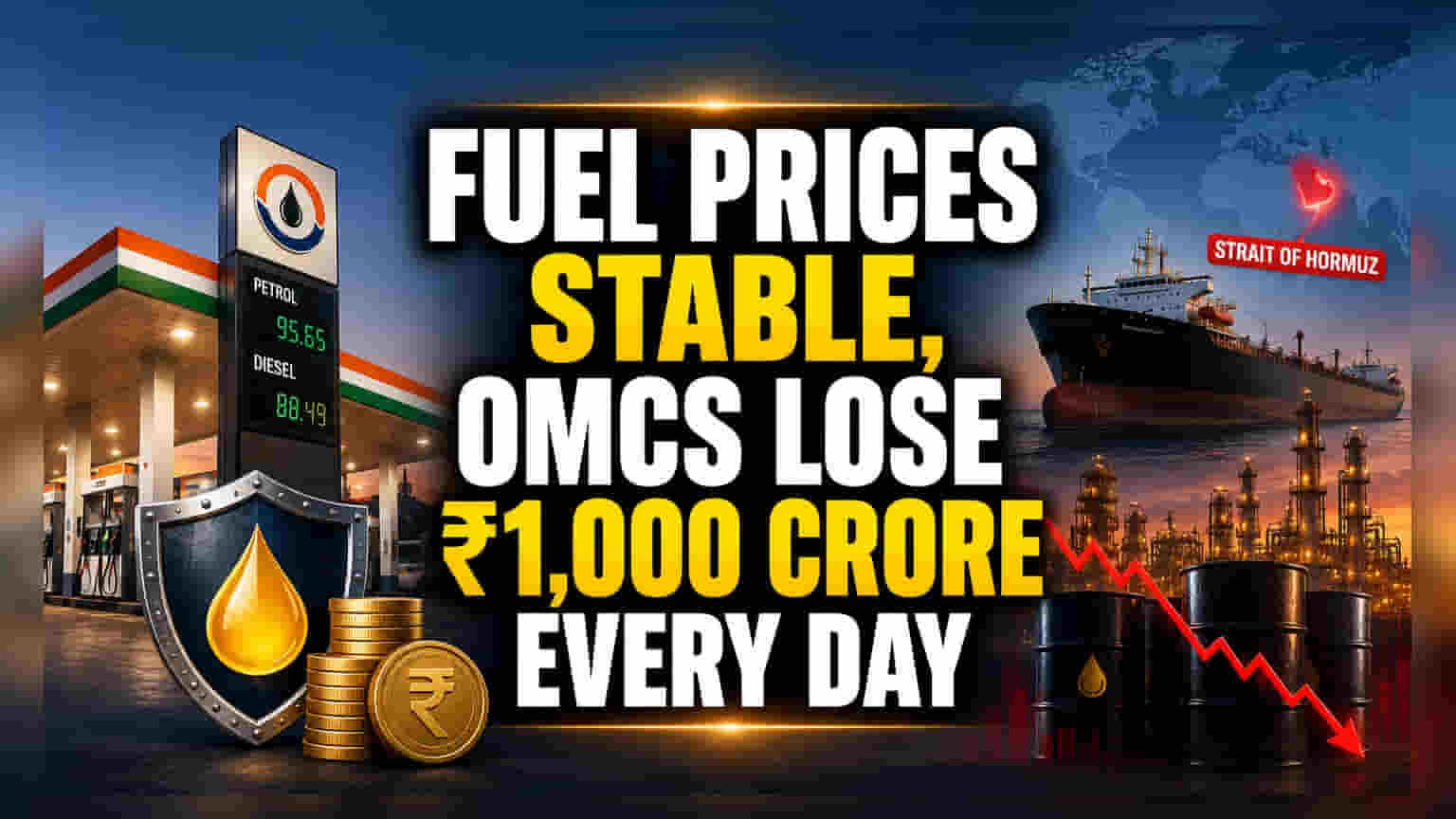
Union Minister Hardeep Singh Puri confirmed that Indian petrol and diesel prices remain stable despite significant global crude oil market fluctuations. The government continues to absorb cost shocks, citing that excise duty cuts have limited the burden on consumers. While tensions near the Strait of Hormuz are currently causing daily losses for oil marketing companies, officials suggested that fuel prices could soften as cheaper crude inventory begins processing.
What Happened
Union Minister for Petroleum and Natural Gas Hardeep Singh Puri stated that retail fuel prices in India have remained largely stable, despite ongoing volatility in global crude oil markets. Addressing reporters in Sonbhadra, Uttar Pradesh, the minister emphasized the government’s efforts to shield domestic consumers from the full impact of global price shocks. He noted that the government has implemented multiple excise duty reductions since 2021 to manage retail price increases.
Impact On Oil Marketing Companies
The minister highlighted that geopolitical tensions, specifically near the Strait of Hormuz, have created significant challenges for India’s oil marketing companies (OMCs). He stated that these companies are currently incurring daily losses of approximately ₹1,000 crore. This figure reflects the difference between the cost of crude oil and the price at which refined products like petrol and diesel are sold to consumers, given that retail prices have remained steady for an extended period.
For investors, this detail underscores the margin pressure that OMCs—such as Indian Oil Corporation (IOCL), Bharat Petroleum Corporation (BPCL), and Hindustan Petroleum Corporation (HPCL)—face when global crude prices rise, but retail prices are kept constant by policy measures. The ability of these firms to absorb such losses typically depends on the government's subsidy support or their own internal financial buffers.
The Inventory And Price Outlook
Minister Puri also provided an outlook on potential price movements. He explained that Indian refineries currently hold inventories of crude oil that were acquired at higher international prices. The retail pricing of fuel is often linked to the cost of these raw materials.
He suggested that as these expensive, older inventories are processed and replaced with crude purchased at lower international rates, there could be room for a reduction in consumer fuel prices. This transition to lower-cost raw materials is a critical factor for market analysts, as it directly influences the operating margins of refining and marketing firms.
What Investors Should Track
Investors in the energy sector should focus on several key variables to understand the business health of OMCs:
- Global Crude Benchmarks: Movements in Brent crude prices continue to be the primary driver of input costs for Indian refineries.
- Refining Margins: The spread between the cost of crude and the price of finished products determines the profitability of refining companies. A narrowing spread can signal margin pressure.
- Government Policy: Future decisions regarding excise duties, windfall taxes, or direct subsidies for OMCs remain important drivers for stock performance in this sector.
- Geopolitical Developments: Tensions in major shipping routes like the Strait of Hormuz can lead to supply chain disruptions and higher freight costs, impacting the total cost of crude imports for India.