 Whalesbook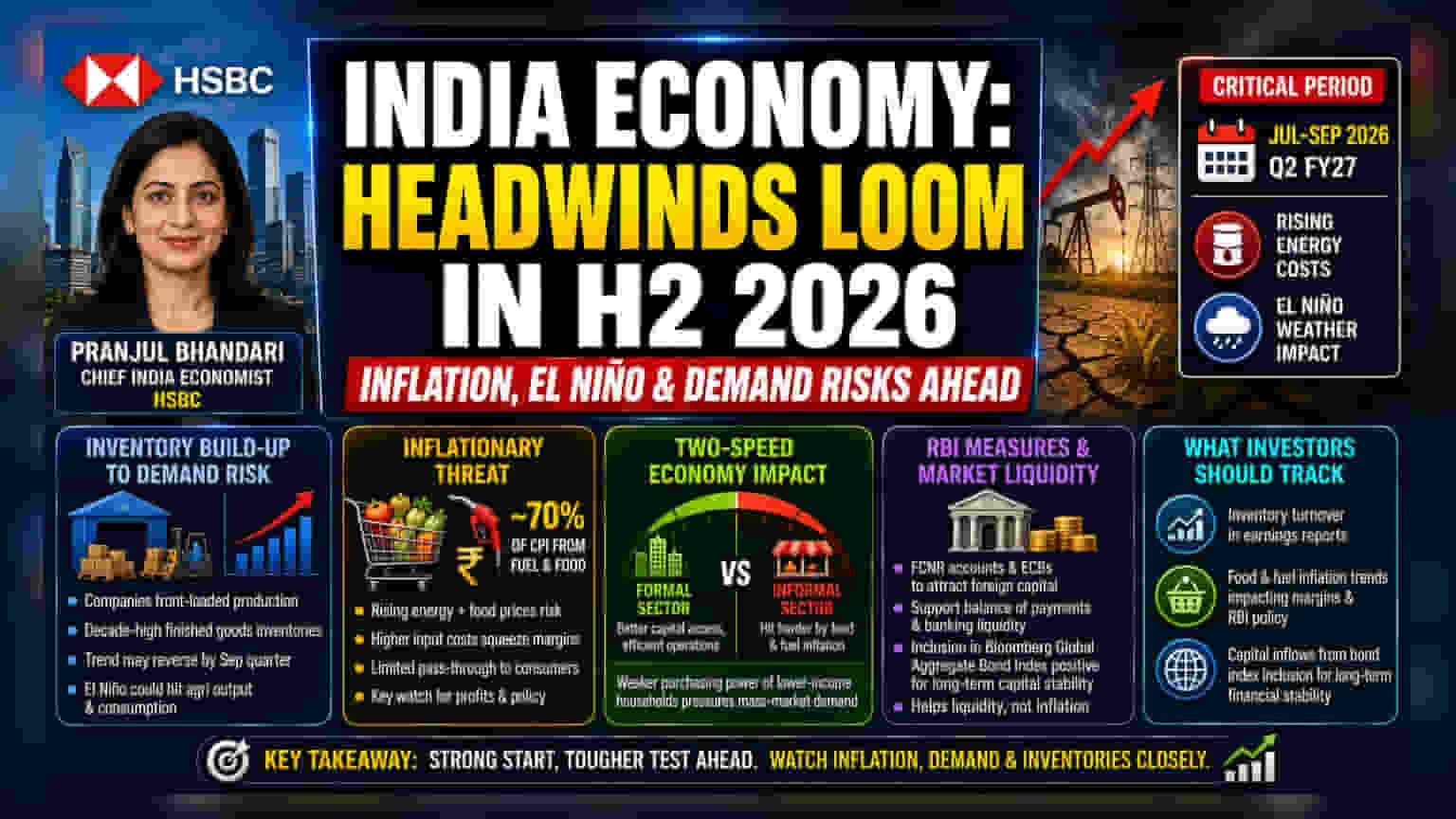


HSBC anticipates economic challenges for India starting in the July-September quarter of 2026, driven by rising energy costs and potential El Niño weather impacts. While high inventory levels have currently boosted manufacturing, analysts warn of a possible slowdown ahead. RBI measures to attract capital may support liquidity, but inflation risks persist.
What Happened
HSBC’s Chief India Economist, Pranjul Bhandari, has issued an economic outlook highlighting potential headwinds for India’s economy in the second half of the year. The report points to the July-September quarter of 2026 (the second quarter of the 2027 fiscal year) as a critical period where two major pressures—rising energy costs and the potential impact of an El Niño weather event—are expected to converge. While the Indian economy has shown notable strength so far, the firm suggests that the current momentum may face testing conditions in the coming months.
The Shift from Inventory Build-up to Demand Risk
One of the key reasons the economy has appeared resilient recently is that many companies have been "front-loading" production, meaning they have been manufacturing more goods than current consumer demand requires. This has resulted in the highest levels of finished goods inventories seen in a decade. While this has supported output and employment numbers for now, it is a temporary boost. HSBC anticipates that this trend could reverse by the September quarter as businesses stop stocking up and the effects of El Niño begin to influence agricultural output and broader consumption.
Understanding the Inflationary Threat
Inflation remains a central concern for investors because it directly impacts the profit margins of listed companies. Fuel and food items make up nearly 70% of India’s Consumer Price Index (CPI), which tracks the average cost of goods and services. A simultaneous increase in energy costs and potential weather-driven food price hikes creates a significant risk of rising inflation. If costs for raw materials and fuel rise, companies may struggle to pass these price increases on to consumers, which could put pressure on their profitability.
The Two-Speed Economy Impact
There is a growing concern about a "two-speed" economy, where the formal and informal sectors experience different levels of stress. Large, formal companies often have better access to capital and more efficient operations, which helps them navigate economic downturns. In contrast, higher food and fuel prices hit the informal sector much harder. As these costs rise, the purchasing power of lower-income households often drops, which can hurt sales for companies dependent on mass-market consumption.
RBI’s Capital Measures and Market Liquidity
The Reserve Bank of India (RBI) is actively working to attract foreign capital through initiatives like Foreign Currency Non-Resident (FCNR) accounts and External Commercial Borrowings (ECB). These moves are designed to help finance the country’s balance of payments deficit and keep the banking system's liquidity healthy. Furthermore, efforts to include India in the Bloomberg Global Aggregate Bond Index are viewed as a positive step for long-term capital stability. While these inflows are helpful for banking liquidity, they do not directly solve the domestic inflation or demand-side problems faced by manufacturers.
What Investors Should Track Next
Investors may want to monitor several indicators as the economy moves through the second half of 2026. First, look for commentary on "inventory turnover" in the upcoming earnings reports of manufacturing and consumer goods companies. If companies report that they are still struggling to sell the goods they have produced, it may signal that the demand slowdown is real. Second, track food and fuel inflation trends, as these will likely influence central bank policy and company margins. Finally, watch for any updates on capital inflows from bond index participation, as this remains a key factor for long-term financial stability.