

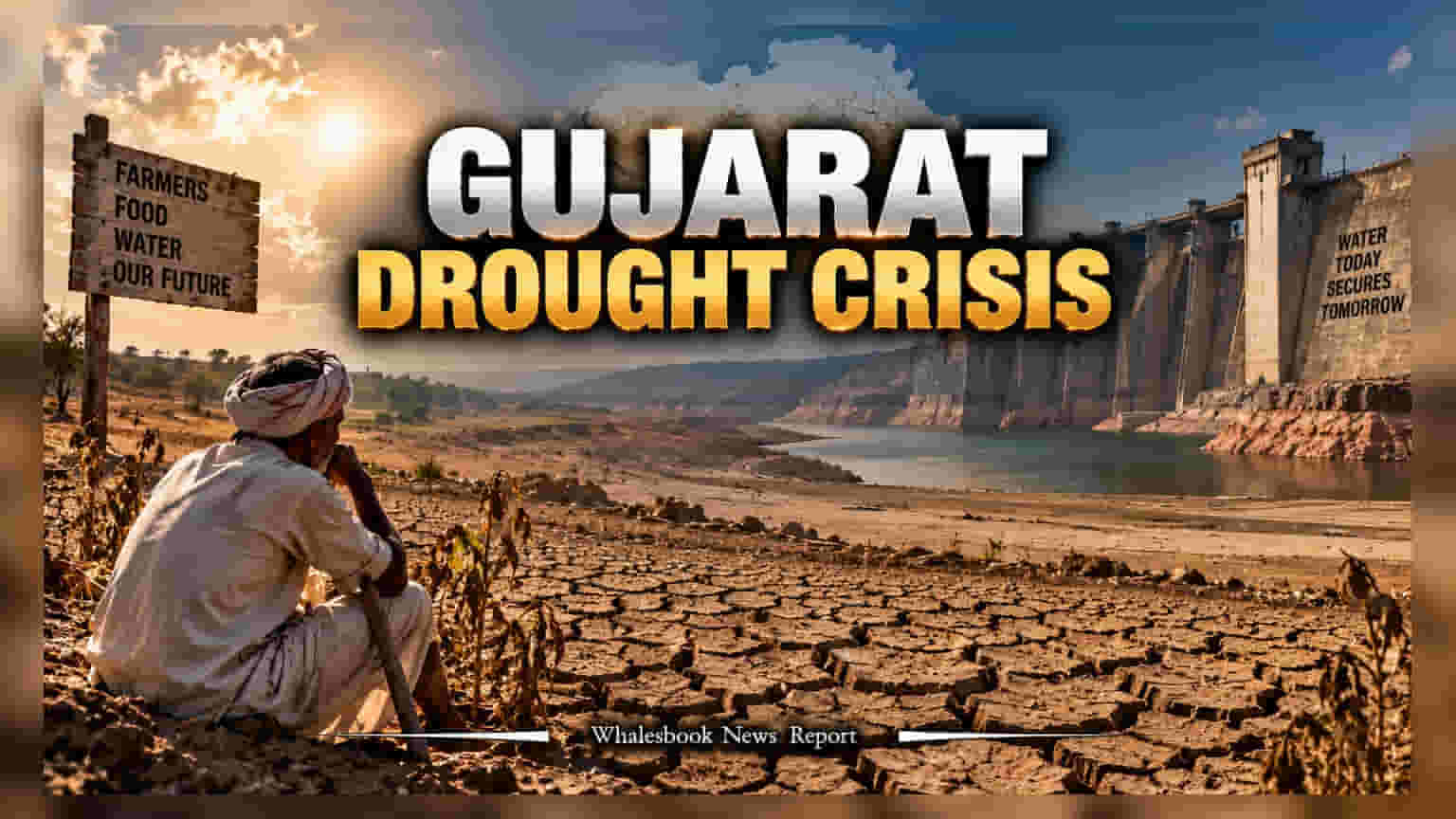
Gujarat’s reservoir levels have fallen to 74.89%, trailing last year's 86.64% mark, creating significant pressure on the rural economy. With the state government prioritizing drinking water over irrigation, farmers in regions like Saurashtra and Kutch face heightened risks of crop stress, potentially impacting agricultural output and rural consumer demand.
The state of Gujarat is grappling with a significant water challenge as the monsoon season nears its end, with reservoir levels across the region failing to match last year’s figures. As of early September 2026, the average water storage in Gujarat’s reservoirs stands at 74.89 per cent, noticeably lower than the 86.64 per cent recorded during the same period in 2025. This shortfall is creating stress for the rural economy, particularly in the Saurashtra, Kutch, and North Gujarat regions.
Impact on Regional Agriculture
While the primary Sardar Sarovar reservoir remains relatively stable at approximately 90.31 per cent capacity, acting as a crucial buffer for the state, smaller regional dams are feeling the brunt of the deficit. Approximately 76 reservoirs across Gujarat are currently holding less than 25 per cent of their total capacity. For the agricultural sector, this creates a challenging environment for the kharif crop season. Farmers in water-stressed districts are facing uncertainty regarding irrigation access, which could lead to lower yields for crops like cotton, groundnut, and pulses. Reduced farm income often correlates with a slowdown in rural demand, a key factor that analysts monitor when assessing the health of companies focused on rural consumption, such as fast-moving consumer goods and tractor manufacturers.
Infrastructure and Policy Priorities
The Saurashtra Narmada Avtaran Irrigation (SAUNI) scheme has once again come into the spotlight as the primary tool to manage water distribution. Designed to transfer excess water from the Narmada basin to 115 water-stressed reservoirs, the scheme is now being used to bridge the gap in critically dry areas. However, its efficacy is being tested by the prevailing weather conditions. The state administration has explicitly stated that drinking water and fodder security are the top priorities. Consequently, water releases from major reservoirs are being rationed to ensure that urban and rural drinking water needs are met before any water is diverted for large-scale agricultural irrigation.
Outlook for the Rural Economy
For the remainder of the monsoon season and the upcoming harvest, the focus remains on moisture levels and potential late-season rainfall. The government's decision to prioritize drinking water over irrigation is a standard protective measure but highlights the vulnerability of the region to erratic monsoon patterns. Investors and analysts may monitor how this localized scarcity affects regional agricultural productivity and, by extension, the broader rural economy. Key indicators to track include state-level updates on reservoir inflow rates, potential government relief measures for farmers, and any revisions in crop yield forecasts for the affected districts. The ability of the existing infrastructure to mitigate the impact of this rainfall deficit will be a significant point of scrutiny as the state manages these competing water demands.