

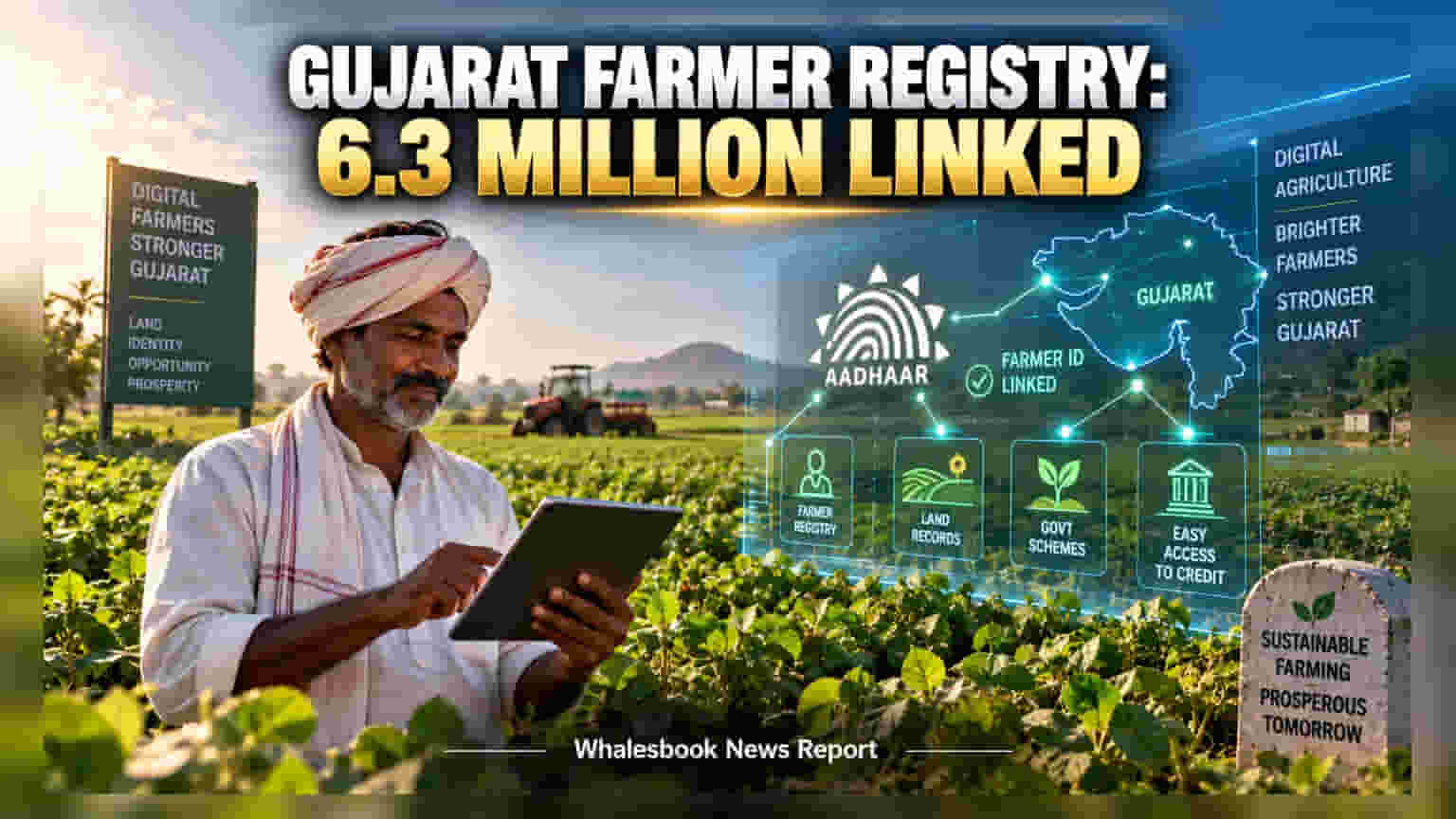
Gujarat has linked over 6.3 million farmers to a centralized digital registry using Aadhaar and land records. This initiative, part of the national Digital Agriculture Mission, intends to streamline subsidy distribution and credit access, potentially reducing administrative leakage in state-run agricultural programs.
The Gujarat government has completed the integration of over 6.3 million farmers into a unified Farmer Registry, marking a significant push in the state's rural digital infrastructure. By mapping Aadhaar identities directly to verified land records, the system aims to create a singular digital profile for every agriculturalist. This transition is designed to replace legacy, paper-based verification methods that have historically slowed down administrative processes and benefit distribution.
Scaling Rural Digital Infrastructure
This initiative operates under the framework of the national Digital Agriculture Mission. The registry assigns a Unique Farmer ID to each individual, which serves as a gateway for accessing various state and central government programs. These include the Pradhan Mantri Kisan Samman Nidhi, minimum support price procurement schemes, and the Kisan Credit Card program. For the state, the primary objective is to curb duplication and ensure that financial assistance and subsidies reach the intended recipients with greater precision.
Impact on Financial Services and Subsidies
For investors and the broader rural economy, this registry offers more than just bureaucratic convenience. By standardizing land and farmer data, the system creates a cleaner, more reliable data layer that financial institutions can utilize. Banks and non-banking financial companies operating in the rural credit space may find it easier to verify creditworthiness and manage risk, potentially accelerating the disbursal of agricultural loans. Furthermore, precise data on crop patterns and land ownership can help companies in the agri-input and procurement sectors optimize their supply chains, as demand forecasting becomes more data-driven.
Implementation Risks and Data Privacy
The digitization of millions of land records is a complex undertaking. One of the main challenges investors should monitor is the accuracy of the underlying land data. The government has provided an 'Update Farmer Request' facility to rectify discrepancies in survey records, which acknowledges that legacy land data often contains errors that can lead to exclusion or delays in benefit receipt.
Additionally, as with any large-scale digitization of personal and financial information, data security remains a material consideration. Protecting sensitive farmer information from cyber risks and ensuring that the digital divide does not prevent remote farmers from accessing their benefits are critical operational tasks. Future progress will depend on the speed of enrollment across smaller villages and the successful integration of this data with AI-driven agricultural advisory tools, which the government intends to deploy once the registry is fully operational.