

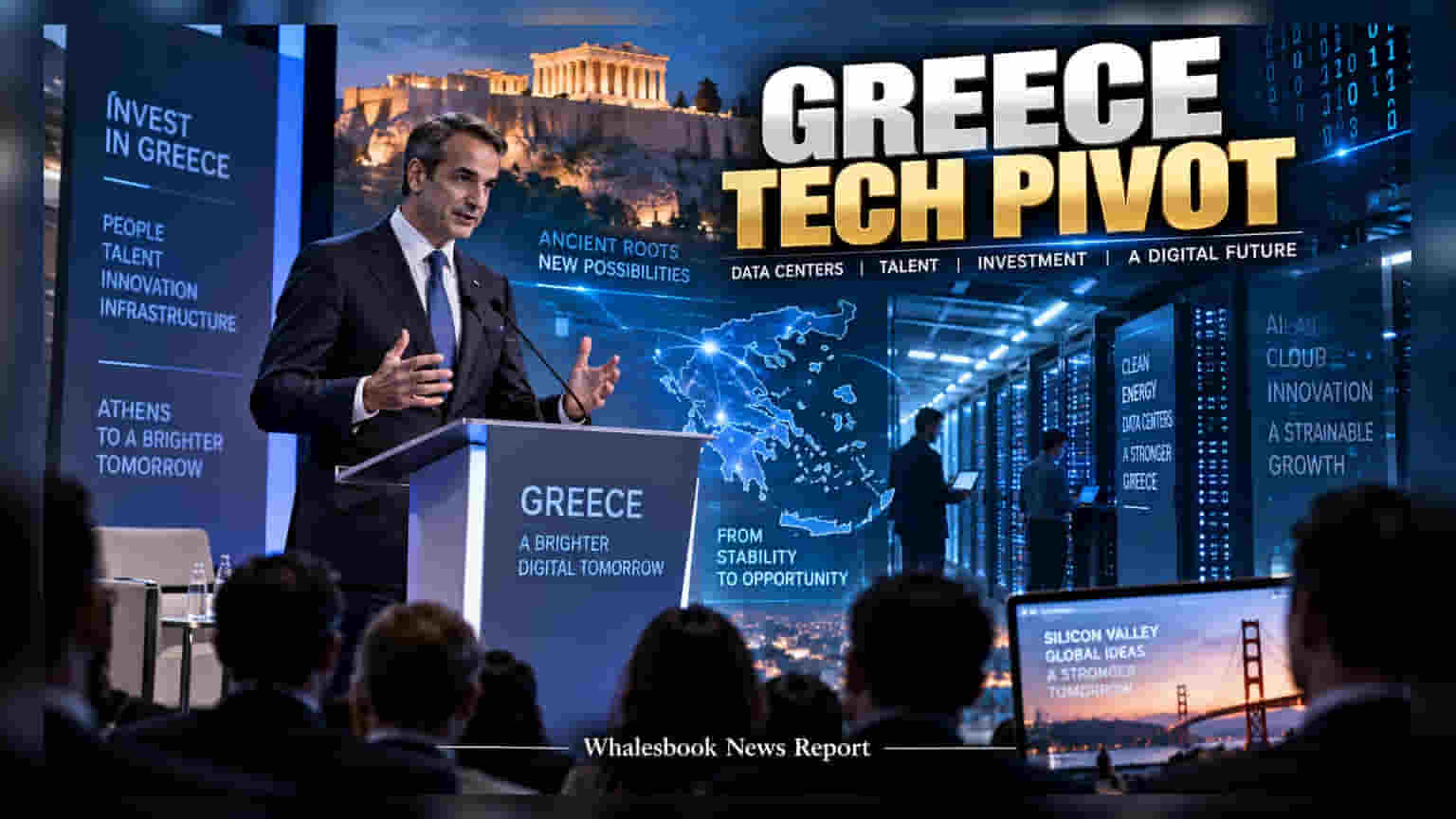
Greek Prime Minister Kyriakos Mitsotakis is positioning the country as a tech hub with new tax incentives and infrastructure plans. While this shift reflects a major economic recovery from the 2012 debt crisis, global investors are tracking how the nation balances this growth with high debt levels and evolving EU-wide AI regulations.
Greek Prime Minister Kyriakos Mitsotakis is actively pitching his country as a destination for global technology investment. During a visit to Silicon Valley, the Prime Minister highlighted that Greece is moving away from its past as a fiscal outlier. The government is now focusing on attracting data center operators and tech startups by leveraging structural policy changes, such as revised taxation on stock options and significant tax breaks for returning talent.
The economic narrative has shifted significantly since the debt crisis of 2012. The country is seeing a period of improved fiscal stability, with 10-year bond yields around 4.3%. This recovery is a key part of the government's pitch to investors, including its potential reclassification by MSCI as a developed market. The focus has turned to building digital infrastructure, including a supercomputing initiative involving Hewlett Packard Enterprise.
Greece is betting on its ability to host large-scale data centers, with Microsoft and Amazon Web Services already securing commitments. A notable part of this strategy is the repurposing of regions that were previously dependent on coal mining for new tech infrastructure. This approach aligns the country's energy transition goals with the high power demands of modern data centers. Unlike some other European regions, the government has reported minimal local opposition to these developments.
However, the path forward involves navigating complex regulatory hurdles. The Prime Minister has expressed caution regarding the rapid adoption of artificial intelligence, admitting that current global regulatory frameworks may not fully address the risks posed by AI-driven technologies. For investors, this uncertainty around AI regulation is a key monitorable. While the government supports technological growth, it is also prioritizing vigilance, which could influence how companies deploy AI models within the country.
For investors monitoring European markets, the main question is whether this momentum can be sustained. While the fiscal improvements are verified, Greece still carries a high debt-to-GDP ratio, which remains a factor in long-term economic planning. Additionally, the broader European tech ecosystem is subject to evolving regulations, which could impact the cost and speed of operations for tech giants. The next important steps to watch include the actual commissioning of these planned data centers and how the European Union’s regulatory stance on artificial intelligence develops over the coming quarters.