

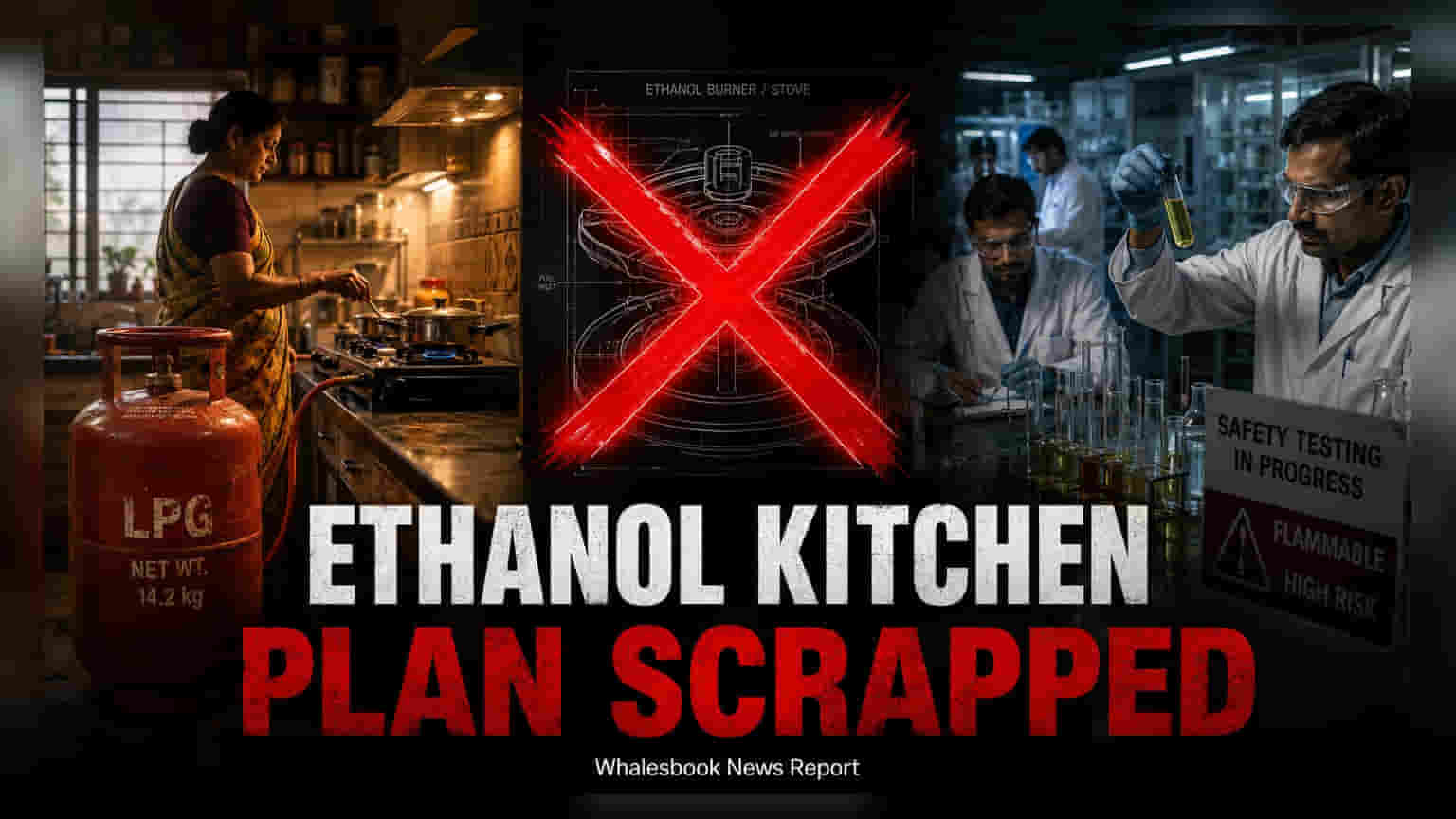
The Indian government has officially confirmed that ethanol will not be introduced as a household cooking fuel or for diesel blending due to safety concerns. Minister of State for Petroleum and Natural Gas Suresh Gopi stated that scientific testing revealed significant fire safety risks. This decision clarifies the near-term demand path for the domestic ethanol industry, which must now focus on the existing petrol-blending targets rather than expanding into new fuel applications.
The Indian government has firmly stated that ethanol will not be adopted as a cooking fuel for households or blended with diesel in the near term. Minister of State for Petroleum and Natural Gas, Suresh Gopi, informed the Rajya Sabha on August 10, 2026, that no policy is currently under consideration to introduce the biofuel for these uses. The announcement reinforces Liquefied Petroleum Gas (LPG) as the primary fuel source for domestic cooking needs.
Safety Concerns Limit Use
The decision follows extensive scientific evaluations conducted by public-sector oil marketing companies in collaboration with accredited laboratories and automobile manufacturers. These tests identified a critical safety barrier regarding diesel blending. Adding ethanol to diesel significantly lowers the fuel's flash point, which is the temperature at which a fuel can ignite when exposed to air. A lower flash point increases the risk of fire and safety hazards during storage, handling, and transportation. Consequently, the government has determined that ethanol-blended diesel does not meet the necessary safety standards for safe usage.
Impact on the Ethanol Industry
For investors following the ethanol production and sugar industries, this clarification provides a clearer picture of the demand landscape. Many companies have been expanding their distillery capacities to align with national biofuel goals. With the government ruling out new demand channels like cooking fuel and diesel blending, the immediate growth for ethanol producers remains tethered to the existing 20% (E20) petrol blending program. Companies in this space will now need to focus on optimizing capacity utilization within these current mandates rather than expecting new consumption avenues to open up in the short term.
Policy Outlook
The administration acknowledged that ethanol has the potential to help reduce India's reliance on imported energy in the long run. However, officials emphasized that any shift toward alternative uses would require extensive further scientific and technical studies. As it stands, there is no official plan to increase the ethanol blending percentage in petrol beyond the current 20% limit. Investors may monitor how ethanol manufacturers manage their supply and production margins given the continued reliance on the transport sector's demand for petrol blending.