

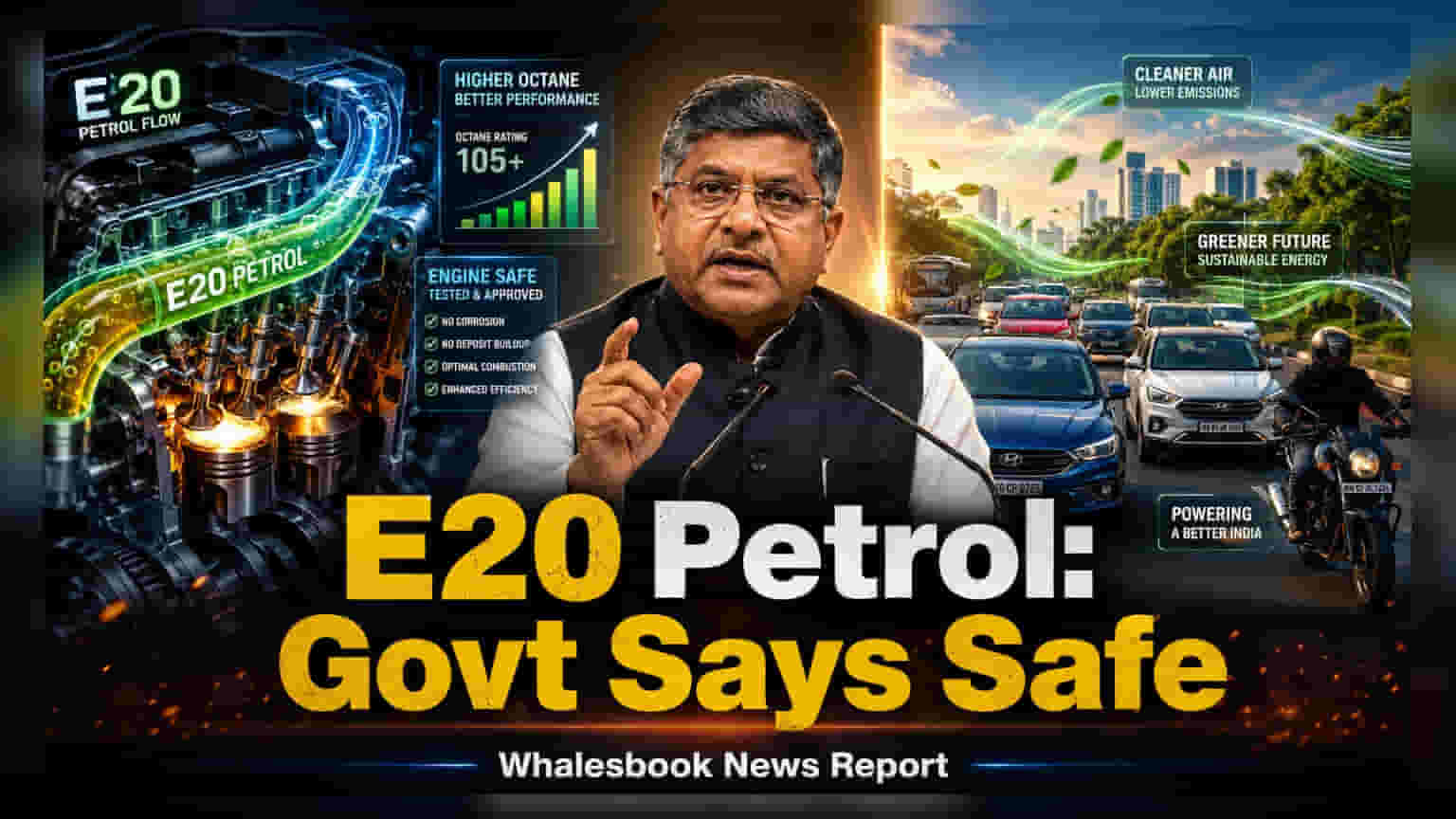
The Indian government has clarified that E20 petrol does not cause widespread engine damage, citing data from 23 crore operational vehicles. This statement addresses concerns regarding the 20% ethanol-blended fuel's impact on vehicle longevity and performance. Investors may track future updates on ethanol-blended fuel policies and their impact on automotive demand.
Detailed Coverage
The Ministry of Petroleum and Natural Gas has officially addressed concerns regarding E20 fuel, which contains 20% ethanol. Minister of State Suresh Gopi informed the Rajya Sabha that there is no verified evidence linking this fuel blend to widespread engine failures. With over 23 crore vehicles currently operating on ethanol-blended petrol in India, the government maintains that the transition remains safe based on extensive testing and performance data.
Scientific Basis and Manufacturer Records
The phased transition to higher ethanol blends, which began with a 1.53% blend in the 2013-14 period, was supported by technical assessments from agencies including the NITI Aayog, the Automotive Research Association of India, and the Society of Indian Automobile Manufacturers. These studies covered critical parameters such as fuel system integrity, engine durability, and corrosion resistance.
Evidence from major automobile manufacturers supports these findings. A leading four-wheeler manufacturer noted that during the 2025-26 fiscal year, over 2.84 crore vehicles were serviced, including older models not specifically designed for E20, without any reports of fuel-related damage. Similar results were observed by major two-wheeler manufacturers, who reported no significant increase in maintenance issues compared to vehicles running on lower ethanol blends.
Performance and Fuel Efficiency Context
While the government acknowledged that older vehicles designed for E10 fuel might experience a minor reduction in fuel efficiency—typically between 3% and 5%—it highlighted the technical benefits of E20. The higher octane rating of the blend provides better anti-knock properties and cleaner combustion, contributing to smoother engine operation.
For investors monitoring the automotive and energy sectors, the government clarified that there are currently no plans to increase ethanol blending beyond the 20% target. Any potential move toward higher blends would require further comprehensive scientific research and consultations with industry stakeholders, including vehicle manufacturers and oil marketing companies. The government reiterated its commitment to the Ethanol Blended Petrol Programme as part of a broader strategy for sustainable fuel, with no current mandate to provide non-blended petrol at retail locations. The key monitorable for the market remains the ongoing adoption rates and any future policy adjustments regarding fuel standards.