

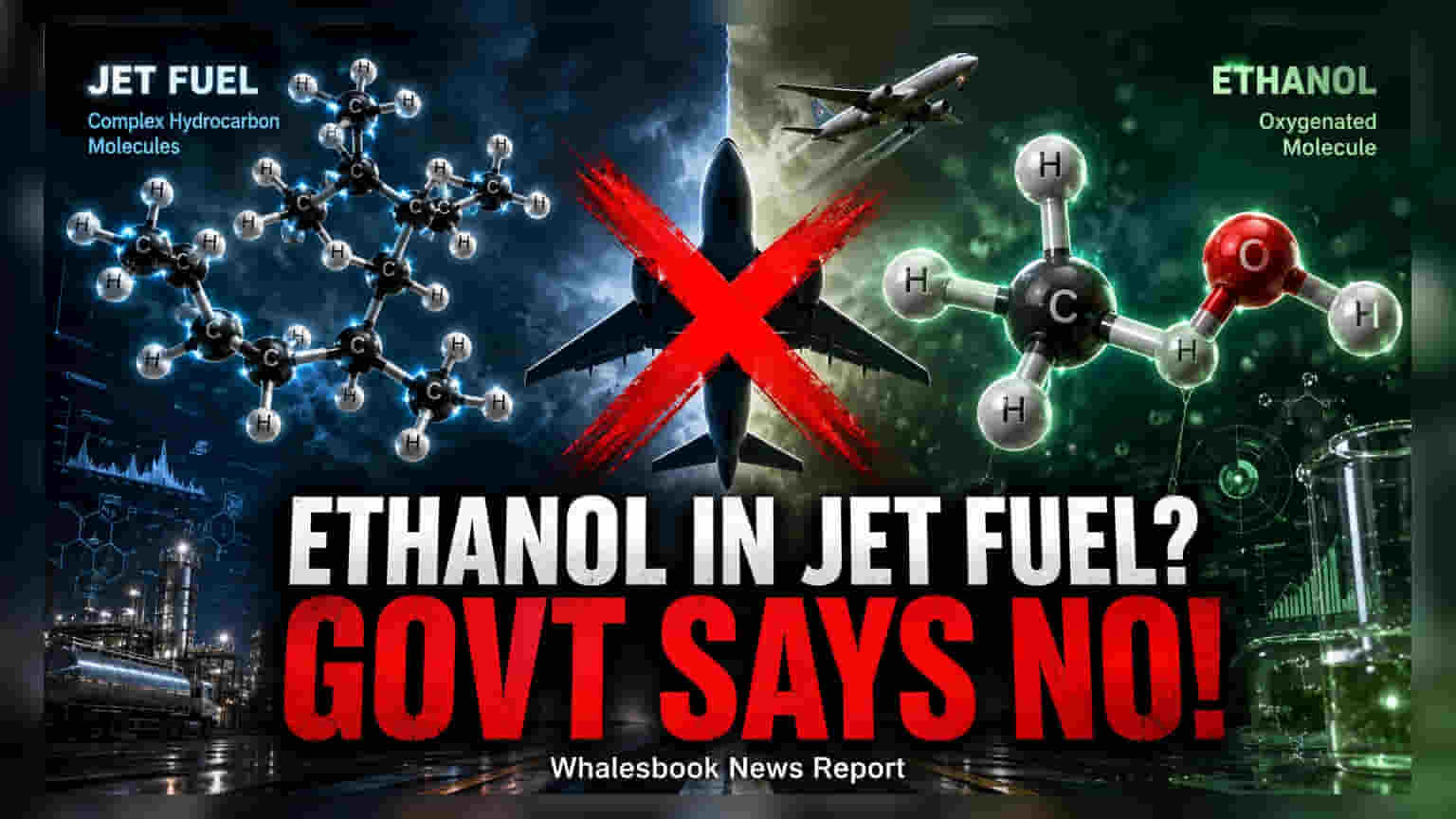
The Civil Aviation Ministry has officially rejected reports suggesting that ethanol will be blended with aviation turbine fuel. This clarification aims to clear up confusion between ethanol and Sustainable Aviation Fuel (SAF). Investors should note that the government’s actual aviation policy focuses on SAF with specific blending targets for 2027-2030, rather than ethanol, which is used in automotive fuel.
The Union Ministry of Civil Aviation has officially denied reports that the government intends to blend ethanol with aviation turbine fuel (ATF). Union Minister Ram Mohan Naidu Kinjarapu described the circulating claims as completely false and irresponsible, emphasizing that no such proposal is under consideration. The official statement was issued to address social media allegations that had raised concerns about flight safety and potential fuel adulteration.
The government has clarified that ethanol and Sustainable Aviation Fuel (SAF) are entirely different products. Ethanol is widely used as a fuel additive in road transport, such as the E20 petrol blend found in many Indian vehicles, but it is not part of the regulatory framework for aviation.
In contrast, Sustainable Aviation Fuel is an internationally certified product that meets rigorous safety standards established by the International Civil Aviation Organisation (ICAO). SAF is designed specifically for aircraft engines and is a core component of the government's long-term environmental strategy for the airline industry, rather than a mere fuel additive.
For market participants, this distinction is important. The aviation sector is currently working toward a gradual transition to cleaner fuels, with India having set clear, indicative targets for SAF blending on international flights. These include 1% blending by 2027, 2% by 2028, and 5% by 2030. These policies are independent of the ethanol-blending mandates that apply to the automotive sector.
The government’s proactive stance aims to maintain public confidence in aviation safety, which it identifies as its highest priority. By rejecting the rumors of ethanol usage in jet fuel, the ministry has attempted to prevent unnecessary anxiety among air travelers. Moving forward, investors tracking the energy and aviation sectors may look to official government policy documents regarding SAF implementation, as these serve as the primary roadmap for the industry's shift toward cleaner fuel, distinct from any ongoing automotive fuel programs.