

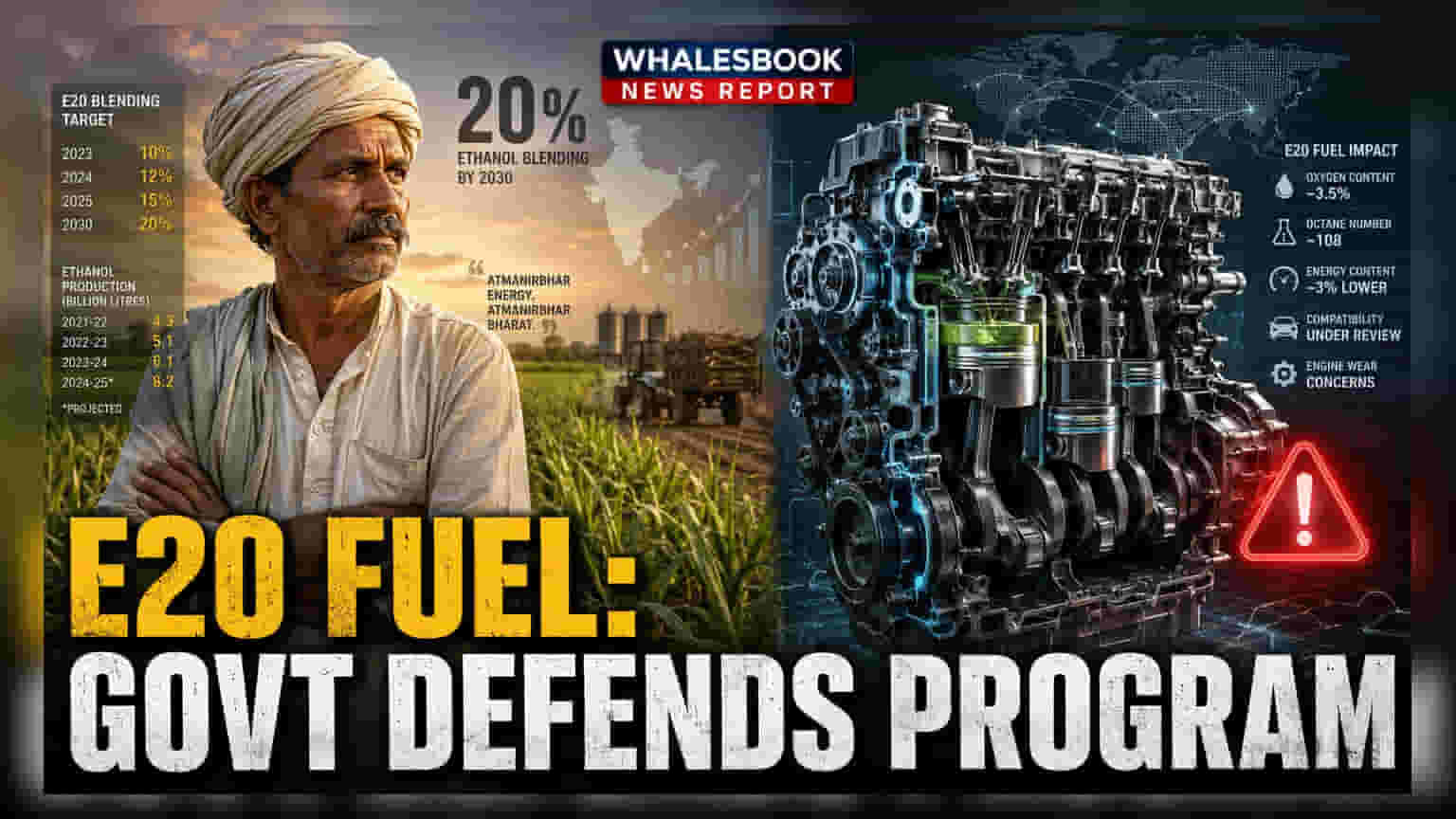
The Ministry of Petroleum and Natural Gas has debunked misinformation regarding the E20 ethanol blending program. The government confirmed vehicle compatibility, insurance validity, and environmental safety based on official trials. This program, which met its 20% blending target in late 2025, aims to lower crude oil imports and boost farmer income.
What Happened
The Ministry of Petroleum and Natural Gas has issued a detailed response to address persistent online claims questioning the safety and impact of India's E20 fuel program. The government statement covers ten specific areas of concern, including vehicle engine health, insurance coverage, water usage in production, and environmental effects. This clarification follows a period of circulating misinformation regarding the impact of ethanol-blended petrol on vehicle performance and maintenance.
Vehicle Performance and Maintenance Facts
Official trials conducted by the Automotive Research Association of India (ARAI) form the basis of the government's stance. These tests involved extensive road trials for both passenger vehicles and two-wheelers. The findings indicated no significant damage to engine components or loss of fuel efficiency. While the government acknowledged that rubber components in older vehicle models might require slightly earlier replacement, it clarified that modern vehicles are fully compatible with E20 fuel. Additionally, the government stated that vehicle manufacturers and insurance providers have confirmed that warranties and coverage policies remain unchanged for compatible vehicles.
Ethanol Production and Environmental Impact
The ministry addressed environmental concerns by highlighting that ethanol plants are increasingly using Zero Liquid Discharge systems to manage and recycle water. Furthermore, the shift toward using maize as a feedstock is designed to reduce the high water demand associated with traditional crops like paddy. The government noted that the distillation process removes sugar content, debunking claims that ethanol-blended fuel attracts insects. According to the government, the shift to E20 has already resulted in the displacement of over 310 lakh metric tonnes of crude oil imports.
Economic and Strategic Context
The E20 initiative is a core part of India’s energy security strategy. Since the 2014-15 fiscal year, the program has reportedly saved over ₹1.9 lakh crore in foreign exchange and provided more than ₹1.6 lakh crore in direct income to farmers. India reached its 20% ethanol blending target ahead of its original schedule in December 2025. This rapid infrastructure development has been supported by significant increases in domestic ethanol production capacity.
What Investors Should Track
Investors tracking energy and automotive stocks may monitor the long-term impact of high-blend fuels on the demand for specialized vehicle components and the financial performance of ethanol producers. Key monitorables include the stability of raw material pricing for distilleries, the ongoing pace of infrastructure upgrades at fuel retail outlets, and any further official updates on production capacity utilization as the country maintains its 20% blending mandate.