 Whalesbook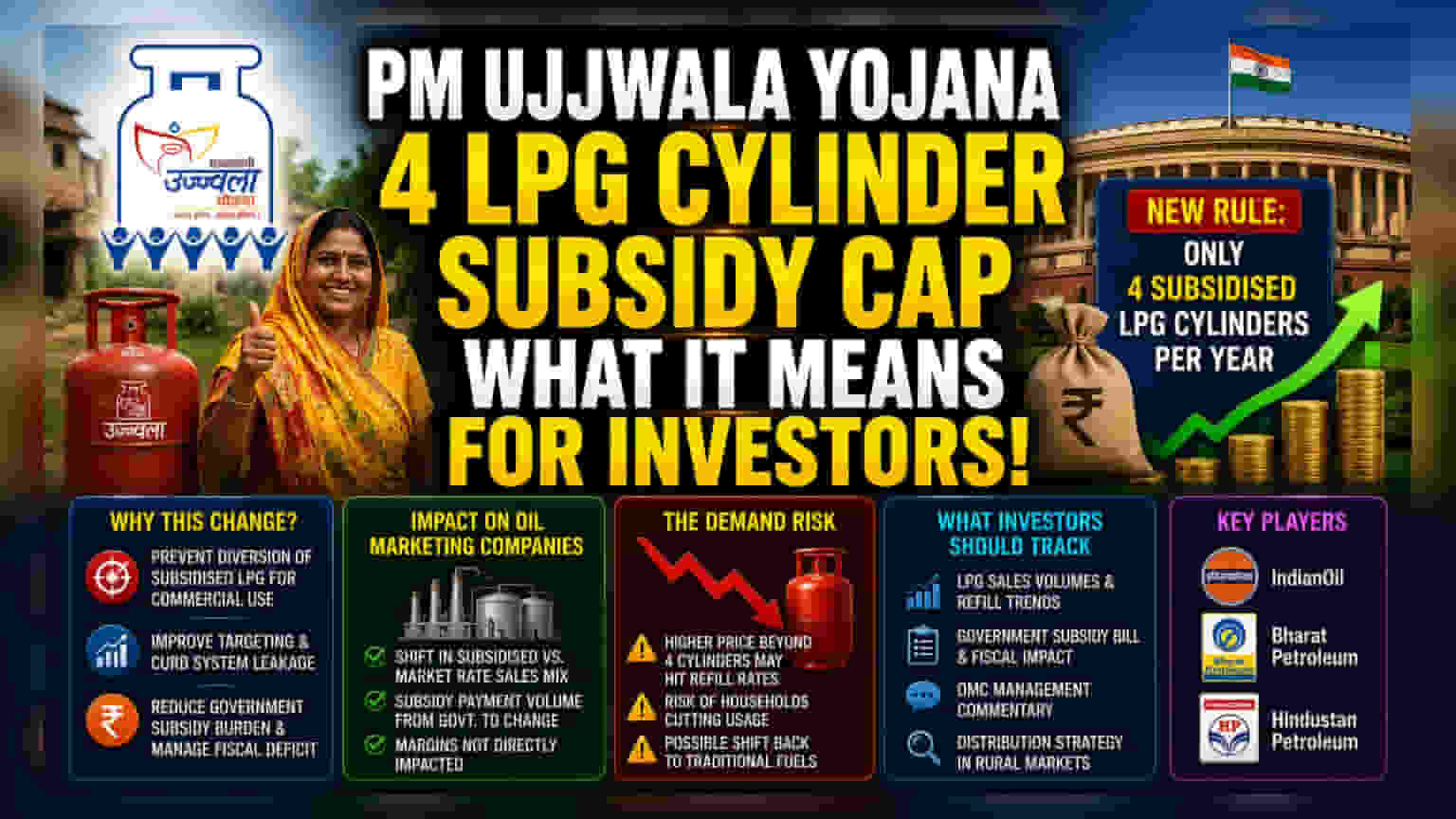


What Happened
The Indian government has introduced a new cap on the Pradhan Mantri Ujjwala Yojana (PMUY), restricting eligible beneficiaries to four subsidized LPG cylinders per year. Previously, the subsidy structure provided more flexibility. According to government statements, this decision is intended to improve the efficiency of the welfare program by stopping the diversion of subsidized gas for commercial use, which authorities identified as a major source of system leakage.
Why This Matters for Government Finances
This move is primarily a fiscal measure designed to manage the government's subsidy burden. By limiting the number of subsidized refills, the government aims to reduce its direct financial outgo on energy subsidies. Managing the fiscal deficit is a key priority for the administration, and rationalizing welfare spending is one way to keep expenditure within budget targets. This change signals a shift toward better targeting of benefits, ensuring that resources are focused on the households that need them most rather than those that might be misusing the system.
Impact on Oil Marketing Companies
For investors, the primary entities involved in this ecosystem are the state-run Oil Marketing Companies (OMCs) such as Indian Oil Corporation (IOCL), Bharat Petroleum Corporation (BPCL), and Hindustan Petroleum Corporation (HPCL). These companies are responsible for the distribution and supply of LPG across the country. Historically, OMCs have played a significant role in implementing government welfare schemes. A reduction in the subsidy cap means these companies will see a shift in how they receive and process subsidy payments from the government. While this does not directly lower the profit margins of these companies, it changes the volume of cylinders sold at the subsidized rate compared to the market rate.
The Demand Risk
While the government maintains that the cap covers the average consumption of most households, there is a risk regarding future demand. If the cost of LPG cylinders beyond the subsidized four becomes too high, some households might reduce their consumption or return to using traditional cooking fuels like wood or coal. This behavior would effectively lower the total demand for LPG, which is a metric that investors in OMCs track closely. Maintaining high penetration in rural and low-income markets is essential for the long-term growth of these energy firms, and any significant drop in usage could affect their overall sales volume.
What Investors Should Track
Investors may want to monitor the impact of this policy on LPG sales volumes for OMCs in the coming quarters. It will be important to see if there is any noticeable slowdown in refill rates among the Ujjwala beneficiary base. Additionally, market participants will watch for any government commentary regarding the total subsidy bill for the year and whether this step successfully reduces the fiscal burden. Management discussions from OMCs regarding their retail sales growth and any changes in their distribution strategy for rural markets will also provide clarity on how this policy is affecting the ground-level business.