

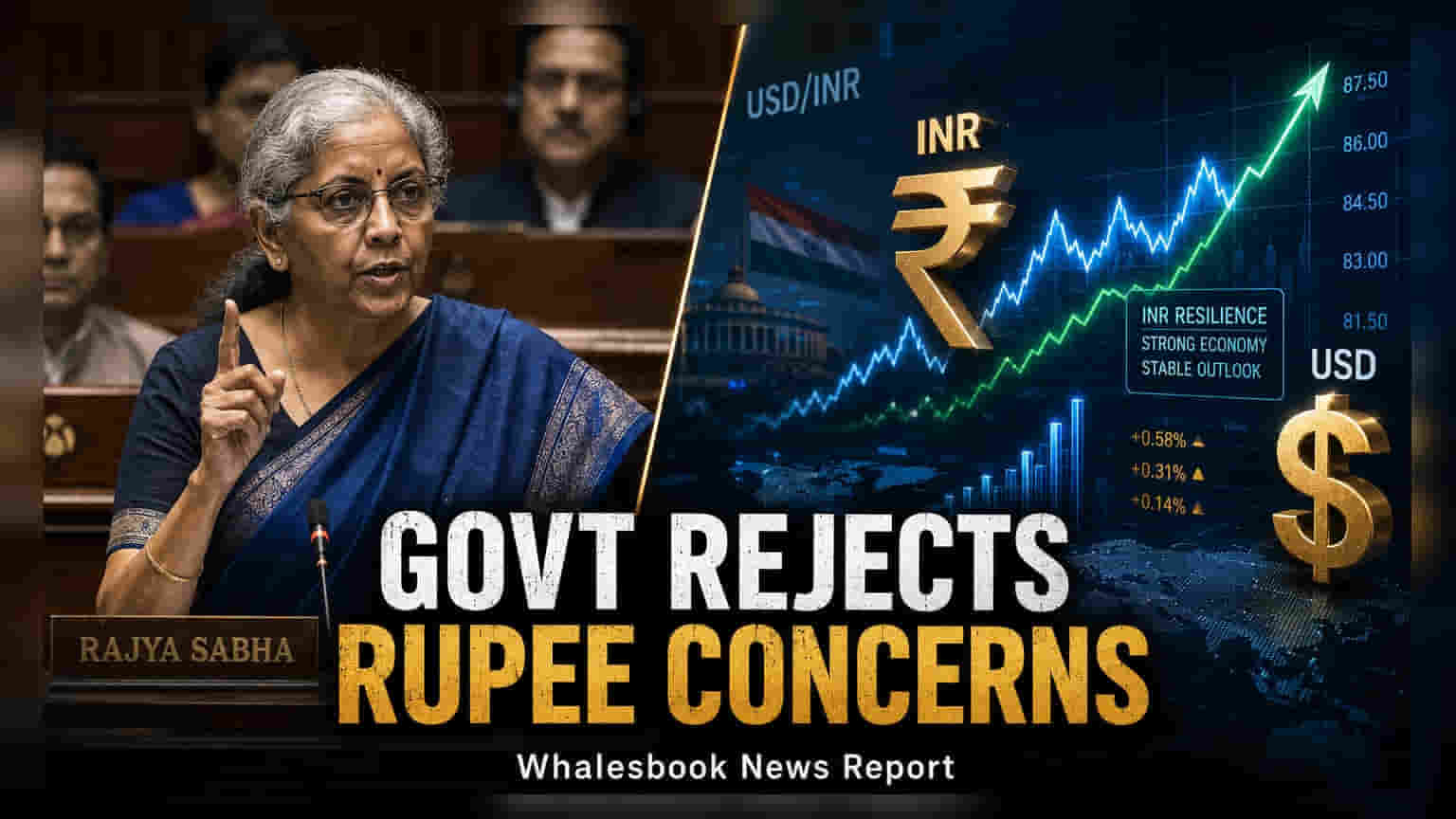
The government has clarified that the rupee's recent movement against the dollar does not reflect poor economic health. Officials emphasize steady GDP growth exceeding 7% for three years and strong foreign exchange reserves. For investors, this highlights the government's focus on maintaining stable macroeconomic conditions amid global market volatility.
Detailed Coverage
The Union government has addressed concerns regarding the weakening Indian rupee, stating that its fluctuations are a result of broader global and domestic factors rather than domestic economic instability. In a statement to the Rajya Sabha, Minister of State for Finance Pankaj Chaudhary emphasized that India's fundamental economic indicators remain robust, supported by consistent real GDP growth of over 7% across the past three fiscal years.
Factors Influencing Currency Movement
The rupee's value against the US dollar is determined by market forces, influenced by variables such as global capital flows, interest rate differentials, oil prices, and the country's current account deficit. The government clarified that there is no fixed target or band for the rupee. Instead, the Reserve Bank of India follows a policy of monitoring the foreign exchange market to manage excessive volatility, rather than setting a specific currency valuation. This approach allows the market to adjust to global developments, such as shifts in the monetary policies of major central banks and fluctuations in the Dollar Index.
Buffer Through Forex Reserves and Debt Management
To manage external pressures, the Reserve Bank of India has actively implemented measures to bolster foreign exchange inflows, including expanding the reach of government securities to foreign investors and simplifying norms for non-resident deposits. These efforts appear to have supported the country's external position. As of mid-June 2026, India's foreign exchange reserves reached $671.6 billion. This level of reserves is seen as a significant buffer, providing cover for approximately 10.3 months of goods imports.
Furthermore, the government highlighted that despite an increase in total external debt to $762.8 billion by the end of March 2026, the debt service ratio—which measures the proportion of export earnings needed to meet debt payments—improved to 5.8, down from 6.6 the previous year. This suggests that the cost of servicing external obligations has remained manageable relative to the country's foreign income.
What Investors Should Track Next
Investors may continue to monitor high-frequency economic indicators for the current fiscal year to gauge if domestic demand remains resilient against external global headwinds. Additionally, the Reserve Bank of India's stance on liquidity and its intervention frequency in the forex market will remain important signals for currency stability. Future updates on the balance of payments and any further adjustments to the External Commercial Borrowings framework will also provide insight into how the central bank plans to navigate potential global currency volatility in the coming months.