

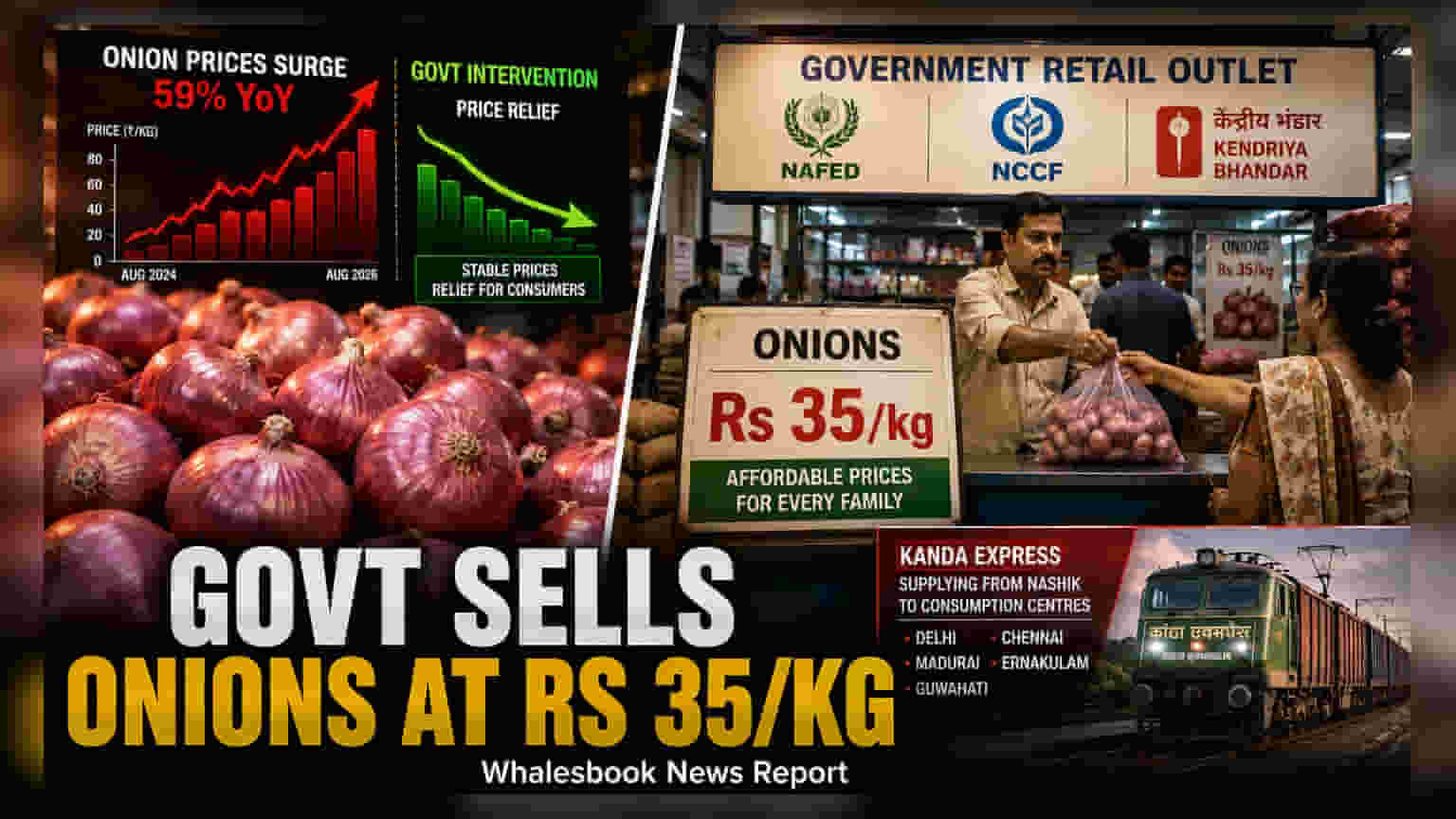
The Indian government has launched subsidized retail sales of onions at Rs 35 per kilogram to address a 59% year-on-year price surge. Distributed through NAFED, NCCF, and Kendriya Bhandar, the initiative utilizes the 'Kanda Express' rail network to boost supply in major cities including Delhi, Chennai, and Guwahati.
The central government has initiated a direct market intervention to stabilize rising onion prices, which have recorded a significant 59% year-on-year increase. To provide relief to consumers, onions are being sold at a subsidized rate of Rs 35 per kilogram through retail outlets managed by the National Agricultural Cooperative Marketing Federation of India (NAFED), the National Cooperative Consumers' Federation of India (NCCF), and Kendriya Bhandar.
To ensure an efficient flow of stock from production hubs to demand centers, the government is leveraging the 'Kanda Express' rail initiative. This transport system is currently moving bulk buffer stocks from Nashik to key consumption centers, including Delhi, Chennai, Madurai, Ernakulam, and Guwahati. The government is utilizing its current buffer stock of approximately 1.21 lakh tonnes to manage supply gaps and maintain price stability in the retail market.
From a broader economic perspective, the surge in onion prices is largely attributed to seasonal factors, festive demand, and disruptions in the supply chain. Persistent food inflation remains a critical factor for the Indian economy, as it directly impacts disposable income levels and influences the broader retail inflation trajectory, which is closely monitored by the Reserve Bank of India when setting monetary policy.
While this intervention aims to provide immediate relief, the effectiveness of such measures depends on the consistent availability of stock in retail markets. The August-September period is historically sensitive due to increased festive demand and weather-related supply constraints. Market analysts often watch these interventions for signals regarding how the government intends to manage agricultural commodity inflation without disrupting market dynamics. There is also the potential for persistent pressure from traders if supply chain bottlenecks are not fully resolved, which remains a key monitorable for the coming weeks.