

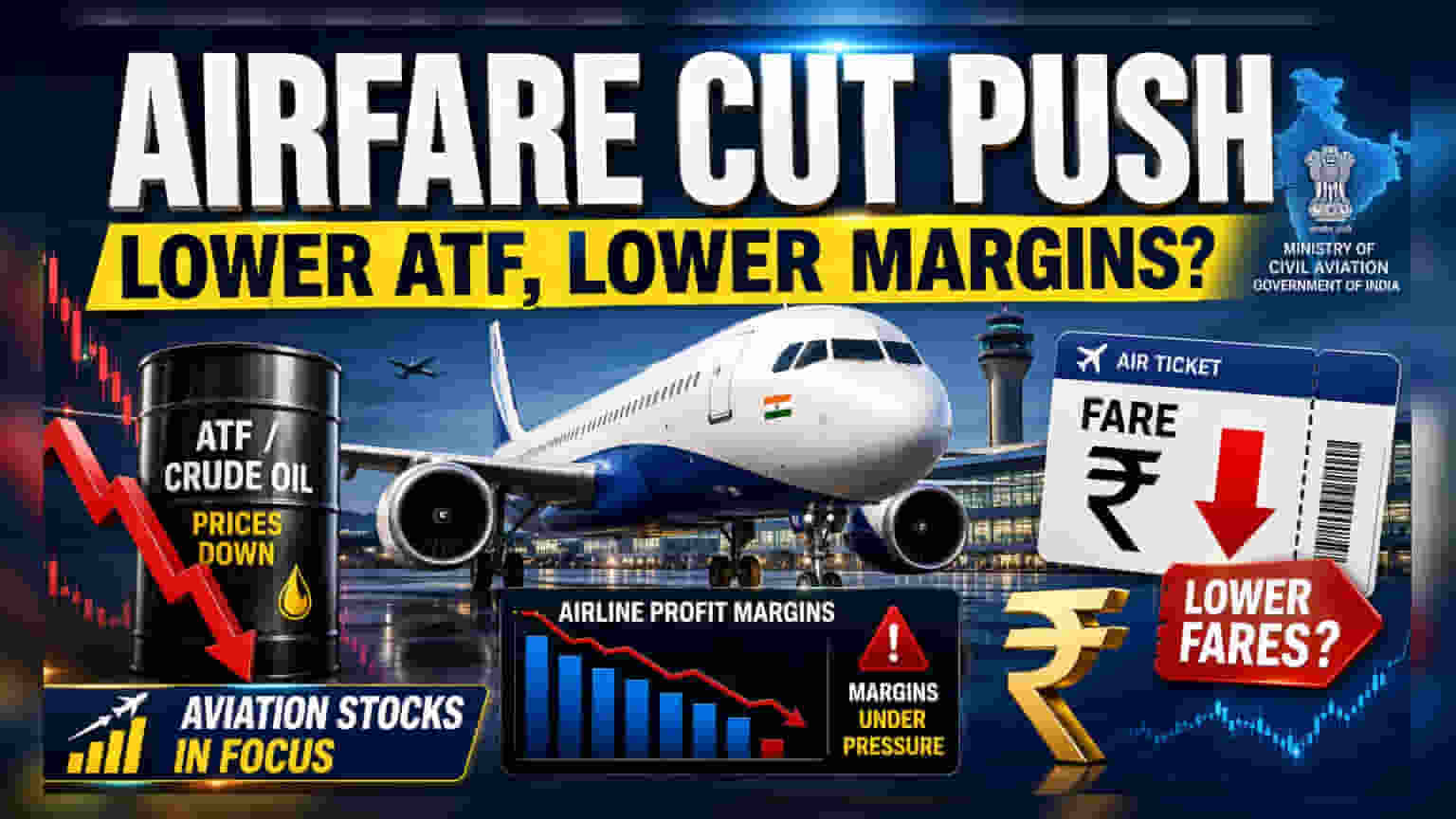
The Civil Aviation Ministry is considering asking domestic airlines to reduce fares and surcharges following a recent decline in aviation turbine fuel prices. For investors, this move highlights a potential tug-of-war between declining operating costs and government pressure on ticket pricing, which could impact future airline margins.
What Happened
India’s Civil Aviation Minister, K Ram Mohan Naidu, has indicated that the government is evaluating a push to have domestic airlines lower passenger fares and additional surcharges. This potential move follows the recent dip in aviation turbine fuel (ATF) prices, which have tracked the cooling trend in global crude oil markets. The government is currently engaging in discussions with airline operators to determine if the drop in fuel costs represents a long-term trend or a temporary fluctuation. The Minister stated that any final decision regarding fare or surcharge reductions will depend on the sustained stability of fuel costs in the coming months.
Why This Matters For Investors
For shareholders in the aviation sector, this development highlights the relationship between fuel costs and profitability. Aviation fuel is one of the largest operating expenses for airlines. When fuel prices fall, airlines typically benefit from improved profit margins if they maintain ticket prices. However, if the government successfully pressures airlines to pass these savings directly to passengers through lower fares, the potential benefit to the airline's bottom line may be limited.
Investors will need to watch whether this regulatory pressure gains traction. If the government mandates or strongly influences fare reductions, it could offset the margin expansion that airlines might otherwise enjoy from cheaper fuel. Companies like InterGlobe Aviation (IndiGo) and SpiceJet, which dominate the Indian market, are typically sensitive to changes in both fuel costs and government regulatory policies.
The Balancing Act
It is important to note that the government has previously implemented measures to support the industry, including capping ATF prices during volatile periods, reducing certain airport charges, and providing emergency credit lines. The Minister mentioned a past price stabilization fund of ₹10,000 crore, highlighting that the government does monitor industry health.
However, the current situation presents a different dynamic: the government is now looking at potential consumer relief rather than industry survival. For investors, the key monitorable is how the airline management teams balance passenger demand with the need to protect their profit margins. If ticket prices are forced lower, airlines will need to rely on higher passenger load factors—or the percentage of seats filled—to maintain their profitability.
Potential Risks and Uncertainties
While lower fuel prices are generally positive, the primary risk for investors is regulatory uncertainty. If the government intervenes in pricing, it introduces a variable that is outside the company’s control. Additionally, crude oil and jet fuel prices are notoriously volatile. If the government mandates price cuts and fuel prices spike again, airlines could find themselves in a difficult position, where they are locked into lower fares while facing higher operating costs.
What Investors Should Track Next
Investors should focus on the following:
- Management Commentary: Look for statements in quarterly earnings reports regarding fuel price trends and the impact of potential government pricing interventions.
- Quarterly Margins: Watch if the reported profit margins improve as expected from lower fuel costs, or if they stay flat, indicating that price cuts may have already been implemented.
- Fuel Price Movements: Monitor global crude oil trends, as they remain the primary driver of domestic ATF prices and the government’s stance on fare regulations.
- Regulatory Updates: Keep an eye on any formal directives or policy changes from the Ministry of Civil Aviation regarding airline pricing structures.