

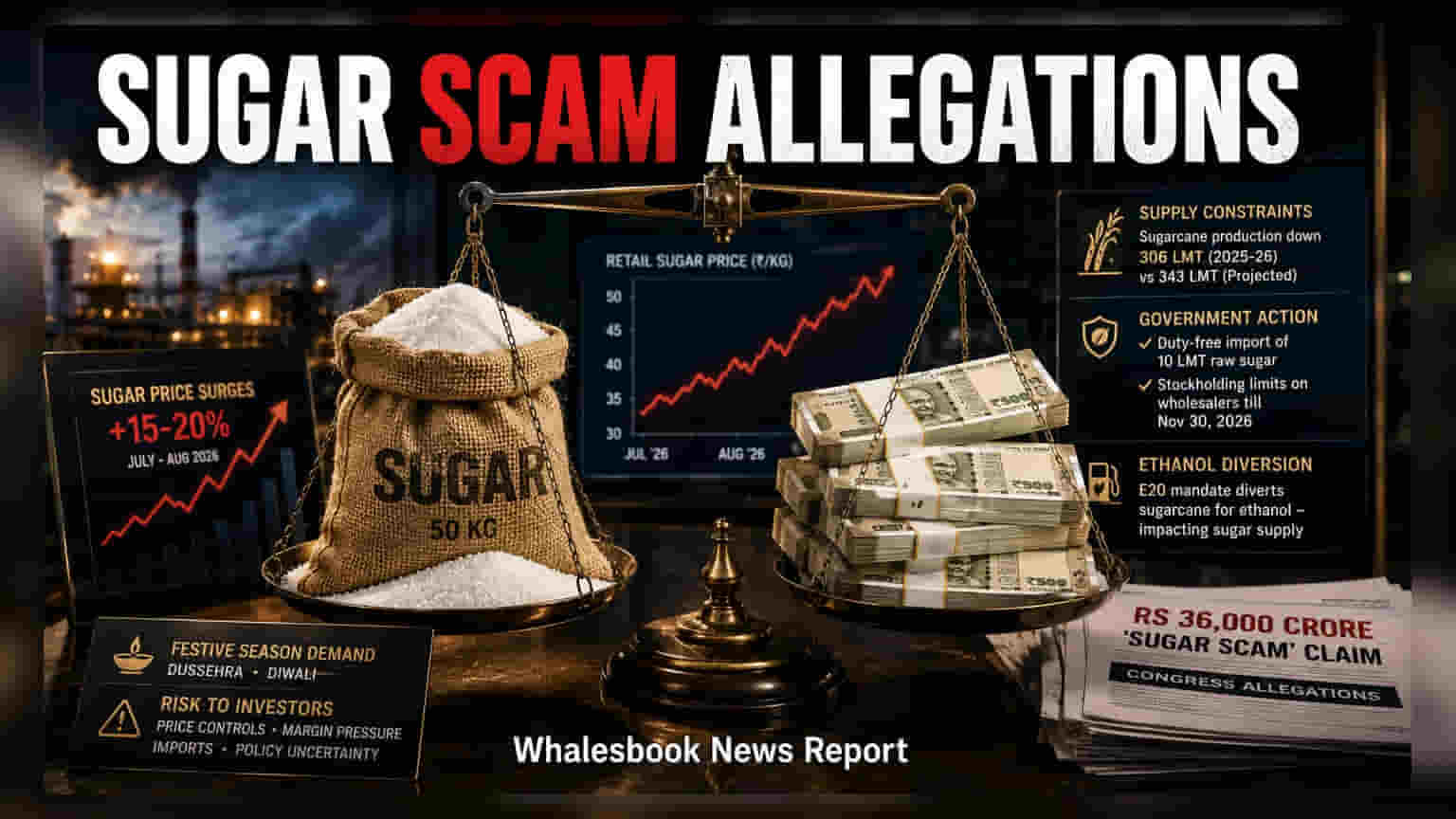
The Indian National Congress has alleged a Rs 36,000-crore sugar scam, attributing recent price hikes to policy mismanagement. The government has rejected these claims, citing lower production and weather-related factors, while introducing measures like duty-free imports and wholesale stock limits to stabilize prices. Investors are monitoring how these regulatory interventions might impact margins and supply chains for sugar manufacturers as the festive season begins.
The political discourse around sugar supply and pricing intensified on August 27, 2026, following allegations from the Indian National Congress regarding a Rs 36,000-crore 'sugar scam.' The opposition party argues that the central government failed to address an impending supply crunch, claiming that the diversion of sugarcane for ethanol production, combined with policy inaction, has allowed profiteers to manipulate the market ahead of the festive season. The party is calling for subsidized distribution to protect households from rising costs.
Government Measures to Stabilize Prices
The central government has denied these allegations, characterizing the price increases as a result of supply-side constraints rather than market manipulation. Official data shows a drop in sugarcane production for the 2025-26 season, with output estimated at 306 lakh metric tonnes (LMT), falling short of the initial projections of 343 LMT. To counter the rising inflationary trend, which saw retail sugar prices climb approximately 15-20% between late July and late August 2026, the government has implemented two key regulatory actions.
First, authorities have authorized the duty-free import of 10 lakh metric tonnes of raw sugar to augment domestic availability. Second, the government has imposed strict stockholding limits on wholesale sugar dealers, which will remain in effect until November 30, 2026. These measures aim to prevent hoarding and ensure a steady supply during the high-demand months of Dussehra and Diwali.
The Impact of Ethanol Policy
A central point of the ongoing debate is the government's E20 ethanol-blending mandate. Critics argue that diverting sugarcane for ethanol production has constricted the amount of cane available for sugar manufacturing. While the government maintains that the E20 initiative is a crucial long-term strategy for energy independence and agricultural reform, the current supply tension has brought the trade-offs between food security and fuel production into sharp focus. Investors are noting that any future shifts in government policy regarding ethanol diversion could significantly alter the supply-demand balance for sugar companies.
Investor Monitorables
For investors, the situation introduces specific regulatory and operational risks. Stockholding limits and potential price controls can impact the inventory turnover and profit margins of sugar mills, as they limit the ability of dealers to hold stock and may dampen pricing power during peak demand periods. Furthermore, the duty-free import of sugar generally helps cool domestic prices, which may create a ceiling for local sugar realizations.
Looking ahead, market participants will likely track the actual arrival of imported sugar, the effectiveness of the stockholding limits in curbing price volatility, and the government’s next steps regarding ethanol diversion. If production remains low and festive demand outstrips supply, further regulatory interventions—or adjustments to trade policy—could remain a possibility. Investors may monitor company-level updates to see how individual mills manage their production mix between sugar and ethanol under these changing regulatory conditions.