

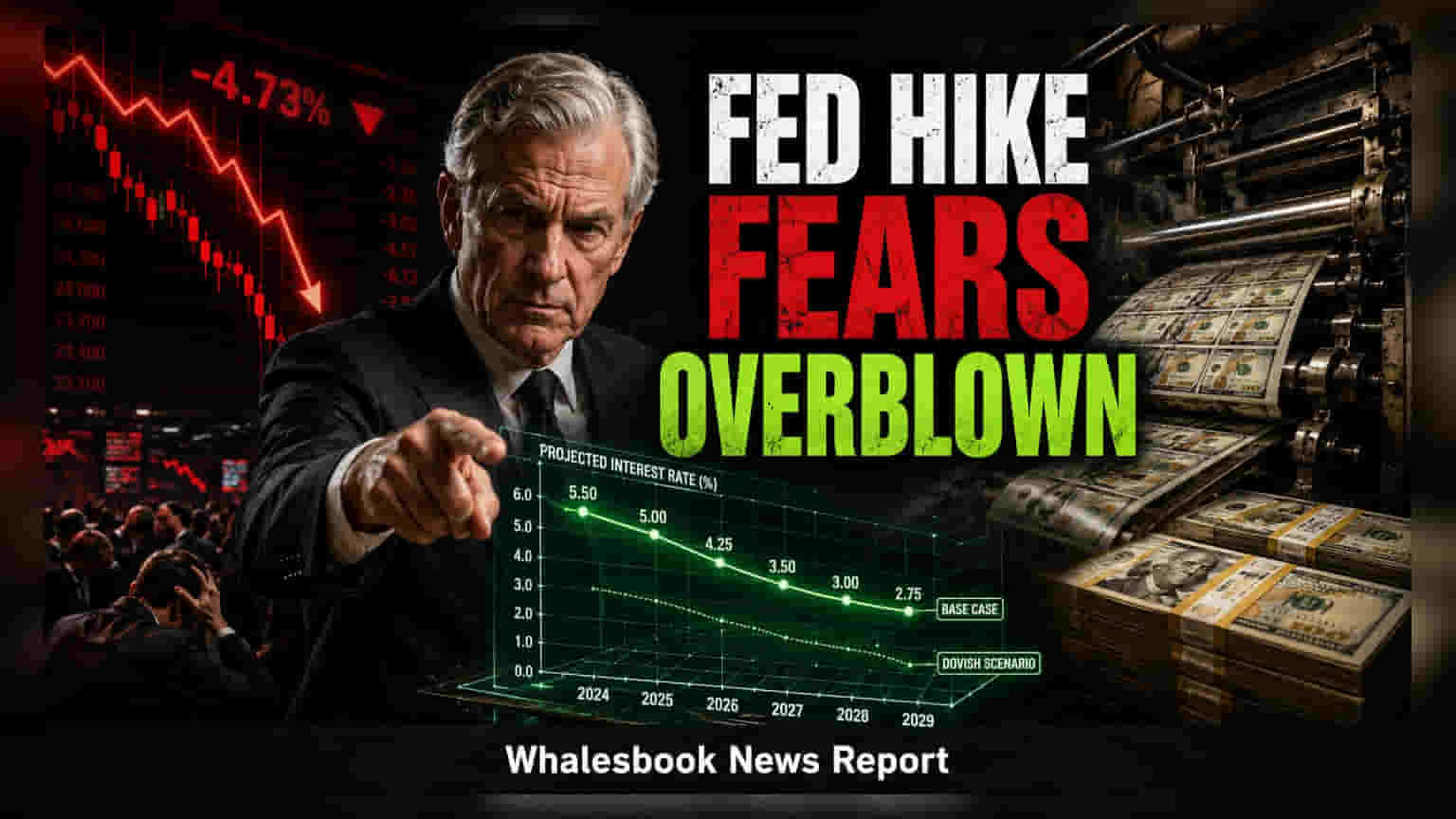
Goldman Sachs warns that market expectations for US Federal Reserve interest rate hikes are too aggressive. The bank points to cooling inflation and softer jobs data as reasons to expect a continued pause in rates for the rest of 2026. This outlook could shift global market sentiment and influence foreign fund flows.
Goldman Sachs is signaling that financial markets are miscalculating the path of US interest rates. In a recent analysis, the investment bank’s chief economist, Jan Hatzius, cautioned that market participants are overestimating the likelihood of further rate hikes by the Federal Reserve this year.
The investment bank bases this view on a clear set of economic indicators. Recent data from the US shows cooling inflation, weaker retail sales, and disappointing employment numbers. According to the firm’s baseline forecast, these trends suggest that a rate increase in the near term is highly unlikely. Instead, the bank expects the Fed to keep rates steady in the 3.50% to 3.75% range for the remainder of 2026.
For Indian investors, the US interest rate environment is a critical factor. US monetary policy dictates global liquidity, influencing the strength of the US Dollar and, by extension, the Indian Rupee. When the US Fed takes a 'dovish' stance—meaning they hold rates steady or signal a pause—it generally reduces the pressure on emerging market currencies like the Rupee. It can also encourage foreign institutional investors (FIIs) to increase allocations to riskier assets in emerging markets like India, rather than keeping funds in safer US government bonds.
However, there is a risk factor that investors should keep in mind. While cooling inflation is a positive signal for bond markets, the US Treasury market is facing separate challenges. Substantial government borrowing and ongoing fiscal concerns mean that investors often demand higher yields to hold long-term government debt. This phenomenon can keep long-term yields elevated, even if the Fed stops raising short-term rates. For equity markets, consistently high bond yields can act as a hurdle, making riskier stocks look less attractive by comparison.
Goldman Sachs, while not listed on the Indian stock exchanges, remains a highly influential participant in the Indian capital markets through its role as a major foreign investor. Its outlook helps set the mood for global institutional capital.
Investors looking ahead should monitor upcoming US employment reports and personal consumption expenditures (PCE) inflation data. These indicators will likely be the deciding factors for the Federal Reserve’s next move and will determine whether the current market recalibration—which has pushed expectations for the next hike well into 2027—proves to be correct.