

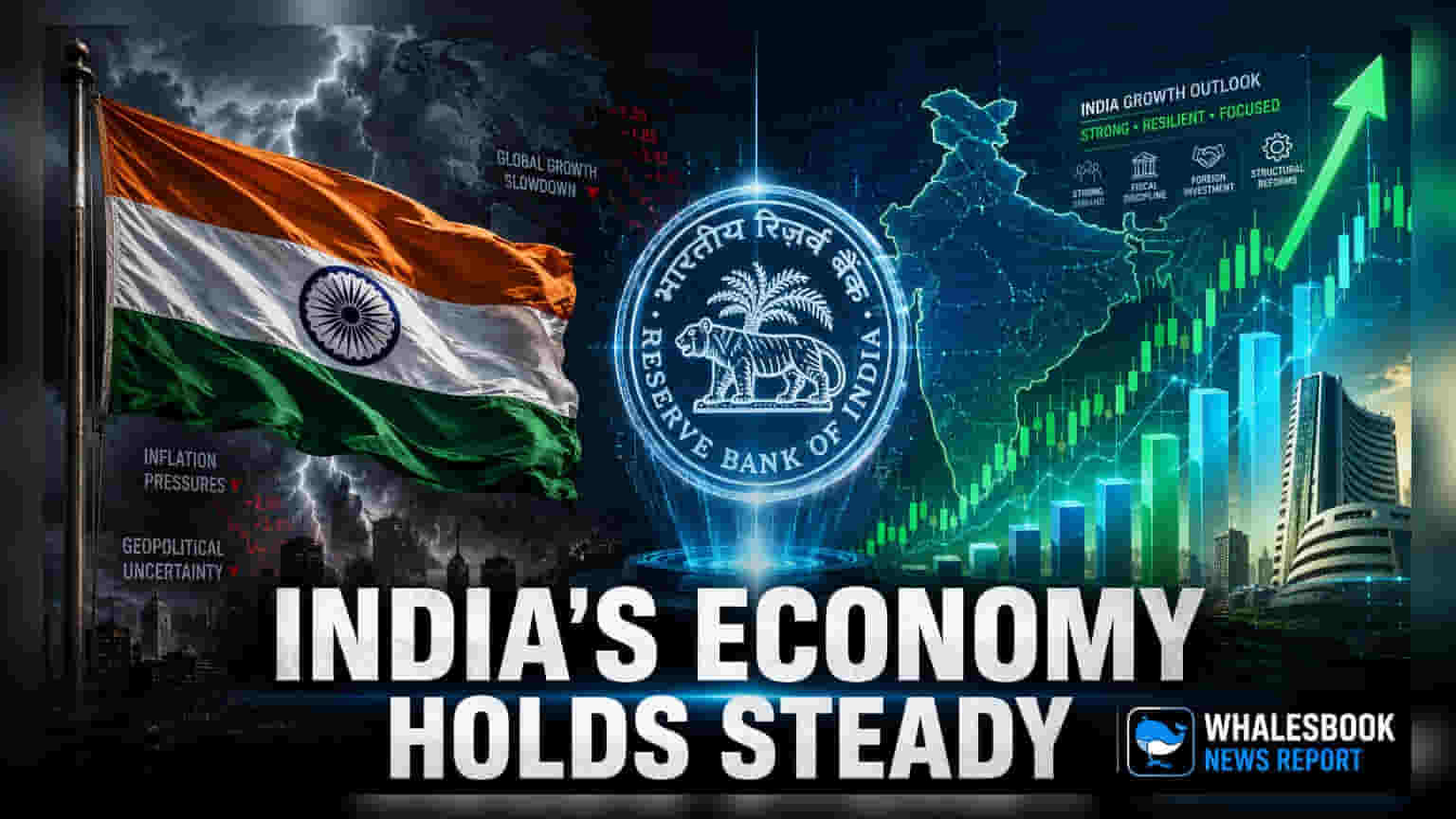
Goldman Sachs has increased India's growth estimate for FY27 to 6.5%, citing falling crude oil prices and easing inflation. Strong domestic demand and consistent infrastructure spending continue to drive the economy despite global geopolitical tensions.
What Happened
India's economic outlook has received a boost as Goldman Sachs raised its growth projection for the nation to 6.5% for the 2026-27 financial year (FY27). This revision comes at a time when global markets face uncertainty from geopolitical conflicts, particularly in West Asia. The upgrade is supported by the expectation of lower inflation, driven by the recent cooling of global crude oil prices. This outlook reflects the economy's ability to maintain momentum through a combination of steady domestic demand, industrial output, and active government policy management.
Fiscal Strategy and Infrastructure Spending
The government continues to prioritize fiscal consolidation, aiming to reach its fiscal deficit target of 4.3% of GDP. Rather than opting for large, broad-based stimulus measures, policymakers have focused on supply chain stability and consistent capital spending. Data from the initial months of the current fiscal year indicates that capital expenditure has moved ahead of the budgeted pace, exceeding one-fifth of the total allocation. This ongoing investment in roads, railways, defense, and telecommunications remains a core pillar of the government's economic strategy.
The Drivers of Economic Resilience
Several factors are contributing to this stability. Robust GST collections and strong performance in both the manufacturing and services sectors signal that domestic activity remains healthy. Additionally, the latest readings from the Moneycontrol Eco Pulse index climbed to 54.5 in May, up from 51.2 in April, suggesting that the economy is gaining strength rather than slowing down. Analysts also point to healthier corporate and bank balance sheets, which have significantly improved the country's capacity to absorb external financial shocks.
The Role of Exports and Policy
India's export sector has shown notable resilience, with double-digit growth recorded over the past two months. This success is being attributed to a strategic diversification of trade partners. Furthermore, the anticipation of finalized trade agreements, such as a potential India-UK free trade deal, and progress in India-US trade negotiations, are expected to provide additional support to the external sector. These initiatives are designed to improve market access and attract foreign capital inflows.
Challenges to Monitor
Despite the positive outlook, experts emphasize that certain risks remain. An uneven monsoon season could pose a threat to agricultural productivity and rural demand. If rainfall levels are insufficient, it could lead to localized food price pressures, potentially impacting overall inflation. Additionally, the economy remains exposed to global commodity price volatility and the resolution of remaining international trade disputes. Investors will continue to watch how these factors evolve alongside the government's progress on infrastructure execution and fiscal targets.