

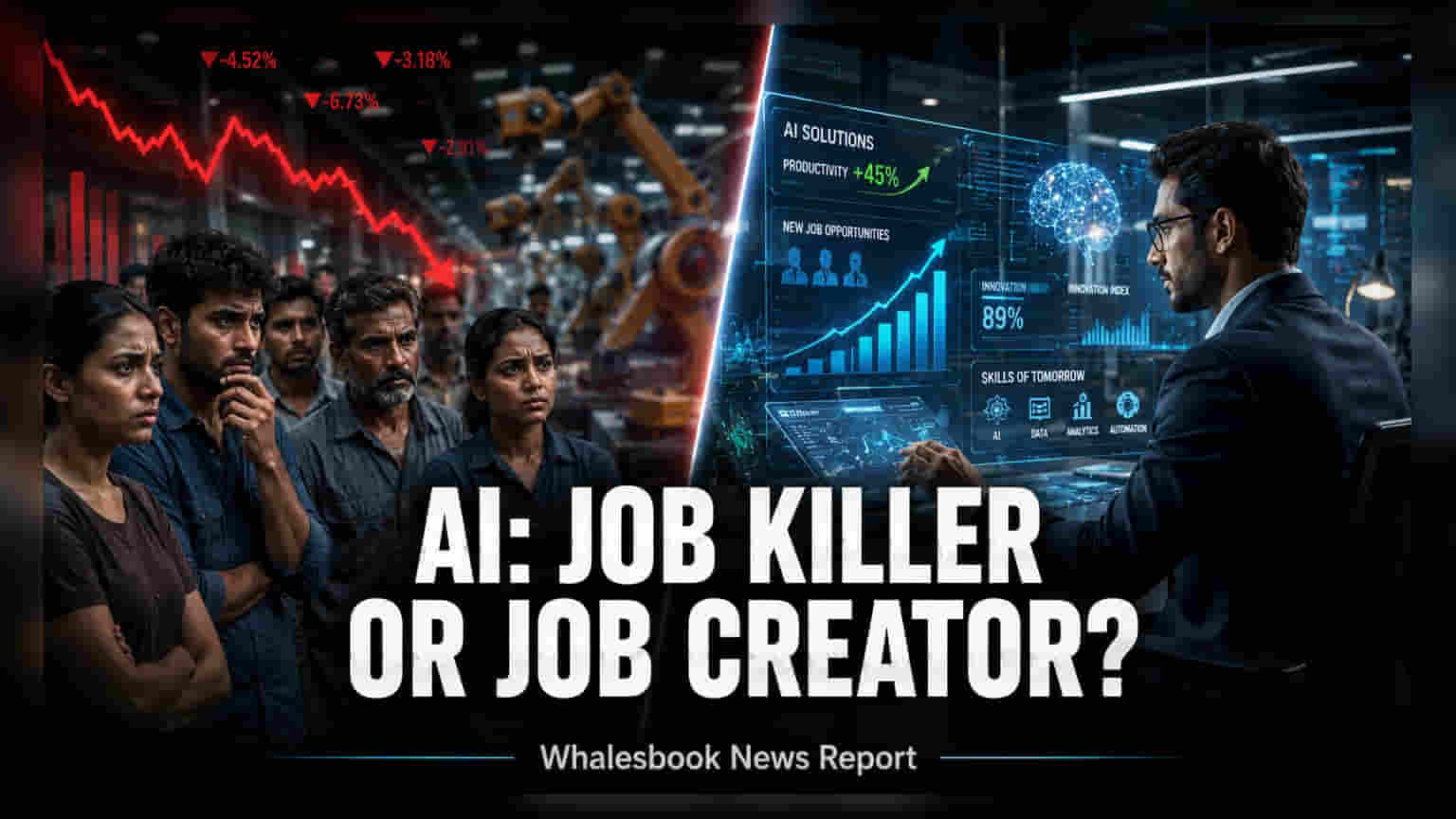
A recent Goldman Sachs report indicates that generative AI will likely automate repetitive, low-complexity tasks while acting as a supportive tool for complex, skill-intensive roles. This shift is expected to fundamentally transform workforce productivity across sectors like finance, retail, and healthcare, rather than causing widespread job losses.
A report from Goldman Sachs suggests that the rise of generative artificial intelligence is set to reshape the modern workforce by focusing on the nature of tasks rather than specific industries. The study finds that jobs consisting primarily of routine, repetitive functions face the highest risk of automation, while roles that require human judgment, empathy, and complex problem-solving are more likely to be improved by AI tools.
Task Complexity and Automation Risk
The report classifies professional activities by their complexity. Low-level, repetitive tasks are the most vulnerable to being handled by AI systems. Conversely, as the level of expertise and insight required for a job increases, the technology tends to shift from being a replacement to a productivity-enhancing partner. This means that while some operational roles may diminish, many professional fields will see workers using AI to handle basic modeling, research, or data entry, allowing them to focus on high-value decision-making.
Impact on Key Service Sectors
In the financial services industry, which plays a central role in the Indian economy, basic compliance checks and back-office operations are identified as areas at risk of automation. However, for analysts and senior professionals, the technology is expected to assist in automating basic financial modeling, which could lead to faster turnaround times for research and reporting.
Similarly, in the retail sector, while cashier roles face potential replacement from self-checkout systems and automated inventory management, sales staff may use AI to provide personalized customer experiences. In healthcare, administrative duties such as patient scheduling are susceptible to automation, but AI is being viewed as a potential tool for doctors to improve diagnostics and treatment precision. The education sector is seeing a parallel trend, where AI-powered tools may handle repetitive tasks like grading standardized assessments while assisting educators with personalized learning plans.
Economic and Employment Implications
For Indian investors, the transition to AI-integrated business models carries significant implications for operational efficiency. Companies that successfully adopt these tools to augment their workforce may see improvements in profit margins through reduced overhead costs and increased output per employee. However, the risk for firms remains in the execution phase, as businesses must manage the transition for existing employees and invest in new infrastructure to support AI integration.
Investors should monitor how companies across the banking, retail, and healthcare sectors manage their capital spending on AI adoption. The long-term financial impact will depend on a company’s ability to successfully integrate these technologies to boost productivity without facing disruptions in workforce stability or facing high implementation costs that could strain short-term cash flow.