

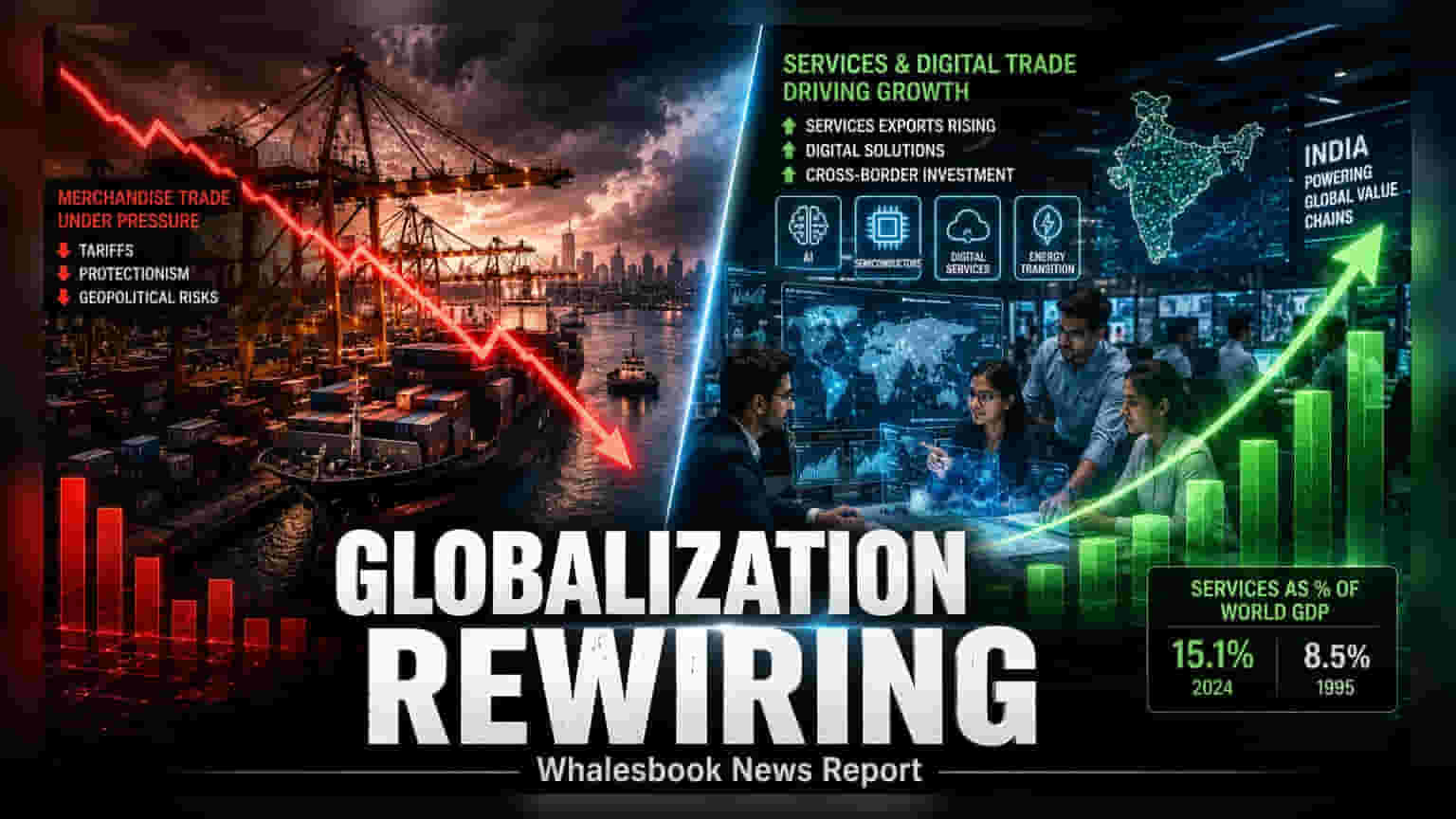
Global trade is shifting from physical goods to services, digital flows, and strategic technology investments. For Indian investors, this trend highlights a pivot toward IT, tech infrastructure, and specialized manufacturing, even as traditional goods exports face pressure from rising tariffs and supply chain complexities.
The global economy is currently navigating a structural transformation, often referred to as 'Globalization 2.0.' Unlike the previous era of trade that focused heavily on the movement of raw materials and finished physical products, this new phase emphasizes services, digital solutions, and cross-border investment in strategic technologies like AI, semiconductors, and energy transition components.
The Shift in Trade Patterns
Traditional merchandise trade has encountered significant headwinds recently. Rising tariffs, trade protectionism, and geopolitical fragmentation have made the exchange of physical goods more complex and costly. For many economies, including India, the reliance on high-volume goods exports is increasingly being tested by international regulatory hurdles and shifting trade policies. In contrast, services—ranging from software and consulting to financial services—have shown remarkable resilience and growth. Services as a share of world GDP reached 15.1% in 2024, compared to 8.5% in 1995, highlighting the deepening integration of the global economy through digital and intellectual capital.
India's Strategic Position
For the Indian economy, this evolution presents a distinct opportunity. India has emerged as a powerhouse in services exports, particularly through its robust IT sector, business process management, and the rapid expansion of Global Capability Centers (GCCs). The government’s recent focus on securing free trade agreements with major blocs and enhancing the competitiveness of its services sector aims to capitalize on this shift. By integrating more deeply into global value chains, India is attempting to transition from a consumer of global trends to a key provider of essential digital and business infrastructure.
Investor Implications and Monitorables
Investors are observing a redirection of capital toward sectors that define future competitiveness. Companies and funds are increasingly prioritizing investments in energy-efficient technologies, data centers, and AI infrastructure. This concentration of capital suggests that the next decade of growth may be driven by companies that provide the backbone for this digitized global economy, rather than those solely dependent on traditional manufacturing volume.
However, this transition is not without challenges. The manufacturing sector continues to navigate risks such as higher compliance costs, carbon border adjustments, and potential trade barriers. For instance, while India has seen strong manufacturing demand, persistent import reliance for industrial inputs and energy can impact profitability.
Looking ahead, investors may focus on three key monitorables. First, the growth trajectory of services exports, which are increasingly becoming a cushion against merchandise trade volatility. Second, the effectiveness of new trade agreements in mitigating tariff risks for Indian exporters. Third, the pace of private capital investment in strategic sectors like semiconductors and green energy, which will signal the long-term sustainability of India’s economic integration.