 Whalesbook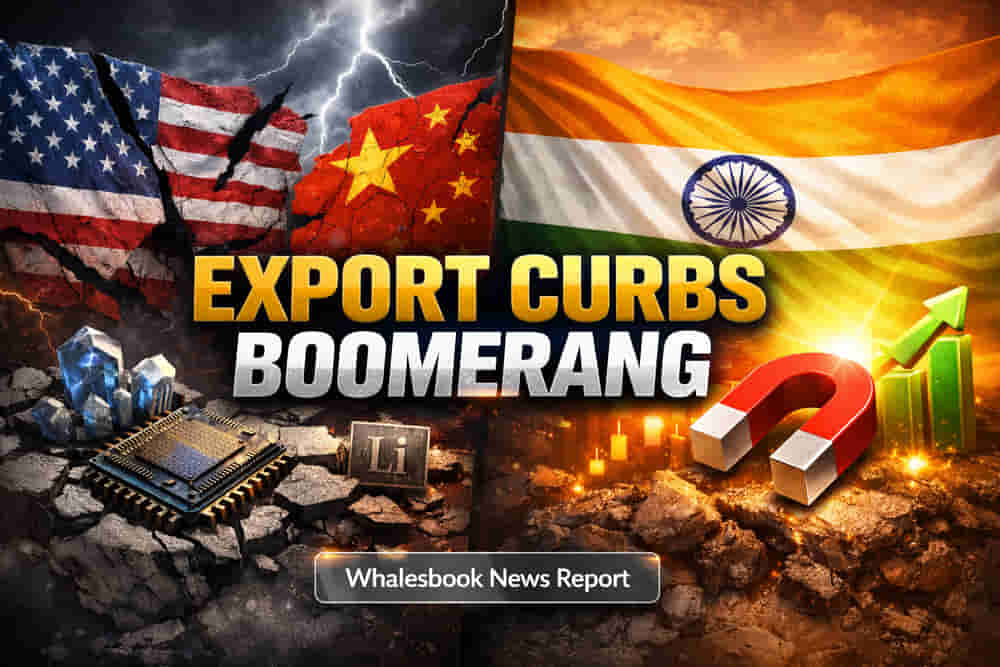
The Futility of Export Curbs: A Global Lesson
Export restrictions, often presented as powerful tools for economic coercion and strategic advantage, frequently fall short of their intended goals. Recent experiences from the United States and China starkly illustrate this paradox. Policies restricting outbound shipments of critical inputs and intermediates often inadvertently push recipient countries towards greater self-reliance, while simultaneously inflicting significant financial damage on the exporting nations' own businesses.
Unintended Consequences for Tech Giants
When the U.S. imposed restrictions on advanced semiconductor exports to China, the objective was to impede Beijing's technological advancement. However, this measure had the opposite effect, accelerating China's domestic semiconductor development. Cut off from essential chips, China intensified its focus on building its own semiconductor ecosystem. This has reportedly cost American firms over $33 billion in lost sales to companies like Huawei alone between 2021 and 2024. The realization of these substantial losses has prompted a policy shift, with the Trump administration reportedly considering allowing Nvidia to export certain advanced chips to China. The rationale is that continued exports maintain China's dependence on U.S. technology, whereas outright bans only expedite its drive for self-sufficiency, leading to billions in lost revenue for American companies.
China's Retaliation and Global Diversification
In direct response to U.S. chip curbs, China retaliated by imposing its own export restrictions on rare earth elements, materials crucial for electric vehicles and defense systems. Beijing further expanded these controls in October 2025, specifically targeting semiconductors and defense sectors. Nevertheless, these measures, intended as leverage, have spurred importing nations like Japan, Europe, and the U.S. to ramp up their domestic production, explore substitutes, and invest heavily in recycling technologies. American firm MP Materials, for instance, increased its domestic rare earth output to 15% of global supply. Consequently, demand for Chinese rare earths has diminished, proving that export controls can erode a nation's market dominance and credibility as a supplier.
India's Strategic Response
Recognizing the vulnerability to such trade tactics, India has initiated several measures to reduce its reliance on Chinese exports, particularly for rare earth magnets and other critical inputs. The Indian government has approved an incentive scheme valued at ₹7,280 crore to establish domestic capacity for approximately 6,000 tonnes per year of rare earth permanent magnets. These magnets are vital for electric vehicles, defense, and renewable energy sectors. The scheme includes sales-linked incentives and capital support for companies involved in extraction, processing, and magnet manufacturing, aiming to lessen import dependence.
Furthermore, India has launched the National Critical Mineral Mission (NCMM), approved in early 2025 with an outlay of around ₹16,300 crore. This mission focuses on securing supplies of 30 identified critical minerals, including rare earth elements, lithium, cobalt, and nickel, while simultaneously building robust domestic value chains. A dedicated seven-year national initiative is underway to develop the entire rare earth value chain, offering subsidies, tax incentives, R&D grants, and expedited clearances to foster domestic capabilities.
Key Lessons for India
India's own past export restrictions, often implemented to manage domestic concerns like inflation in commodities such as steel, rice, wheat, or sugar, carry similar risks. Such measures can incentivize import-dependent countries to boost their own output, alter crop patterns, or impose import barriers. For instance, when India restricted sugar exports, Bangladesh reportedly turned to Pakistan for supplies. Over time, this can diminish India's export potential and damage its reputation as a reliable global supplier.
Stringent export curbs on essential items can also be self-defeating domestically. They can signal severe supply shortages, encouraging hoarding and speculation, which then renders the curbs ineffective in controlling domestic prices. Frequent and unpredictable export bans can discourage long-term contracts and investments in affected sectors. In an interconnected global economy, nations cannot effectively micromanage supply chains without repercussions. Export controls, while appearing to be an easy policy lever, historically tend to backfire.
Impact
This news has a significant impact on international trade dynamics, potentially affecting global supply chains for critical minerals and technology components. For India, it underscores the need for self-reliance, potentially leading to increased investment in domestic manufacturing and resource development, which could indirectly influence Indian businesses and investor sentiment in related sectors. For global markets, it highlights the risks associated with protectionist policies.
Impact Rating: 7/10
Difficult Terms Explained
- Export curbs: Restrictions imposed by a country on the sale of its goods or services to other countries.
- Economic coercion: The use of economic power or influence to influence or control the behavior of another country.
- Strategic leverage: The ability to influence or control the actions of another party through the use of strategic advantages.
- Self-reliance: The ability to do things for oneself without outside help; independence.
- Collateral damage: Unintended harm or destruction caused by an action, especially in war or business.
- Commercial policy: Government policies related to international trade and business.
- Semiconductor: A material with electrical conductivity between that of a conductor and an insulator, used in electronic components like computer chips.
- Rare earth elements: A group of 17 chemically similar metallic elements with unique properties vital for many modern technologies.
- Economic statecraft: The use of economic policy and tools to achieve foreign policy and national security objectives.
- Value chains: The full range of activities or the companies involved in the creation of a product or service.