 Whalesbook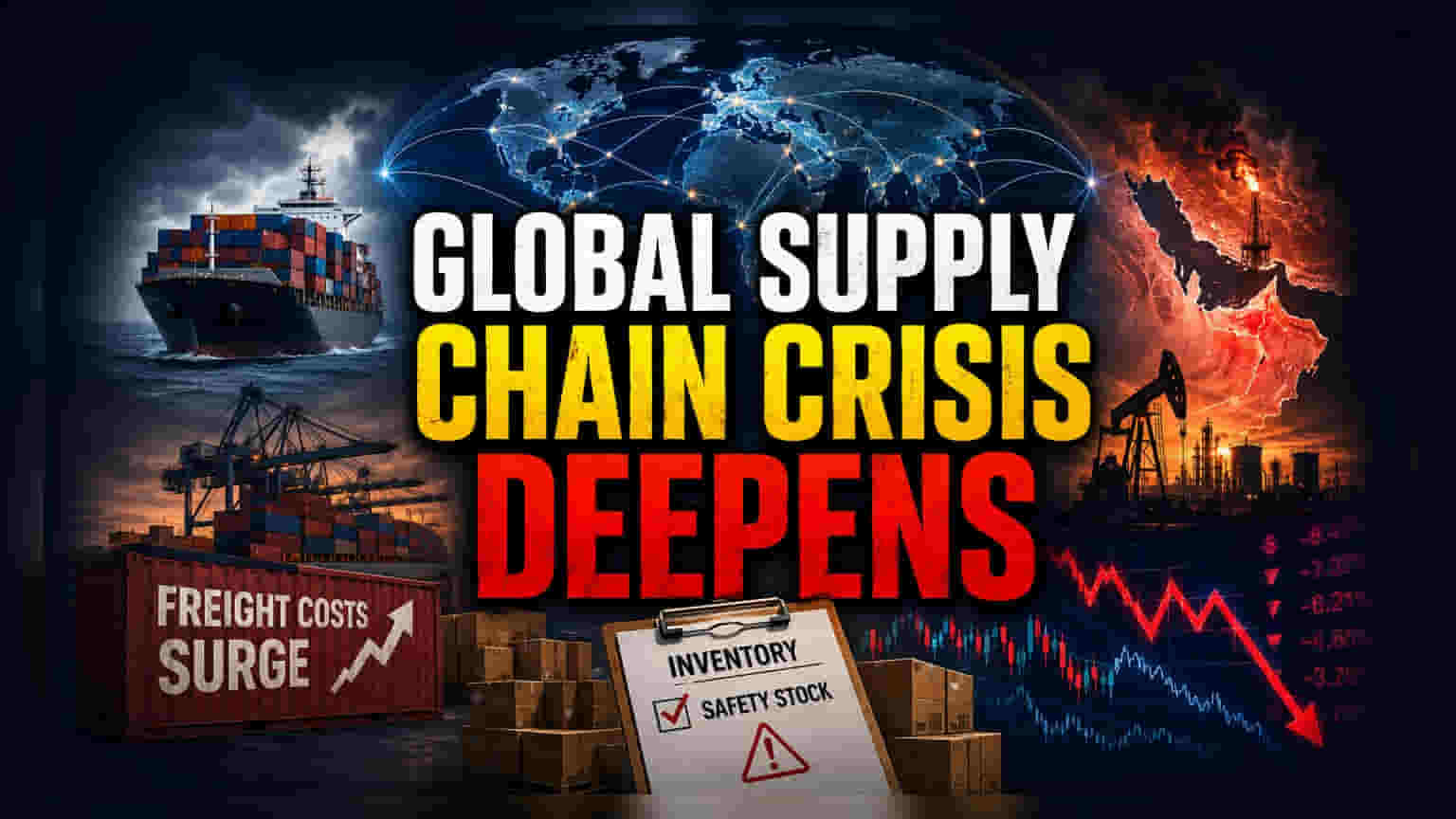


The Illusion of Stabilization
The modest decline in the New York Federal Reserve's Global Supply Chain Pressure Index, moving from 1.82 to 1.77, fails to capture the structural deterioration occurring beneath the surface. While the index provides a statistical snapshot of easing logistics bottlenecks, it masks a more aggressive inventory-loading behavior among major manufacturers. This front-loading behavior is less a sign of returning efficiency and more a defensive posture against the enduring blockade of the Strait of Hormuz. When companies pull demand forward to hedge against future scarcity, they create an artificial floor for prices, ensuring that volatility remains high even if the raw index figures suggest a slight cooling.
Geopolitical Risk and Freight Inflation
Beyond the GSCPI, the true health of the global transit network is better reflected in the persistent surge of the Drewry World Container Index. Freight costs have decoupled from the logistical improvements cited by the New York Fed, indicating that shipping lines are factoring in significant risk premiums for transit through high-threat zones. The current environment is characterized by a "fear premium" that has not yet been priced out of consumer goods. Unlike the post-pandemic supply chain recovery, which was driven by the normalization of port operations, the current strain is exogenous and political. Should the transit corridors through the Middle East remain constricted, these elevated freight costs will inevitably trigger a second wave of margin compression for manufacturing-heavy economies.
The Forensic Bear Case
The current economic environment presents a distinct risk of a stagflationary trap. When businesses prioritize inventory accumulation over capital expenditure, they sacrifice liquidity to combat supply uncertainty. This behavior creates a precarious feedback loop; firms are currently maintaining output levels by drawing down future demand, effectively borrowing from their own future balance sheets. If the geopolitical stalemate continues, manufacturers in Asia will face a critical juncture where petroleum reserve exhaustion meets rising input costs. Furthermore, the reliance on high-cost, air-freighted alternatives to mitigate ocean delays is eroding operating margins for companies that cannot easily pass these costs on to inflation-weary consumers.
Forward Outlook
Market analysts remain concerned that the J.P. Morgan Global Composite PMI, while stable at 51.8, is being held aloft by this inventory front-loading. Investors should monitor forward-looking guidance in upcoming earnings reports for specific mentions of freight surcharges and "safety stock" levels. The consensus among institutional observers is that the window for a soft landing is narrowing, as the persistent supply side friction forces central banks to maintain higher-for-longer policy stances to prevent supply-driven inflation from becoming embedded in wage expectations.