 Whalesbook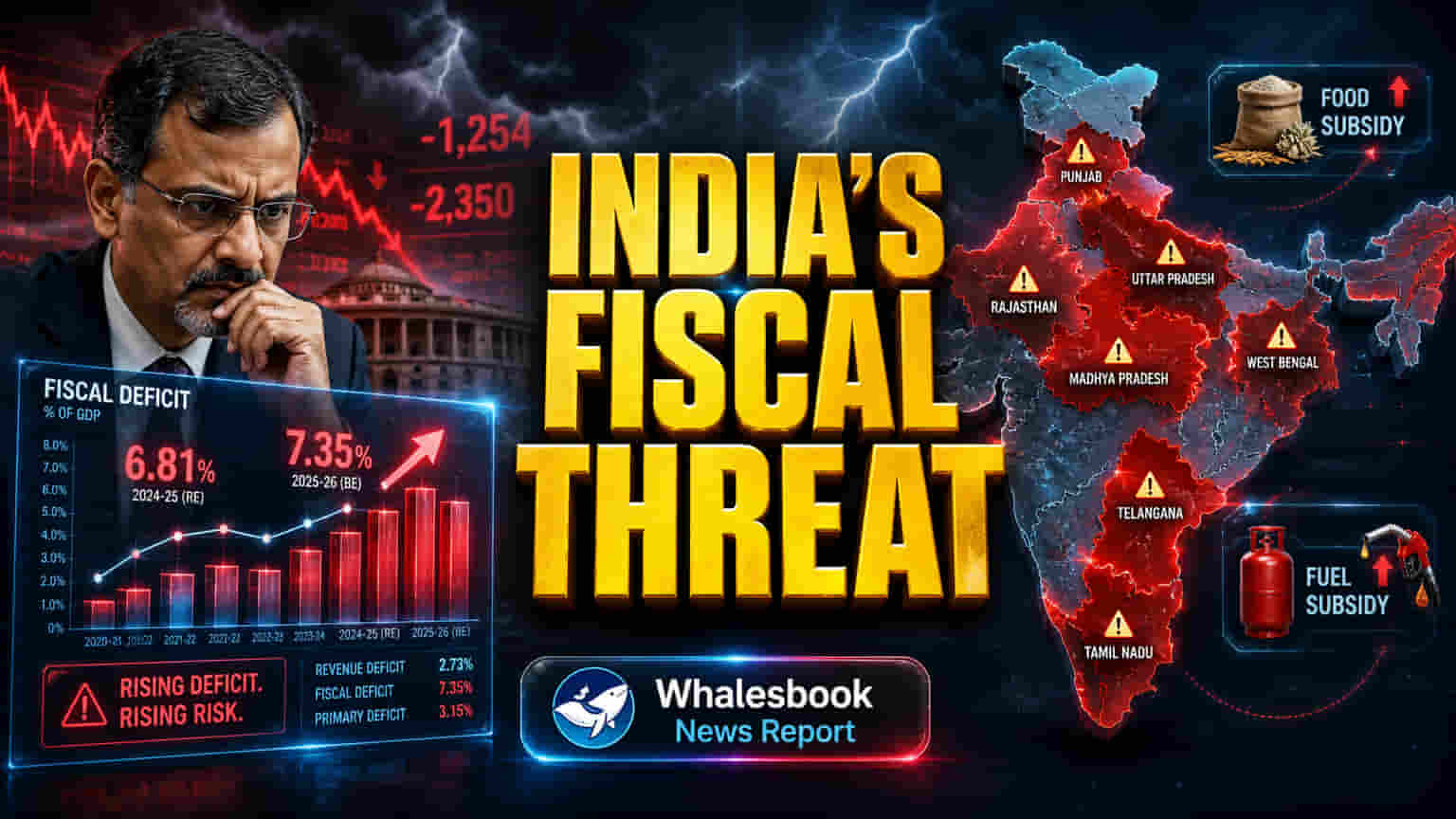


External Shocks Challenge India's Fiscal Goals
This situation highlights increasing risks in India's fiscal management, especially as global events impact domestic spending. The nation's headline fiscal deficit target of 4.3% of GDP for 2026-27 is being challenged by the escalating West Asia crisis and its effects on commodity prices, prompting a review of India's financial stability.
West Asia Crisis Fuels Energy Price Surge
The ongoing conflict in West Asia has created a significant energy shock for India, driving up global prices for crude oil and fertilizers. Brent crude prices surged to over $113 per barrel by early May 2026, far above pre-conflict levels. This price increase directly impacts India's import bill, contributing to a projected widening of the current account deficit to over 2% of GDP for FY27. Higher energy and fertilizer costs are expected to strain state budgets, increasing demands for subsidies and support programs, areas where states bear the main impact of external shocks.
Investors Scrutinize Combined Deficits
This increased pressure on state finances is drawing greater attention from international investors and rating agencies to India's overall fiscal health. Unlike in the past, state-level fiscal problems are no longer just domestic accounting issues; they are now "visible and it is priced." The government's fiscal deficit target of 4.3% for 2026-27 is facing significant pressure. Some analysts suggest it could widen to 4.5% due to higher subsidy spending and policy reactions to the crisis. The 10-year Indian government bond yield has risen to 7.02%, reflecting increased borrowing costs and market caution. The Indian Rupee has also weakened considerably against the US Dollar over the past year, trading at 95.32 on May 4, 2026.
State Budgets and Debt Levels
India's central government debt-to-GDP ratio is projected at 55.6% for 2026-27, with a medium-term goal of reaching around 50% by 2030-31. However, including state borrowings pushes the general government debt to 81.92% of GDP in 2024, a level considered high compared to other emerging markets. The NITI Aayog's Fiscal Health Index 2026 highlights varied state performance, with Odisha, Goa, and Jharkhand leading, while Punjab, Kerala, and West Bengal struggle with high debt and deficits. This crisis complicates balancing immediate needs, like cash transfers, against long-term capital investment crucial for growth. This imbalance can lead to infrastructure gaps and affect public services.
Key Risks for India's Economy
The combination of geopolitical instability, rising commodity prices, and state fiscal issues creates significant risks for India. A prolonged West Asia conflict could further increase oil prices, driving inflation higher and widening the current account deficit, while also challenging the government's ability to meet its fiscal deficit targets. The weakening rupee also increases costs for essential imports, including oil. Fitch Ratings acknowledges India's strong growth but points to weak fiscal metrics, noting that deficits and debt remain high compared to peers. Increased borrowing to finance deficits, especially if revenue growth slows, raises concerns about long-term debt sustainability and limits future policy options.
Government Outlook and Commitments
Despite these pressures, the government remains committed to its fiscal consolidation path, aiming to reduce the central government debt-to-GDP ratio to 55.6% in FY27 and eventually 50% by FY31. The Reserve Bank of India forecasts FY27 GDP growth at 6.9% with inflation around 4.6%, while maintaining a neutral monetary policy stance. Credit rating agencies like Fitch and Moody's currently have a stable outlook for India, though they continue to monitor fiscal metrics. Navigating these complex global and domestic pressures will be key to maintaining economic stability and achieving sustainable growth.