

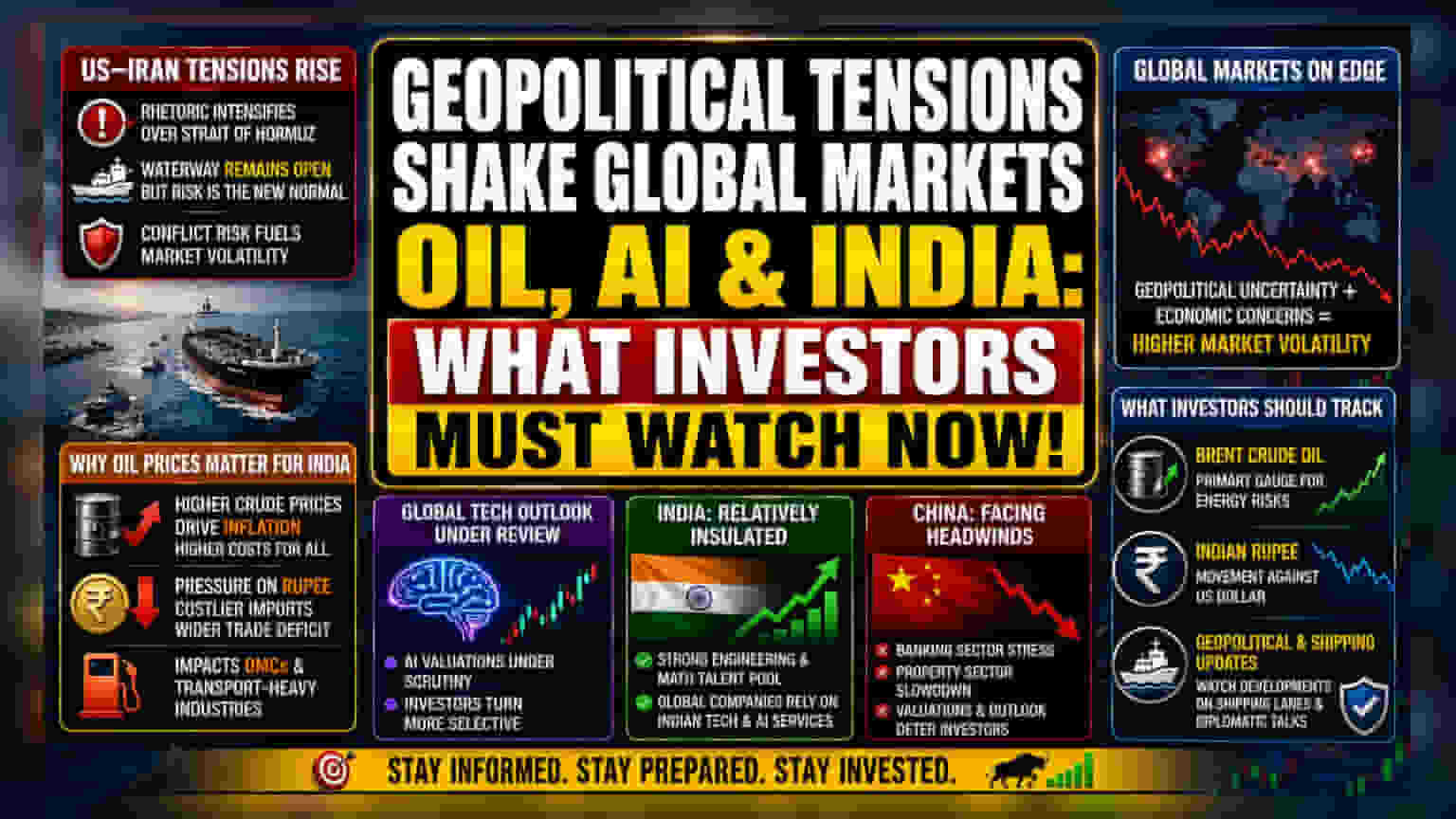
Rising political tensions between the US and Iran are fueling global market volatility, with specific concerns over potential disruptions at the Strait of Hormuz. For Indian investors, the primary risks involve potential spikes in crude oil prices and inflationary pressure, even as India remains a preferred long-term destination for global tech outsourcing.
What Happened
Global financial markets are experiencing a period of uncertainty as political rhetoric between the United States and Iran intensifies. The friction centers on the Strait of Hormuz, a critical maritime shipping lane for global energy supplies. While US officials indicate the waterway remains open, conflicting reports and threats from Iranian leadership have created a "new normal" of risk, according to market analysts.
This heightened geopolitical uncertainty is causing significant fluctuations in global equities. Investors are concerned that persistent conflict or escalation could lead to unpredictable market moves, especially when combined with existing concerns regarding global economic stability.
Why Oil Prices Matter For India
Crude oil is the most immediate link between these geopolitical tensions and the Indian economy. As one of the world's largest importers of crude oil, India is highly sensitive to price fluctuations. If tensions escalate and cause a blockade or disruption in the Strait of Hormuz, global oil supply could tighten rapidly, driving prices upward.
For Indian investors, higher crude prices generally create a double whammy: they can push up domestic inflation, leading to higher costs for consumers and businesses, and put pressure on the Indian Rupee, which can increase the cost of imports. This environment often impacts the profit margins of oil marketing companies and transport-heavy industries.
The Shift In Global Tech Outlook
Beyond energy, global equity markets are also reassessing the recent excitement around Artificial Intelligence (AI). Some market observers are questioning whether current valuations in the global AI trade have moved into excessive territory. This has led to caution among international investors who are now more selective about where they deploy capital.
Why India Is Viewed Differently
While global markets are wary, India is often viewed as being relatively insulated from the worst of these risks. The country’s large pool of engineering and mathematical talent remains a key advantage. Global companies continue to rely on Indian services for their tech and AI-driven operations, which supports long-term growth prospects.
This stands in contrast to the current situation in Chinese equities, which have struggled to regain momentum. China’s market faces internal challenges, including stress in its banking system and a slowdown in the property sector, which has deterred many international investors until the valuation and economic outlook become clearer.
What Investors Should Track
Investors may monitor a few specific indicators as this situation develops. First, the price of Brent crude oil serves as the primary gauge for energy-related risks. Second, the movement of the Indian Rupee against the US Dollar will reveal how currency markets are pricing in these global risks. Finally, keeping an eye on official updates regarding shipping lanes and geopolitical agreements will provide the best context for potential shifts in sentiment.