

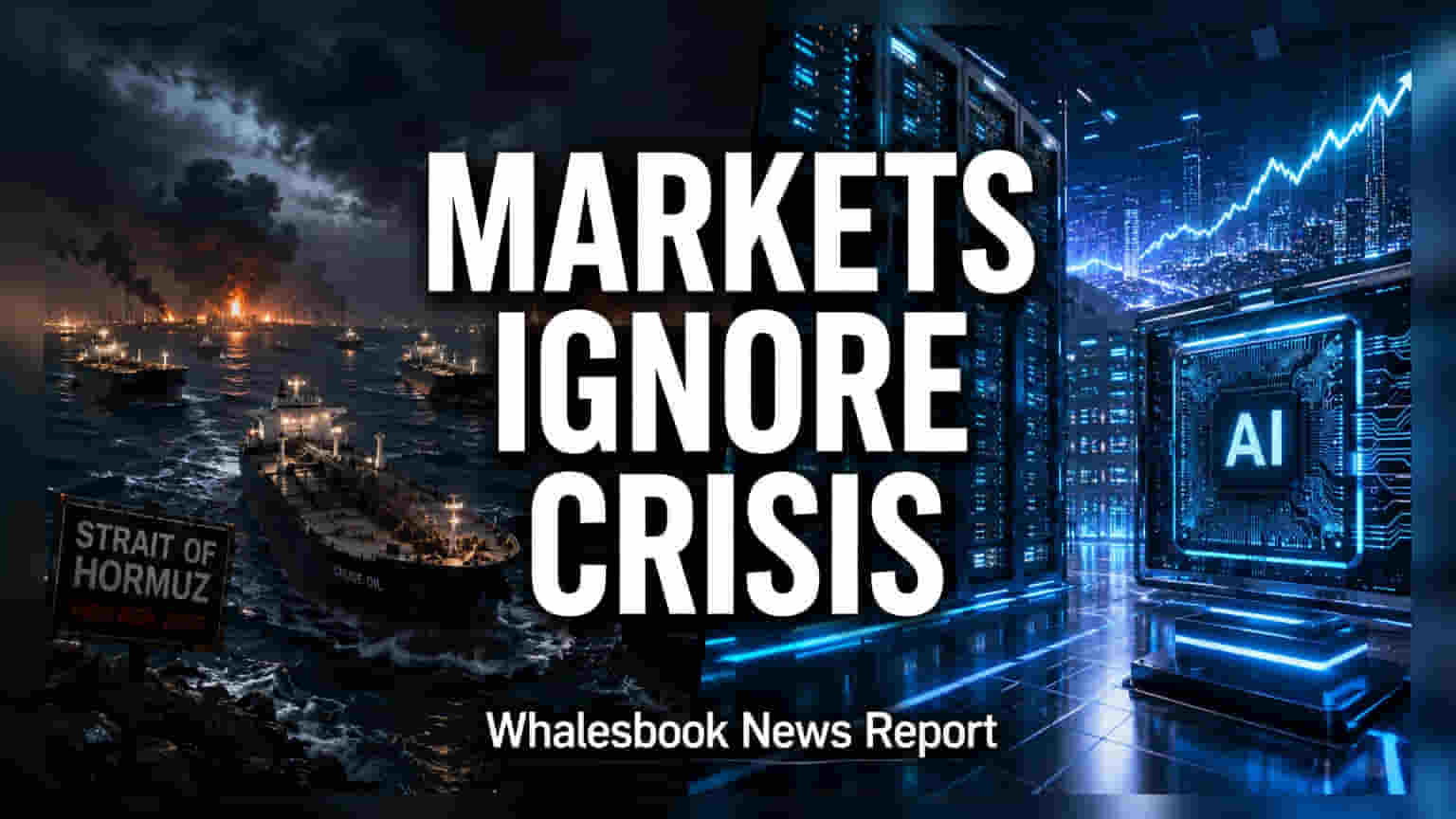
Global equity markets remain resilient despite the Strait of Hormuz being closed to commercial shipping since February 2026. This strength is driven by record US corporate earnings growth of 47% in Q2 2026, heavy AI investment, and high market liquidity. While markets are currently ignoring geopolitical risks, investors are tracking diplomatic progress regarding a managed shipping corridor and the sustainability of high profit margins.
Global equity markets have shown remarkable resilience throughout 2026, shrugging off the closure of the Strait of Hormuz, which has remained blocked to commercial shipping since late February. Despite the serious geopolitical implications of this disruption, major global indices have continued to climb, creating a noticeable disconnect between market sentiment and the underlying geopolitical reality.
Liquidity and Earnings Strength
The primary force behind this market strength is an unprecedented level of liquidity. Massive government deficit spending and large-scale treasury cash drawdowns have injected significant capital into the financial system. When cash yields are compared against inflation, investors have increasingly favored equities. Furthermore, corporate performance has been a massive driver. In the United States, Q2 2026 earnings showed record-level growth, up 47% year-on-year, with profit margins reaching approximately 16.7%. This earnings power has allowed companies to support stock prices even in a challenging macro environment.
The surge in Artificial Intelligence (AI) and data center infrastructure spending has also created a self-sustaining cycle. Hyperscalers continue to invest billions, providing consistent demand for chipmakers and hardware suppliers. This spending has helped maintain momentum in semiconductor and memory stocks, although these sectors have recently faced high volatility and sharp sell-offs.
India’s Resilience
Indian markets have mirrored this global durability. Much of this is due to a strong inflow of domestic retail capital through Systematic Investment Plans (SIPs), which has acted as a stabilizer against foreign institutional selling. Additionally, India’s access to discounted Russian crude and diversified LNG sources has shielded the economy from the worst of the energy supply disruptions caused by the maritime blockade. Indian companies involved in the global AI infrastructure supply chain have also seen improved business prospects, adding to overall market sentiment.
Risks and Monitorables
While the market remains buoyant, it is not without risks. The current stability is built on the assumption that diplomatic efforts between Iran, Oman, and the United States will lead to a managed shipping corridor. If these negotiations fail or if the conflict escalates, the current energy and supply chain premiums could spike, pressuring industrial and agricultural costs.
Investors should also watch for the risk of margin reversion. High corporate profit margins may not be sustainable if inflation remains sticky or if global supply chain frictions worsen. Furthermore, market concentration remains high, making indices sensitive to volatility in the tech and semiconductor sectors. The key monitorable in the coming months will be progress on maritime diplomatic negotiations and whether global corporate earnings can maintain their current growth trajectory without further support from government-driven liquidity.