 Whalesbook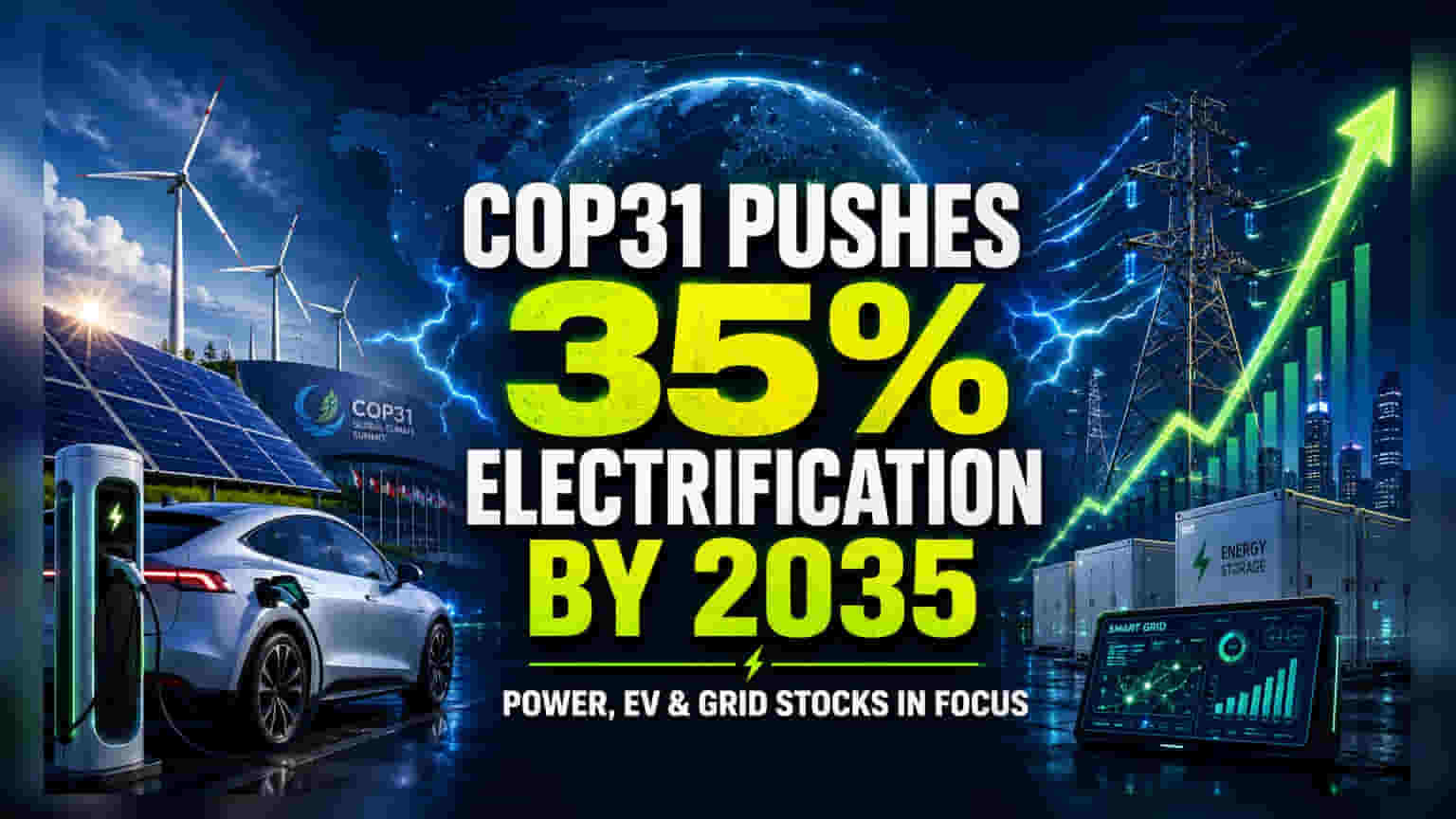


The COP31 presidency has announced a global target to raise electricity's share in total energy demand to 35% by 2035, up from the current 20%. This push toward cleaner, electricity-based energy systems creates significant long-term implications for Indian sectors such as renewable power, power grid infrastructure, electric mobility, and energy-efficient construction.
What Happened
The presidency of the 31st Conference of the Parties (COP31) has unveiled a major new global goal: increasing the share of final energy demand met by electricity to 35% by 2035. This initiative, announced at the Bonn Climate Change Conference in June 2026, aims to move the world away from direct fossil fuel reliance in transportation, industry, and building heating. Supported by global bodies like the International Energy Agency (IEA) and the International Renewable Energy Agency (IRENA), the move is intended to improve energy security, lower costs, and accelerate the transition to cleaner energy sources.
Why This Matters For Investors
For Indian investors, this global push reinforces the long-term trend toward electrification. As the world moves toward using electricity for more activities, such as driving electric vehicles (EVs) or powering industrial machinery that previously used fossil fuels, the demand for electricity is expected to rise. This shift may place a spotlight on the entire energy value chain. Companies involved in renewable energy generation, such as solar and wind, may see more consistent demand. Similarly, the businesses responsible for building and maintaining the electricity grid—including manufacturers of cables, transformers, and smart grid technology—could see increased activity as power networks require significant upgrades to handle higher loads.
Impact on Key Sectors
Several sectors in India could see long-term changes due to this global focus. The automotive and transport sector is a primary area for electrification. A higher reliance on electricity confirms the growth trajectory for EV makers and manufacturers of charging infrastructure. In the building and real estate sector, the new targets include a goal to reduce energy consumption intensity by at least 25% by 2035. This may drive demand for energy-efficient construction materials, smart heating and cooling systems, and green building designs. Additionally, the focus on halving the growth of global waste may highlight companies operating in waste management and recycling, as reducing waste is now being framed as a core part of the climate strategy.
The Challenge of Infrastructure
While the target is ambitious, moving to 35% electrification is a difficult task. The primary challenge involves the stability and capacity of power grids. If electricity demand surges, older or weaker grids may struggle to deliver reliable power without significant investment. For investors, this means the pace of capital spending on grid modernization will be a crucial factor. There is also a reliance on critical minerals and the cost of raw materials required to build this new infrastructure, which could create price volatility for companies in the clean energy supply chain.
What Investors Should Track
Investors may want to monitor how these global targets influence local policy and corporate investment plans. The key monitorable is the pace of actual infrastructure spending. While global goals provide a roadmap, the success of these initiatives will depend on government policies regarding energy storage, grid connectivity, and the financial health of power distribution companies. Investors may also track management commentary from companies in the renewable, automotive, and construction sectors to see how they are aligning their long-term growth strategies with these global energy shifts.