

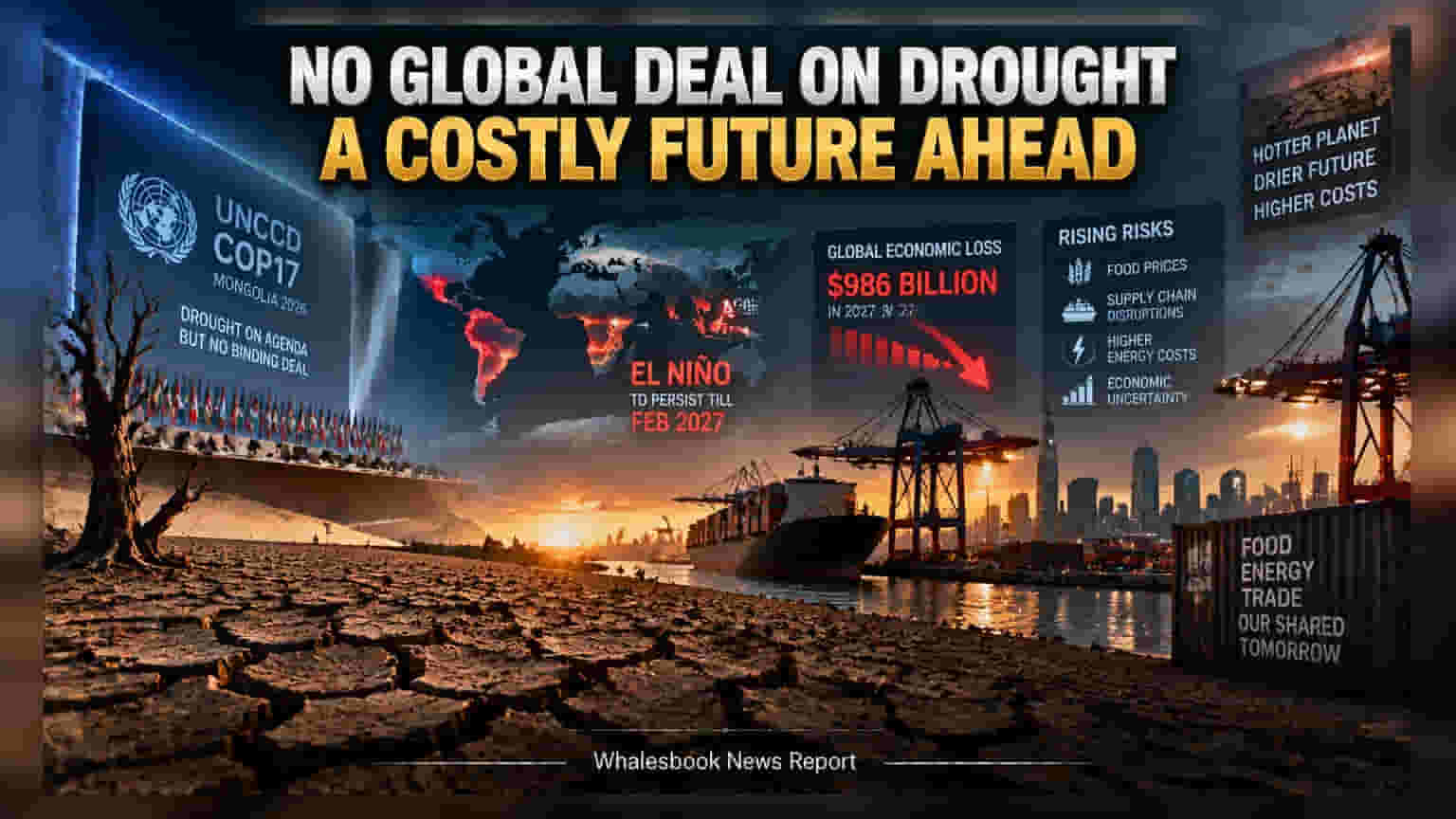
UNCCD talks failed to reach a consensus on a global drought framework, raising systemic economic risks. With El Niño expected to last until early 2027, experts project potential global financial losses of nearly $1 trillion next year, impacting commodity prices and supply chains.
The recent conclusion of the UNCCD COP17 in Mongolia, which ended without a consensus on a legally binding global framework for drought management, has highlighted a growing divide between climate science and economic policy. While drought was formally designated as a permanent agenda item for future discussions, the failure to secure a unified international treaty means the responsibility for managing drought-related economic risks currently falls primarily on individual national governments.
For investors and market observers, this development carries significant implications. The World Meteorological Organization has indicated that the current El Niño weather pattern is likely to persist through February 2027. This extension creates a prolonged period of uncertainty for global commodity markets, which are already sensitive to supply disruptions.
Economic projections by Oxford Economics suggest that the global economy could face financial losses of approximately $986 billion in 2027 alone. These costs are linked to the cascading effects of drought, including supply chain bottlenecks, reduced agricultural productivity, and higher energy prices. When water levels drop in key shipping routes or agricultural output falls, the resulting inflationary pressure often impacts sectors that rely on stable input costs.
From an investor’s perspective, the absence of a global regulatory framework increases the unpredictability of operating environments for multinational companies. Sectors such as Fast-Moving Consumer Goods (FMCG) and agrochemicals are particularly exposed to these trends. When agricultural production faces stress, raw material costs for food and beverage companies can fluctuate sharply, putting pressure on profit margins. Similarly, the energy sector, including hydroelectric power, often faces reliability issues during extended dry spells, which can lead to increased costs for industrial consumers.
Additionally, there is a sovereign credit risk for developing nations. Many countries rely on agricultural exports as a primary source of revenue. If prolonged drought reduces output, these nations may face debt pressure as they simultaneously grapple with the high costs of post-disaster recovery and infrastructure repair. This creates a volatile environment for global trade and can shift the focus of capital allocation away from growth toward crisis management.
Investors may monitor key indicators such as global commodity price indices, particularly for wheat, sugar, and edible oils, to gauge the impact of these climate trends. Additionally, tracking government policy on water management and infrastructure spending will be important, as these factors will determine which companies can better navigate the pressure on supply chains and input costs in the coming quarters.