

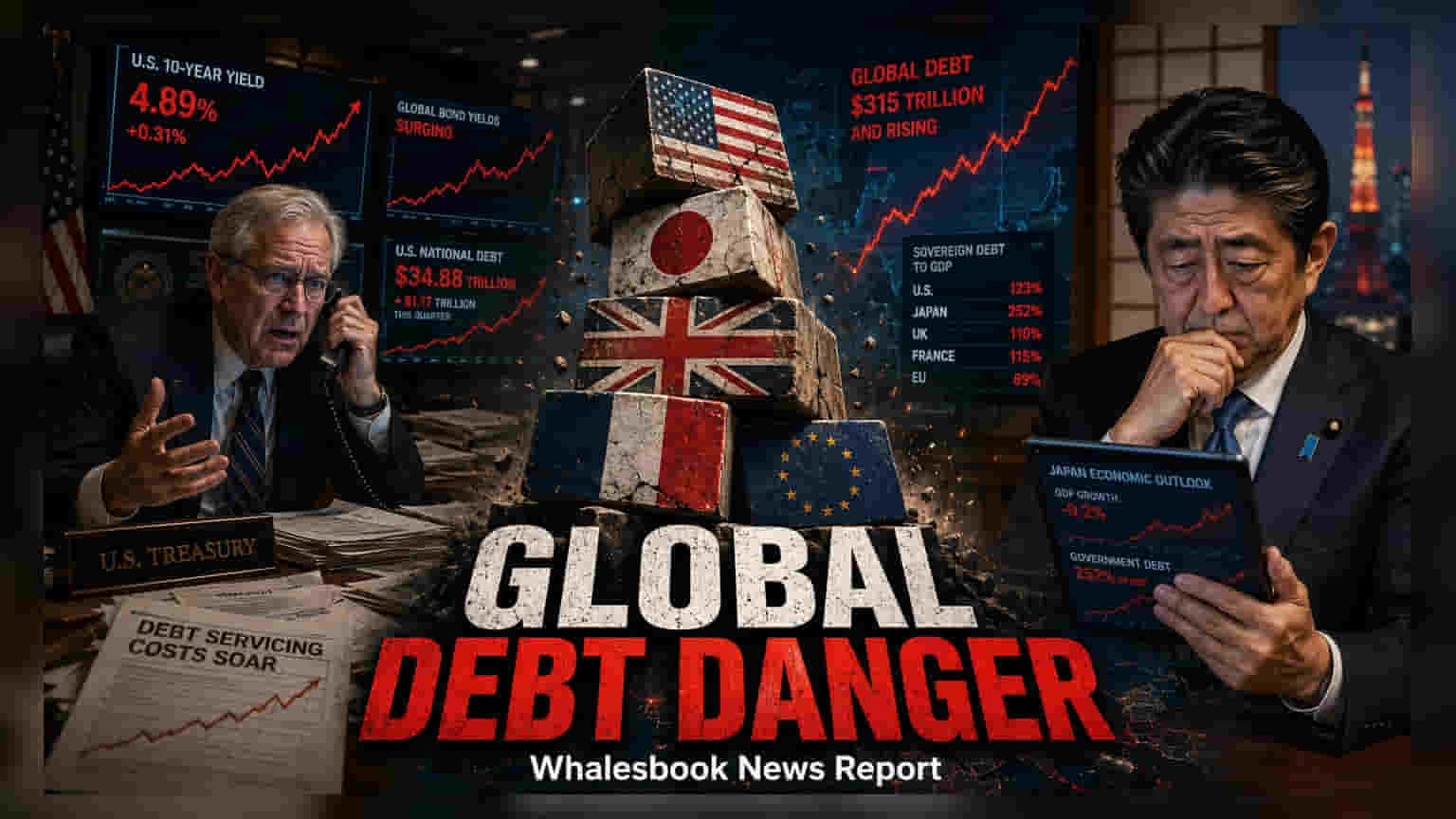
Rising interest rates and record debt levels in the US, Japan, and Europe are raising alarm bells for global financial stability. With US 30-year bond yields at 5.25% and massive fiscal deficits looming, investors are questioning the long-term sustainability of government spending, which creates risks for global capital flows.
The global bond market is sending a clear warning to governments in major economies. As of August 2026, the 30-year U.S. Treasury bond yield has climbed to 5.25%, the highest level seen since 2007. This rise in long-term interest rates serves as a barometer for how much it costs to borrow money, and it is flashing red for investors who worry that major economies are ignoring their growing debt piles.
Fitch Ratings has projected that total government debt among developed markets will hit a record $75.8 trillion by the end of 2026, equal to 104% of their collective GDP. While the bond markets continue to function, the sheer scale of this debt, combined with high interest rates, is making it increasingly expensive for governments to refinance their existing obligations. The United States is at the center of this concern, with a projected budget deficit of 7.8% of GDP for 2026, which is among the highest for major developed nations.
Financial stress is not limited to the U.S. In Japan, the government is struggling with a massive debt-to-GDP ratio and a yen that has remained near 40-year lows, even after coordinated interventions to stabilize the currency. Meanwhile, European nations like France and the U.K. are also facing pressure, as their governments struggle to balance public spending needs with the reality of higher interest costs. Investors fear that without serious fiscal consolidation—which means reducing government spending or increasing revenue—these nations could face a period of sustained volatility.
For Indian investors, the global debt situation is important to watch because of how it influences capital flows. When government bonds in developed markets offer high interest rates, global funds often move money out of emerging markets like India to invest in these safer, higher-yielding options. This can put pressure on the Indian Rupee and impact foreign institutional investment. Furthermore, if these global tensions trigger a sudden market sell-off, it can lead to increased volatility across all asset classes, including Indian stocks.
There are several risks that investors should keep in mind. The first is fiscal sustainability; if governments fail to manage their deficits, it could force central banks to choose between keeping interest rates high to fight inflation or cutting them to save their own bond markets. Second, geopolitical tensions, such as ongoing conflicts in the Middle East, continue to threaten energy prices and supply chains, which keeps inflation risks alive. Finally, the fragility of these debt markets means that any unexpected economic data—whether it is higher-than-expected inflation or a slowdown in growth—could cause sharp price swings.
Moving forward, the key monitorables for investors include the next round of central bank policy meetings, specifically from the U.S. Federal Reserve, and updates on government fiscal deficit targets. Continued reliance on short-term debt and the ability of major economies to manage their debt service costs will be the main factors determining whether this situation remains a manageable challenge or turns into a more serious global market episode.