

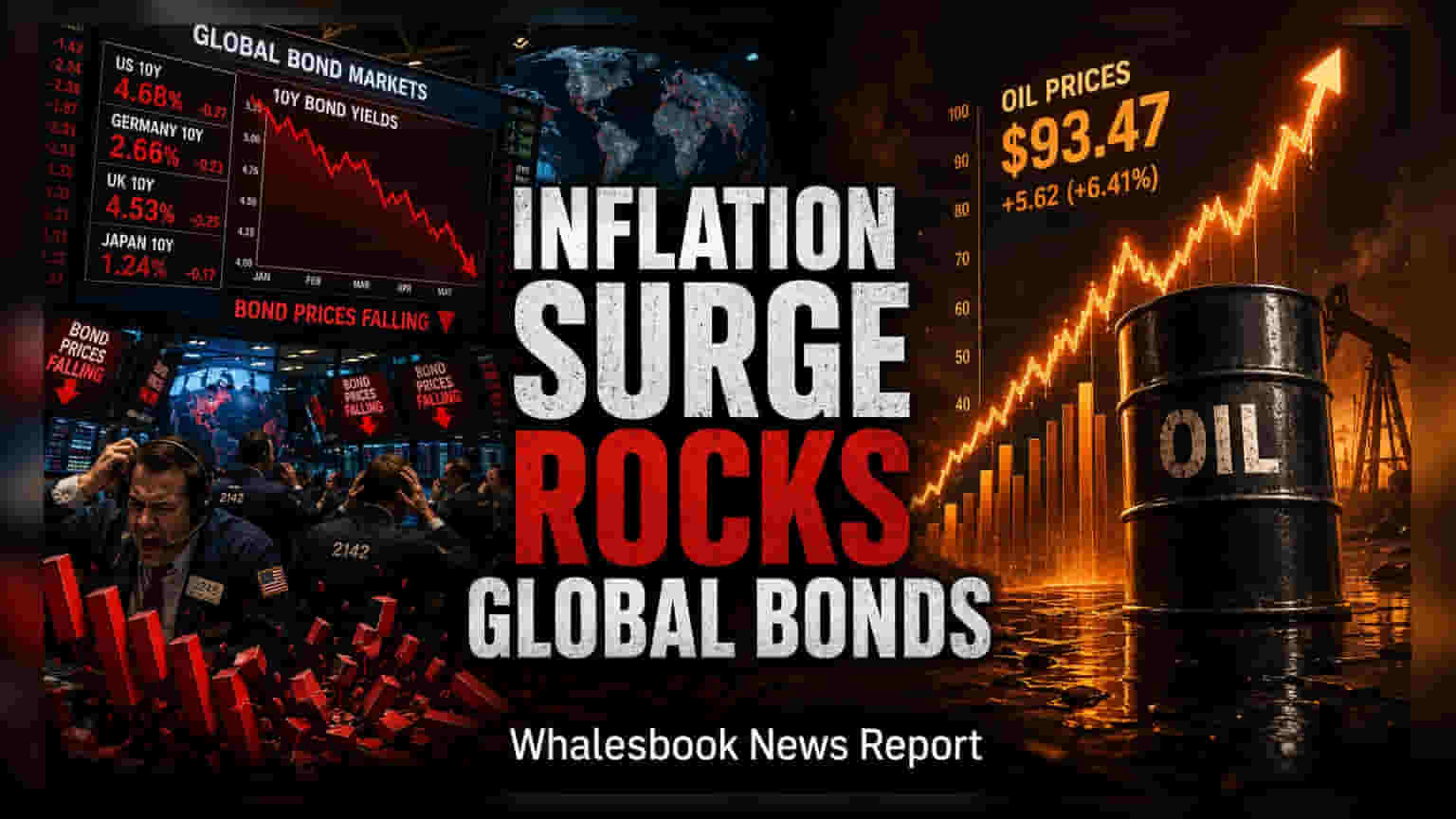
Global bond markets are witnessing a sharp sell-off as rising crude oil prices rekindle inflation fears. The Bloomberg Global Treasury Index has reached its highest yield levels since the 2008 financial crisis. Investors are now bracing for critical policy meetings from major central banks, including the Federal Reserve, as market expectations shift toward potential interest rate hikes.
Detailed Coverage
Global bond markets are under intense pressure as a resurgence in energy costs sparks renewed worries about long-term inflation. The yield on the Bloomberg Global Treasury Index has climbed to 3.68%, a level not witnessed since the height of the 2008 global financial crisis. This rise in yields, which move in the opposite direction to bond prices, reflects a significant sell-off across sovereign debt markets worldwide.
Impact of Rising Energy Costs on Inflation
Crude oil prices have climbed past $100 per barrel, driven by geopolitical tensions in the Middle East. This trend is complicating the efforts of global central banks to keep inflation in check. In the United States, strong employment and economic growth data have led some market observers to reconsider whether the Federal Reserve might need to implement further rate hikes, moving away from previous expectations of rate cuts. The ICE BofA MOVE Index, which tracks bond market volatility, has jumped to a two-month high, signaling that investors are preparing for continued price swings.
Regional Bond Market Pressure
The sell-off is not limited to the US market. In the United Kingdom, gilt yields have remained consistently above 5%, a trend not seen in nearly two decades, as investors wait to see how the Bank of England will address energy-driven inflation. Similarly, Germany’s 10-year yield has reached levels unseen since 2011. Japan is also facing notable shifts, with 40-year yields jumping 10 basis points in a single session, amid concerns that the Bank of Japan’s current policy stance may be insufficient to combat domestic inflation pressures caused by a weaker currency.
Central Bank Policy Uncertainty
Market focus is now shifting toward the upcoming meetings of the Federal Reserve, the Bank of England, and the Bank of Japan. Analysts from firms like Barclays have noted that central banks face a difficult balancing act. A decision to raise rates could lead to a reassessment of future borrowing costs, while keeping rates unchanged without clear communication might cause long-term yields to rise further. Moody’s Ratings has characterized this period as a new macroeconomic regime defined by higher structural inflation, increased fiscal deficits, and elevated interest rates. Investors are now monitoring how these institutions will navigate the trade-off between fighting inflation and managing potential economic slowdowns in their respective regions.