

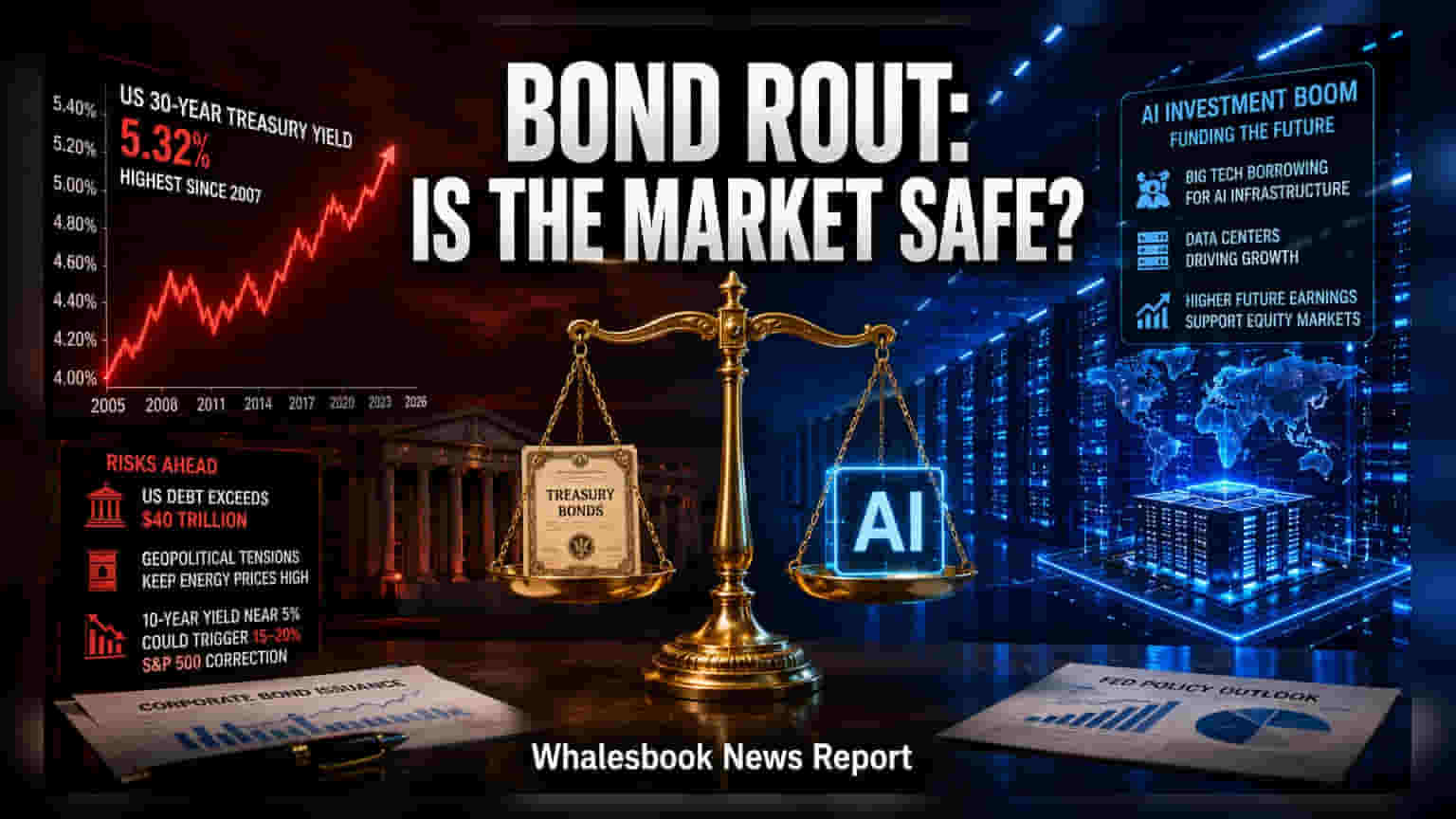
US 30-year Treasury yields have crossed 5.3%, levels not seen since 2007. While high interest rates usually hurt stock prices, the current rise is partly driven by productive AI infrastructure investment rather than just economic fear. However, with US national debt exceeding $40 trillion and geopolitical tensions rising, investors should remain cautious about potential volatility in equity markets.
For years, investors have followed a simple rule: when bond yields rise, stock markets usually fall. The logic is straightforward—higher interest rates make government bonds a safer and more attractive option compared to risky stocks. However, the current environment in the United States is challenging this old rule, creating a complex situation that investors need to decode carefully.
As of late August 2026, the US 30-year Treasury yield has climbed above 5.3%, a level unseen since 2007. While many analysts historically associate such spikes with impending recessions, this time, the driver is somewhat different. A significant portion of this yield movement comes from a massive wave of corporate debt issuance. Major technology companies, including leaders in artificial intelligence, are borrowing heavily to fund the construction of data centers and digital infrastructure. This is viewed by many as productive spending—money aimed at future growth—rather than borrowing just to cover budget deficits.
Because this investment is aimed at long-term technological expansion, the stock market has shown surprising resilience. When companies grow their businesses through AI, they expect higher future earnings, which helps justify higher valuations even in an environment of expensive borrowing. In this specific scenario, rising yields are functioning as a signal of a two-speed economy: one part is growing through innovation, while other sectors struggle with higher interest costs.
Despite this growth argument, the risks cannot be ignored. The US national debt has now surpassed $40 trillion, creating long-term questions about fiscal sustainability. The US Treasury has already begun increasing debt buybacks to manage the pressure, a move some strategists view as a sign of stress. Furthermore, geopolitical uncertainty, specifically related to the ongoing war in Iran, continues to keep energy prices unstable. Since energy costs drive inflation, any sharp increase in oil prices could force yields even higher, reversing the current calm in equity markets.
Investors should keep an eye on the 10-year Treasury yield. Some market strategists have warned that if these yields move closer to 5%, it could trigger a correction in the S&P 500, with potential declines of 15% to 20% as borrowing costs become too heavy for many companies to bear. For the immediate future, the primary focus for the market will be how well the AI investment cycle can hold up against the dual pressures of government debt and energy-related inflation. Tracking official data on corporate bond issuance and any changes in the Federal Reserve's stance on inflation will be key to understanding whether this rally can continue or if the bond market is about to send a stronger warning signal to equities.