 Whalesbook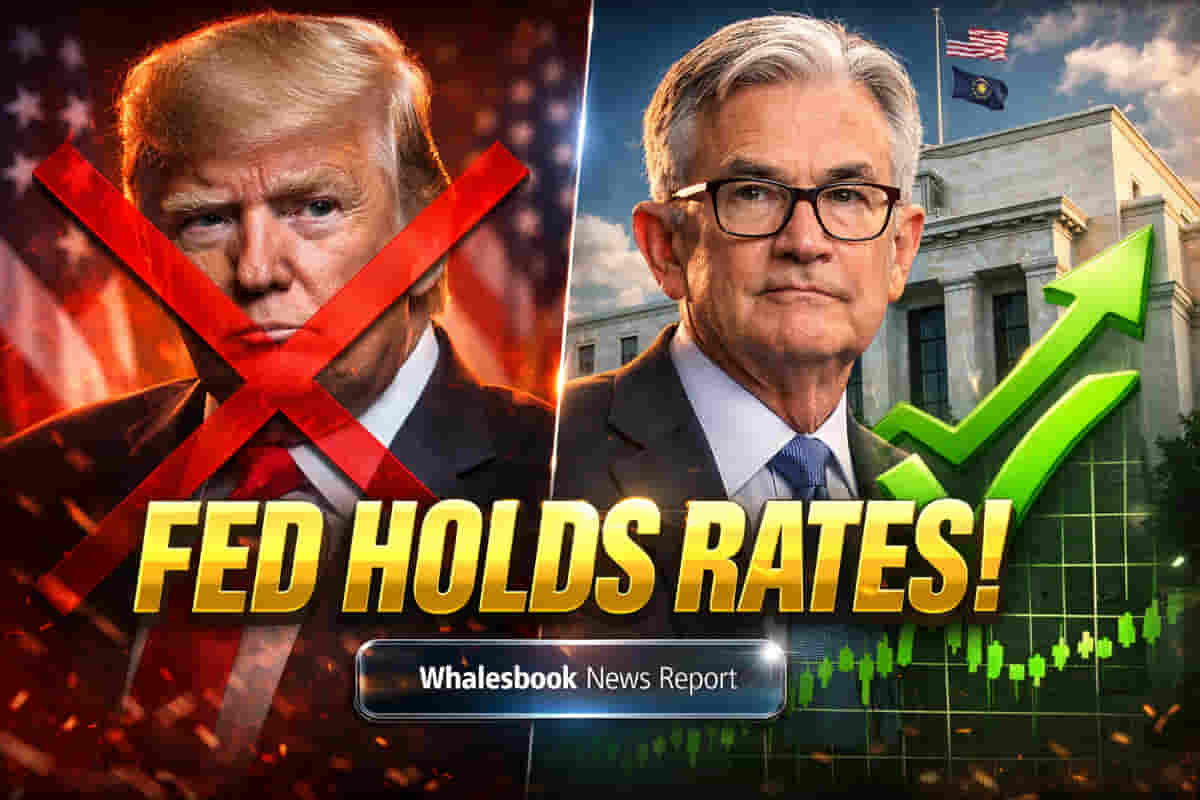
THE SEAMLESS LINK
Global policymakers are navigating an increasingly complex economic terrain, marked by persistent geopolitical tensions and domestic political pressures. Against this backdrop, the U.S. Federal Reserve, along with key central banks in nations like Brazil, Canada, and Sweden, is widely expected to hold interest rates steady at their upcoming meetings. This projected pause in monetary easing signals a broad trend of caution among monetary authorities, many of whom are demonstrating a unified front in safeguarding their operational independence amidst external interference.
The Valuation Gap
Despite presidential calls for lower borrowing costs, the Federal Reserve is poised to maintain its current interest rate settings. This stance is supported by recent economic data indicating a cooling labor market, with the U.S. unemployment rate declining to 4.4% in December 2025 [6, 18]. However, inflation remains a key concern, holding steady at 2.7% year-over-year in December, still above the Fed's 2% target [11, 14, 42]. The Federal Open Market Committee's (FOMC) December 2025 Summary of Economic Projections indicated a median unemployment rate of 4.4% for Q4 2026 and 4.2% for Q4 2027 [3, 40], suggesting a gradual improvement but one that may not yet warrant a rate cut given inflation dynamics.
The market has priced in a high probability of the Fed holding rates steady, with minimal expectation for a cut at this meeting [12, 24]. This pause follows three consecutive rate reductions in late 2025, bringing the federal funds rate to a range of 3.5% to 3.75% [1, 21, 30]. Policymakers appear to be assessing the impact of these previous cuts while remaining vigilant about potential inflation resurgence and growth risks stemming from ongoing trade disputes.
Navigating Political and Legal Headwinds
Fed Chair Jerome Powell and his institution face significant external challenges to their independence. Beyond President Trump's repeated demands for lower rates, the Federal Reserve has been subjected to grand jury subpoenas, and the Supreme Court is reviewing a case concerning the president's authority to remove Governor Lisa Cook [1]. This intense scrutiny has prompted a show of solidarity from over a dozen central bank chiefs, including those from the European Central Bank and the Bank of England, who have publicly backed Powell and the principle of central bank independence [1, 2]. Historically, central bank independence has been crucial for achieving price stability and fostering sustainable economic growth, though its de facto application can be eroded by political pressure [10, 15, 25, 29, 35].
A World in Flux
The decisions of major central banks unfold against a backdrop of global economic turbulence. IMF Managing Director Kristalina Georgieva described the current environment as a "more shock-prone world," highlighting concerns ranging from market volatility in Japan to ongoing trade disruption threats [7, 38]. The International Monetary Fund projects global growth at 3.3% for 2026, an improvement but considered insufficient to significantly reduce global debt burdens [4, 38]. In contrast to the expected holds in developed economies, some central banks in Africa may initiate rate easing cycles due to different economic conditions [Input Source A].
Data from China indicates that its economy grew 4.5% year-on-year in Q4 2025, meeting its annual target, though domestic demand and investment showed weakness, potentially necessitating further policy support [17, 26, 33, 36]. The Euro area, meanwhile, is forecast to see GDP growth of 1.2% in 2026 [23, 43]. Upcoming economic releases, including inflation data from Australia, Brazil, and Japan, Chinese industrial profits, and Eurozone GDP, will provide further insight into the divergent global economic trajectories.
The Analytical Gauge
Bloomberg Economics suggests that a unanimous vote to hold rates steady would serve as a strong signal of support for Chair Powell, particularly concerning Fed independence. The voting patterns of Governors Christopher Waller and Michelle Bowman are being closely watched, with Waller anticipated to align with the majority, further reinforcing the board's unified stance [Input Source A]. Past market performance indicates that the S&P 500 has historically seen an average gain of 16.8% in the 12 months following the conclusion of Federal Reserve tightening cycles, suggesting a potentially positive outlook for equities should this pause mark a true end to hikes [16].
Forward Signals
Chair Powell's upcoming press conference will be particularly scrutinized, being his first since disclosing Justice Department subpoenas and following the Supreme Court's review of Governor Cook's position. However, expectations are low for detailed disclosures on these legal matters. Policymakers are focused on the delicate balance between potential growth risks from tariffs and the need to manage inflation pressures. The coming week's U.S. data calendar includes producer price index figures, durable goods orders, the trade deficit, and consumer confidence reports, which will inform the Fed's assessment of the economy's trajectory and future policy considerations. Ultimately, the Fed's policy path in 2026 will depend critically on incoming economic data, particularly regarding inflation and the labor market [39].