 Whalesbook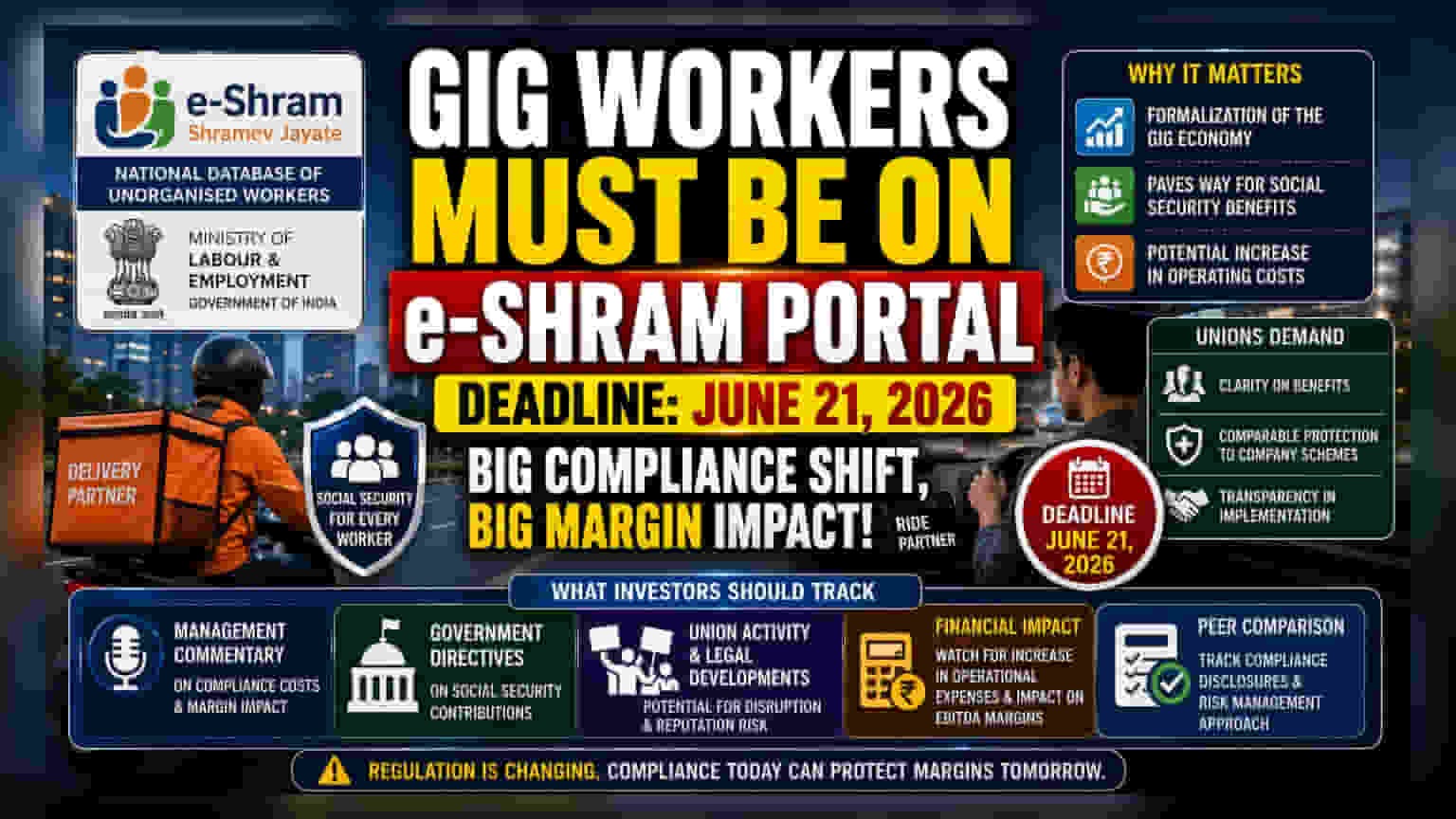


As the June 21 deadline for onboarding gig workers onto the government’s e-Shram portal approaches, platform companies face increased regulatory focus. Investors should monitor how this mandatory registration impacts compliance costs and operating margins for aggregators in food delivery, quick commerce, and ride-hailing. The shift toward formalizing social security for gig workers could influence the long-term business models of these labor-intensive platforms.
What Happened
Aggregators and platform companies have been set a deadline of June 21, 2026, to complete the onboarding of their gig and platform workers onto the government’s e-Shram portal. This portal, managed by the Ministry of Labour and Employment, serves as a central database for unorganized workers. The move is part of a broader government push to formalize the gig economy and ensure that social security benefits eventually reach these workers.
While some major players have stated their readiness to comply, citing existing operational standards, others remain in discussions regarding technical implementation. Unions representing gig workers have also intensified their demands, seeking specific clarity on what benefits will be provided and how they compare to current company-led support systems.
Why This Matters For Investors
For investors, the primary concern lies in the potential for shifting regulatory costs. Business models for most gig platforms, including delivery apps and ride-hailing services, are built on the flexibility of the independent contractor model. When regulatory bodies push for mandatory registration and, by extension, social security contributions, it often raises questions about future operating expenses.
If this registration process eventually evolves into a mandate for companies to contribute to a welfare fund or provide specific benefits, it could put pressure on the profit margins of these companies. Investors should pay close attention to whether such compliance leads to a permanent increase in operational costs.
The Compliance And Margin Risk
Companies in the gig space generally operate on thin margins, often prioritizing growth and market share over profitability. Historically, the sector has benefited from lower overhead costs compared to traditional employment models because they do not have to provide full employee benefits like health insurance, provident funds, or gratuity to independent partners.
If regulatory requirements tighten, companies may face two types of pressure. First, the administrative and technical cost of implementing compliance systems. Second, the potential long-term liability if government policies move toward requiring platforms to fund social security benefits for their workforce. Any increase in these costs can directly affect EBITDA margins, which is a key metric for retail and institutional investors analyzing the health of these platform businesses.
Sector Context And Regulatory Trends
The push for e-Shram registration aligns with global trends. For example, the International Labour Organization recently adopted the Decent Work in the Platform Economy Convention, 2026, which sets a standard for the rights and protection of platform workers. This signals a worldwide move toward formalizing gig work. In India, this puts specific pressure on delivery and transport aggregators to demonstrate that their "partner" model is sustainable and compliant with evolving labor standards.
What Investors Should Track
Investors should monitor a few key areas in the coming quarters. First, listen for management commentary during earnings calls regarding compliance costs and their potential impact on margins. Second, watch for any further government directives that might mandate specific financial contributions to social security funds. Third, keep track of union activity and legal developments, as friction between worker collectives and platforms can lead to operational disruptions or negative publicity. Finally, observe how peer companies in the same sector disclose their compliance status, as this will help distinguish between companies that are proactively managing regulatory risks and those that may face sudden cost increases.