 Whalesbook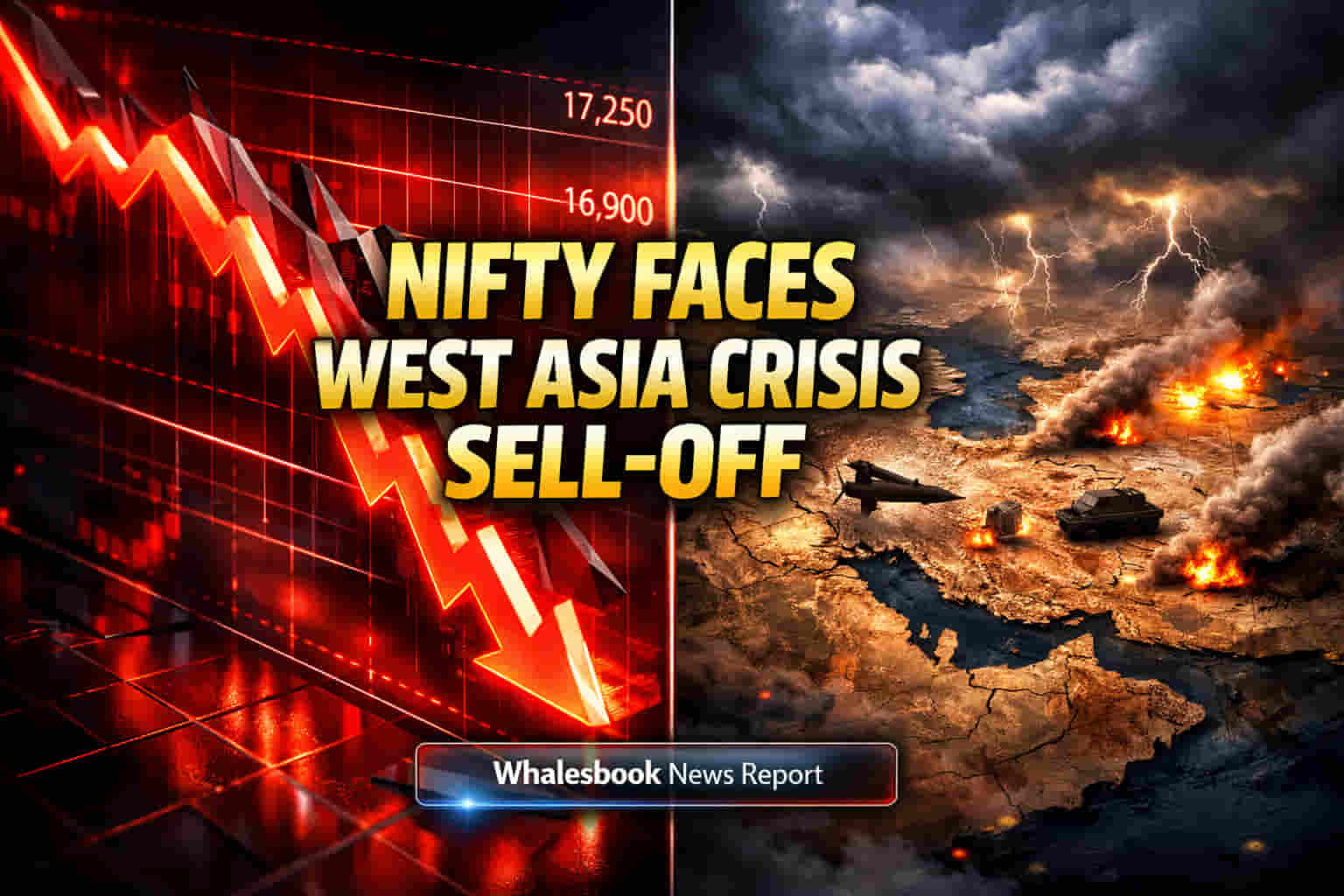


**
Geopolitical Tensions Ignite Market Sell-Off
Indian equity markets are bracing for a significant gap-down opening on Monday, driven by escalating geopolitical tensions in West Asia following Israel's strikes on Iran and subsequent retaliatory actions. This heightened regional instability, coupled with a weakening US inflation outlook, has injected substantial uncertainty into global financial markets. The GIFT Nifty futures indicated a considerable decline, signaling immediate downward pressure on domestic benchmarks. Analysts are cautioning that the duration of the conflict remains a critical unknown, with potential for sustained risk-off sentiment impacting investor confidence and driving capital away from riskier assets like equities. The confluence of global conflict, domestic technical breakdowns, and upcoming trading holidays is expected to amplify market volatility significantly in the near term.
Technical Breakdown Exposes Broader Weakness
The Nifty 50 index has decisively fallen below its 200-day Simple Moving Average (SMA) and Exponential Moving Average (EMA), a development technical analysts view as a major bearish signal. Historically, this threshold acts as a critical demarcation line between bull and bear markets, suggesting a potential shift to a sustained downtrend. The breach of this long-term support level, combined with the index failing to hold immediate support around 25,000-24,900, opens the door for further declines, with targets identified around 24,700 and potentially extending towards 24,400. The India VIX, a measure of market volatility, has risen to approximately 13.50-13.70, reflecting heightened investor nervousness and anticipation of sharper price swings. The proximate weekly Nifty expiry and the ensuing Holi holiday are likely to exacerbate intraday fluctuations and speculative positioning.
Stretched Valuations, Macro Vulnerabilities in Mid/Small Caps
The bearish technical setup and geopolitical fears disproportionately impact India's mid and small-cap segments, which are grappling with stretched valuations and underlying macro vulnerabilities. The Nifty MidCap 100 index, trading with a Price-to-Earnings (P/E) ratio of around 32.9, is considered slightly overvalued relative to its 7-year median. Similarly, the Nifty SmallCap 100 trades at a P/E of approximately 30.1. These elevated valuations, combined with a significant breach of their respective 200-day moving averages, signal considerable downside risk. Compounding these issues, India's high dependence on crude oil imports (~85%) makes its economy acutely vulnerable to supply disruptions and price spikes, directly impacting inflation, the fiscal deficit, and rupee stability. Furthermore, a prolonged period of FII net outflows, with selling totaling ₹7,536 crore on Friday, February 27, 2026, signals a lack of foreign investor conviction amidst rising global risks.
The Forensic Bear Case: Risks Abound
The current market environment presents a compelling bear case, fueled by multiple converging factors. Valuations across Nifty, MidCap, and SmallCap indices hover at or near historically expensive levels, particularly the Nifty 50's P/E of ~22.03, which has historically preceded negative three-year returns. A sustained surge in crude oil prices, potentially breaching $100 per barrel, poses a direct threat to India's energy security and corporate profitability, with downstream refiners likely to absorb significant margin compression. The consistent selling by Foreign Institutional Investors (FIIs), now an eight-month trend, underscores a cautious global capital allocation strategy away from emerging markets like India, amplifying downside risk. The technical breakdown below critical 200-day moving averages across major indices solidifies a bearish sentiment, suggesting that any rallies are likely to face intense selling pressure. The IT sector, in particular, may experience a prolonged downturn, with March historically showing negative seasonality for the Nifty IT Index and recent bounces appearing to be short-lived.
Outlook Amidst Uncertainty
Looking ahead, the trajectory of the ongoing geopolitical conflict in West Asia will be the primary determinant of market direction. While emerging markets broadly are expected to perform well in 2026 due to favorable macro conditions like lower interest rates and robust earnings growth, current events introduce significant short-term headwinds. Any de-escalation in tensions could trigger a relief rally, but the underlying macro vulnerabilities and stretched valuations suggest that the market remains susceptible to sharp reversals. Analysts are closely watching for signs of stabilization in oil prices and a shift in FII flows, which are crucial for any sustained recovery. Until then, a cautious stance and a focus on defensive assets are likely to prevail.