 Whalesbook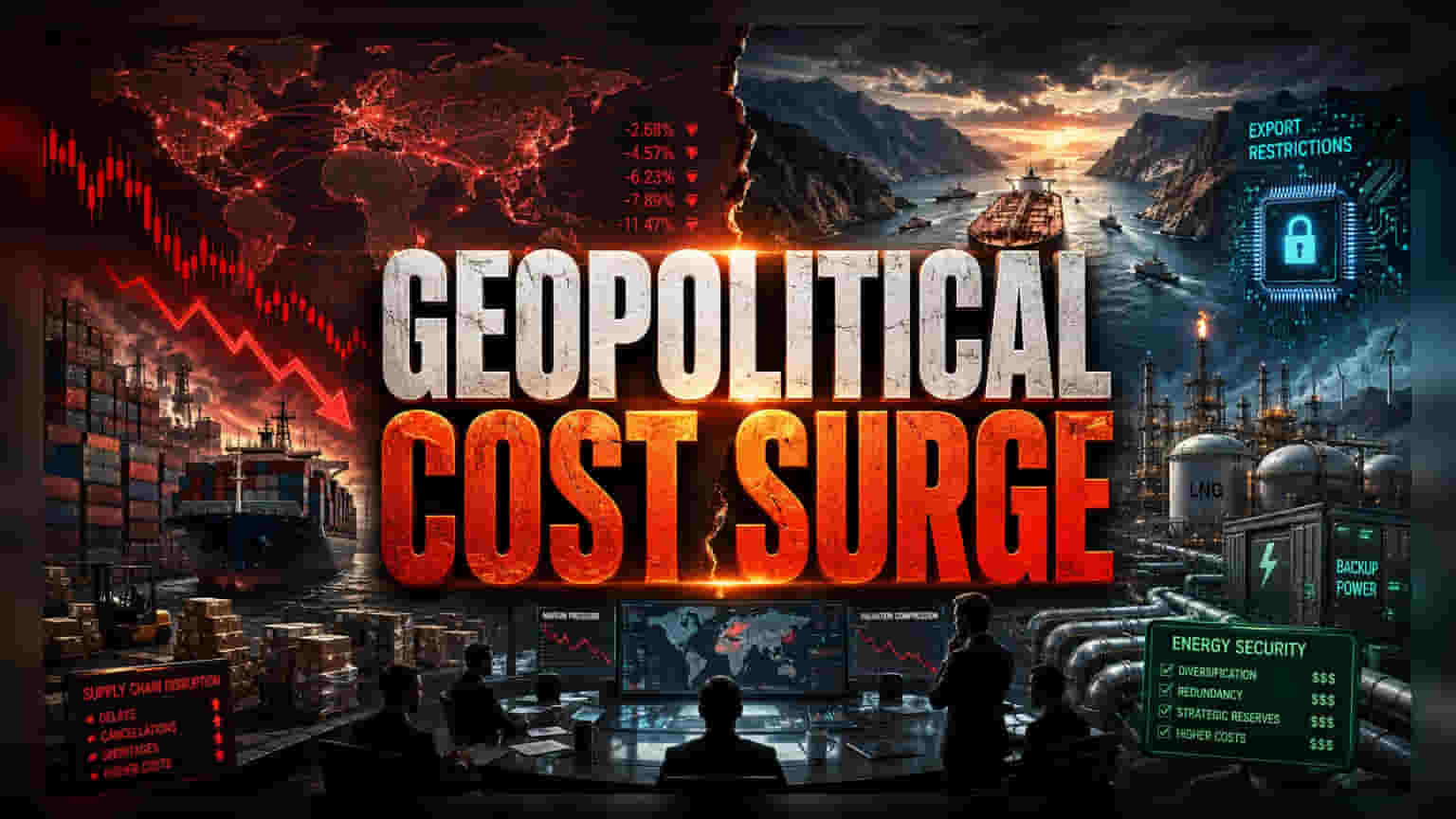


The Valuation Cost of Strategic Hedging
The fundamental transition from lean, just-in-time logistics to redundant, geographically diversified supply chains represents a direct tax on corporate profitability. While markets historically rewarded firms for operating at maximum efficiency, the current geopolitical climate forces capital expenditures into non-productive areas such as inventory buffers and regional manufacturing centers. This structural shift suggests that investors must now discount the historical operating margins of multinational firms, as the cost of insurance against trade disruption is permanently embedded into the cost of goods sold.
The Energy Security Premium
Energy volatility has moved from an operational line item to a core boardroom risk. The persistent threat to critical transit points, particularly the Strait of Hormuz, has compelled firms to abandon low-cost energy sourcing in favor of high-reliability alternatives. This move often involves the procurement of more expensive, localized energy or the commitment to massive, multi-year infrastructure upgrades to ensure consistent operational throughput. These investments are defensive in nature and rarely yield immediate top-line expansion, creating a divergence between nominal revenue growth and actual cash flow returns.
Structural Vulnerabilities in Globalized Firms
Companies heavily reliant on cross-border technological dependencies, particularly in high-growth sectors like artificial intelligence, face an acute dilemma. The drive for strategic interdependence conflicts with the realities of localized regulatory hurdles and export restrictions. Firms that cannot achieve vertical integration in critical components find themselves exposed to third-party geopolitical risk that is largely outside of management control. Unlike the prior decade, where global integration was viewed as a risk-mitigation strategy, today's market conditions treat deep international reliance as a major liability, potentially leading to lower valuation multiples for companies unable to prove localized operational sovereignty.
Forecasting the Policy Drag
Looking ahead, the tension between decarbonization targets and energy security will likely continue to create operational friction. Boards are now forced to reconcile the capital requirements of the energy transition with the immediate, and often contradictory, need for secure, reliable, and affordable power. Analysts expect that firms will maintain higher cash reserves to navigate this uncertainty, which could temporarily suppress share buybacks and dividend growth. The successful firms will not necessarily be the most efficient, but rather those that manage their geopolitical exposure with the most rigorous, data-backed contingency planning.