

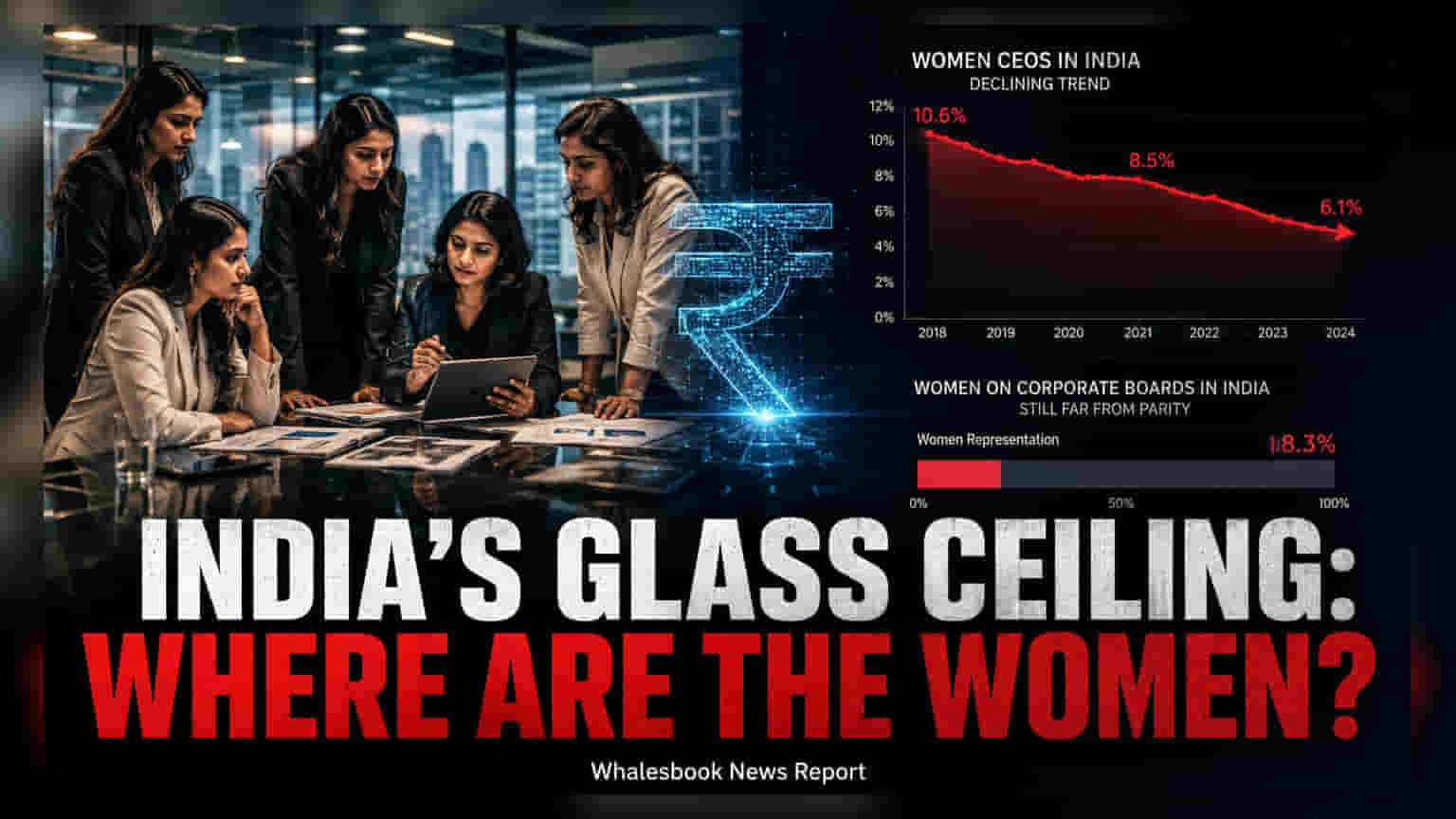
Despite a growing talent pool, only 0.4% of India's Fortune 500 companies have women CEOs. Data shows that while board representation has improved due to regulatory mandates, leadership roles remain largely male-dominated, highlighting a gap in merit-based advancement.
The conversation regarding gender diversity in corporate India has intensified following remarks by former PepsiCo chairman Indra Nooyi about the role of meritocracy in career progression. While India has celebrated the success of prominent female business leaders, official data suggests that these examples remain exceptions rather than the norm at the highest levels of corporate governance.
Leadership Statistics in India Inc.
A review of India’s Fortune 500 companies highlights a significant gender gap at the executive level. While women represent nearly half of the country's population, they currently hold only 0.4% of CEO positions and 4% of Managing Director roles. The representation of women as chairpersons stands at 5.2%, though many of these roles are held within family-controlled business houses rather than through independent professional advancement.
The Impact of Regulatory Mandates
Progress has been more visible in boardroom representation, largely driven by the Companies Act 2013, which mandated the appointment of at least one female independent director. According to data from the CFA Institute India, this requirement helped push board-level female representation to approximately 19%. Despite this progress, there remains work to be done; 41 companies in the top 500 index have yet to appoint a woman as an independent director, and 216 companies have only the minimum required single female director. Currently, only 18 companies in this group have achieved a 50:50 gender balance on their boards.
Challenges in the Leadership Pipeline
The central challenge for India Inc. appears to be the thinning pipeline of women in middle and senior management roles that typically lead to P&L (Profit and Loss) responsibilities. Current reports indicate that only 10% to 12% of women occupy key management positions, limiting the pool of candidates available for C-suite roles. Industry experts suggest that the focus needs to shift toward creating robust internal systems that support career retention and development. Rather than relying solely on mandates or quotas, which some leaders like former Nestle India MD Suresh Narayanan argue may hinder merit-based growth, companies are being encouraged to prioritize meritocratic selection. The long-term goal for investors and corporate stakeholders is to see whether companies can implement cultural shifts that naturally improve representation, as studies increasingly correlate diverse leadership with long-term business performance.