 Whalesbook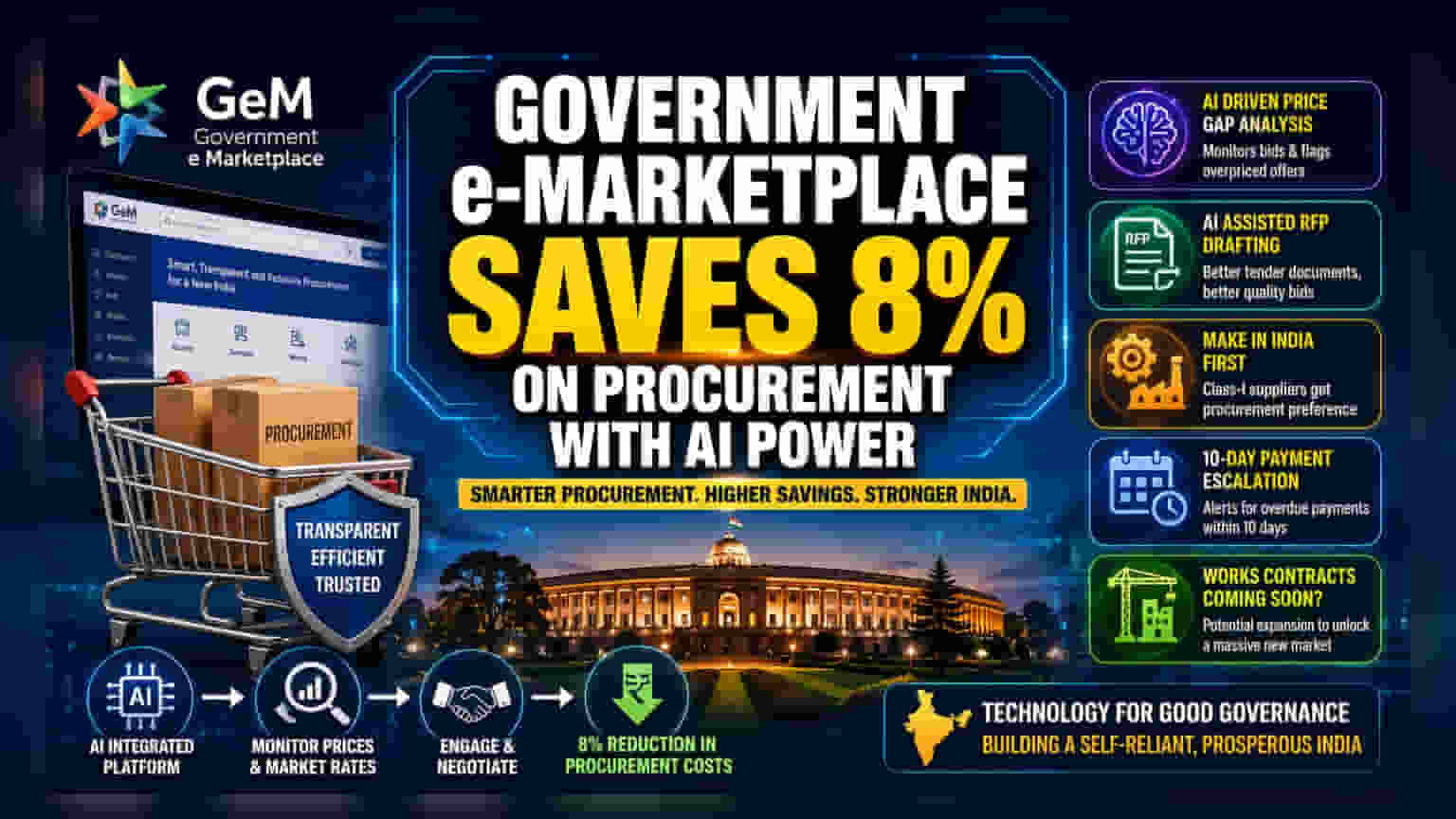


What Happened
The Government e-Marketplace (GeM), India's dedicated online platform for public procurement, has reported an 8% reduction in procurement costs. According to GeM CEO Dr. Mihir Kumar, this savings was achieved by integrating artificial intelligence into the platform's core operations. These AI tools help in monitoring pricing, drafting Requests for Proposals (RFPs), and improving the overall efficiency of government purchases.
The Role of AI in Efficiency
The platform now uses an AI-driven Price Gap Analysis tool to monitor bids. This tool flags instances where the price listed by a seller is higher than the estimated bid price or market rates. When the system detects a discrepancy, the platform engages with the seller to review and potentially adjust the price. This process aims to ensure that the prices the government pays are aligned with current market conditions rather than staying fixed at higher, outdated levels.
Furthermore, AI is being used to assist government departments in drafting tender documents. By analyzing key parameters, the software helps categorize potential bids, aiming to improve the quality of proposals submitted by vendors. This technology-led approach is designed to make the procurement process faster and more transparent for both buyers and suppliers.
Impact on 'Make in India' Vendors
GeM continues to prioritize the government's 'Make in India' policy. The platform now distinguishes between Class-I and Class-II suppliers based on self-certification. Class-I suppliers, who demonstrate that more than 50% of their product's value is added domestically, are given preference in the procurement process. This distinction is part of a broader effort to boost domestic manufacturing and reduce reliance on imported components in government-funded projects.
Understanding the Payment Monitoring
One of the historical challenges for vendors supplying to government departments has been the timeline of payments. The platform has introduced an escalation matrix that alerts buyers to overdue payments within a stipulated 10-day window. While this is an attempt to standardize payment flows, it is important to note that the final decision regarding non-payment reasons still rests with the government buyer. For vendors and investors, this remains a key area where operational efficiency can fluctuate depending on departmental compliance.
What Investors Should Track
The most significant potential development for the future is the potential integration of 'works contracts' onto the GeM platform. While discussions are ongoing, this move would allow the government to procure services beyond simple goods, potentially opening a massive new market segment. Investors may track whether this expansion moves from the discussion stage to implementation, as it could significantly alter the scale and nature of transactions on the platform. Additionally, monitoring how the escalation matrix influences actual payment cycles for listed companies supplying goods to the government remains a critical point for evaluating working capital health.