

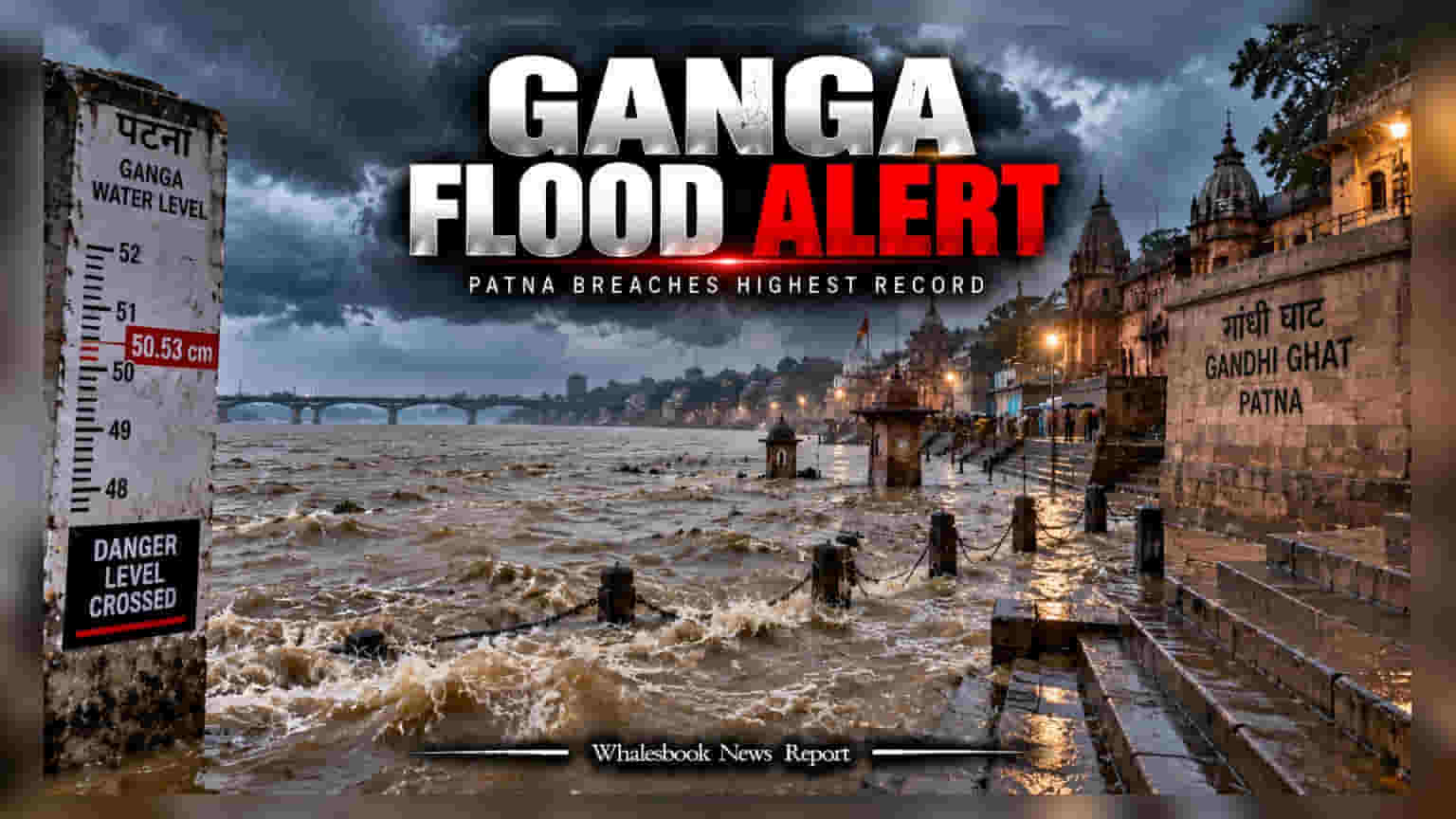
The Ganga at Patna's Gandhi Ghat has surpassed its highest recorded flood level, reaching 50.53 cm amid relentless rains. The situation poses risks to regional infrastructure, supply chain logistics, and agricultural stability across Bihar.
The water level of the Ganga river at Gandhi Ghat in Patna reached 50.53 cm on Saturday, September 5, 2026, officially breaching its previous highest flood record by 1 cm. The surge, recorded at 10:00 am, follows persistent and heavy rainfall across Bihar and the upstream catchment areas in Nepal. Hydrological projections indicate the river may rise further to 50.62 cm by Sunday morning, continuing to test the stability of existing flood defense systems.
From an economic perspective, the rising water levels present immediate challenges for the region's infrastructure and logistics. The integrity of embankments stretching from Buxar to Bhagalpur is now under critical scrutiny. For investors and businesses with exposure to the region, such severe flooding often leads to temporary disruptions in road and rail transport, potential damage to local logistics networks, and impact on agricultural productivity. Historical data indicates that extreme weather events in this region can put pressure on state resources as government agencies prioritize relief, rescue, and post-flood infrastructure repairs.
The flood situation is not contained to the main Ganga channel. Several key tributaries, including the Gandak, Kosi, Burhi Gandak, Bagmati, Punpun, and Ghaghra, are flowing above their danger marks. This widespread rise across multiple river systems complicates flood management efforts, as the regional drainage network faces extreme volume. The simultaneous swelling of these rivers increases the risk of inundation in low-lying urban areas and agricultural tracts, which are vital for the local economy.
State authorities have mobilized resources, including aerial surveys to monitor the geographic reach of the floodwaters and the condition of critical embankments. District administrators have been directed to prioritize the categorization of displaced families and the distribution of essential relief. The focus remains on maintaining structural integrity in vulnerable areas to prevent catastrophic breaches that could escalate the crisis.
Looking ahead, the most critical factors for stakeholders to track are the pace of water recession once rainfall subsides and the government’s timeline for infrastructure restoration. Investors tracking regional economic indicators will likely monitor the impact on local demand, the timeline for potential supply chain normalization, and any subsequent allocations for disaster management and repair spending in upcoming budget or administrative updates.