

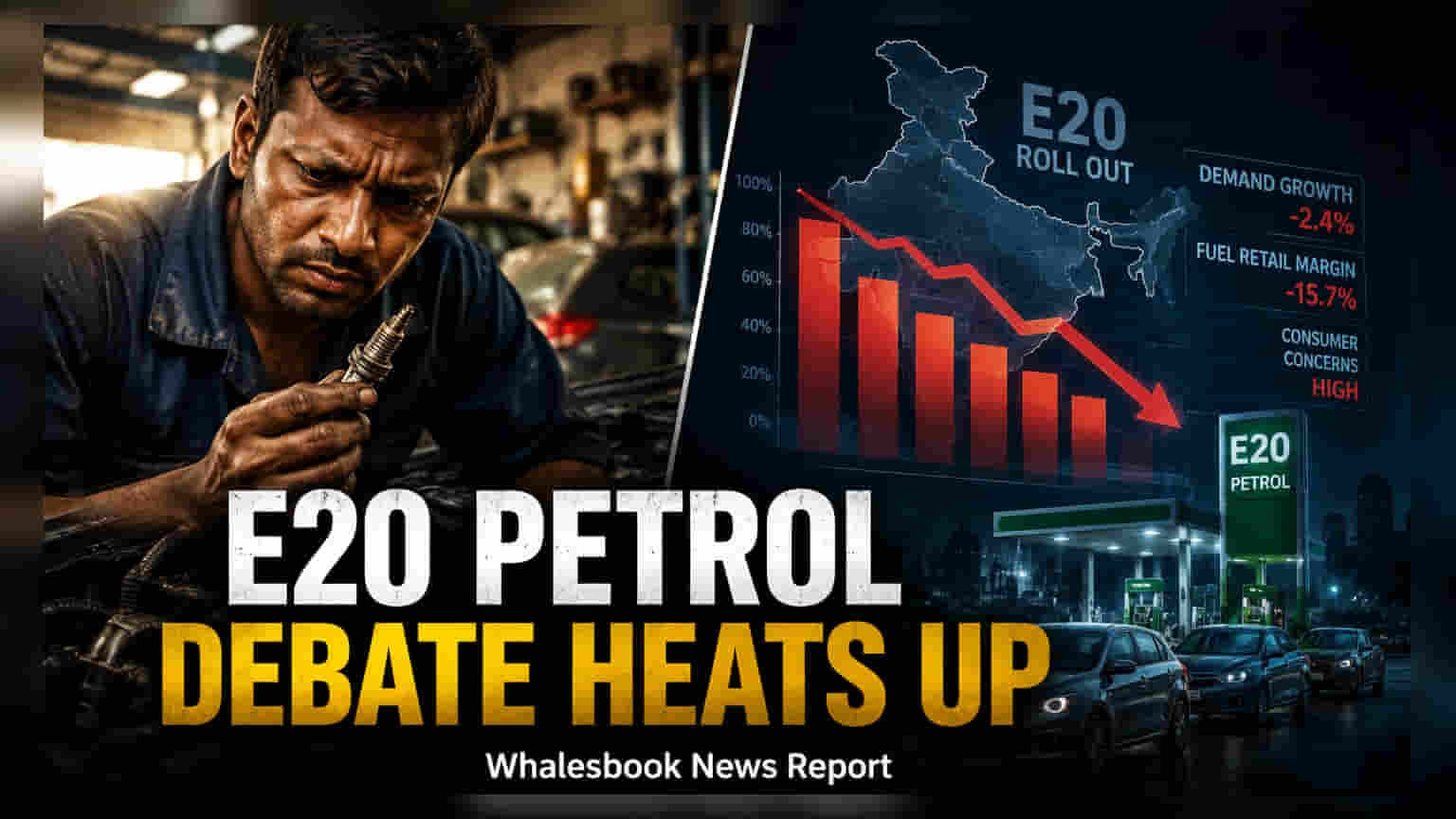
Union Minister Nitin Gadkari has clarified in Parliament that E20 petrol is safe for older vehicles, addressing concerns regarding engine performance. While the blend requires no engine modifications, owners of pre-2017 models may need to replace rubber parts during routine service. The government also acknowledged a minor reduction in fuel efficiency of 2-6%, as the nation accelerates its ethanol blending program to reduce oil imports.
Union Road Transport and Highways Minister Nitin Gadkari has provided a formal clarification in Parliament regarding the suitability of E20 petrol—a blend of 20% ethanol and 80% gasoline—for older vehicles. Amid public and social media speculation about engine failure and corrosion, the minister confirmed that the fuel is safe for legacy models, including those registered before April 1, 2017.
Maintenance for Older Models
While the government maintains that E20 is safe for widespread use, the minister noted that vehicle owners should remain attentive to routine maintenance. Specifically, vehicles classified as BS-III, manufactured between 2005 and 2016, may experience accelerated wear on certain components, such as rubber gaskets and specific fuel system parts. These components are wear-and-tear items that naturally degrade over time, but the introduction of a higher ethanol blend can hasten this process. The government’s stance is that replacing these parts during scheduled service visits is sufficient to ensure vehicle health, and no major engine modifications are mandatory for older cars to operate on E20 fuel.
Impact on Fuel Efficiency and Running Costs
One of the most persistent concerns for consumers involves the impact of E20 on fuel efficiency. The government acknowledged that users might experience a reduction in mileage, estimated to be between 2% and 6%. While this may lead to slightly higher fuel consumption for the end-user, authorities have emphasized that real-world fuel economy is influenced by a range of factors, including tire pressure, air conditioning usage, driving habits, and regular vehicle upkeep.
Strategic Objectives for Ethanol Blending
The push for E20 petrol is a central part of India's broader energy strategy. The government has focused on this shift to decrease reliance on imported crude oil, which is a major component of India’s trade deficit. By achieving its 20% ethanol blending target five years ahead of the original schedule, India aims to improve its trade balance. Official data indicates this transition has already resulted in foreign exchange savings exceeding Rs 1.97 trillion.
From an environmental perspective, the government highlighted that E20 petrol results in approximately 30% lower carbon emissions compared to the previous E10 blend. This aligns with the national goal of reducing transport-related emissions and improving urban air quality. The program is supported by scientific data from domestic institutions like the Automotive Research Association of India, which conducted trials evaluating engine durability and material compatibility. Moving forward, the key monitorable for investors and the public will be the long-term cost impact on consumer wallets and whether the government provides further incentives for ethanol-compliant vehicle maintenance or cleaner fuel adoption.