

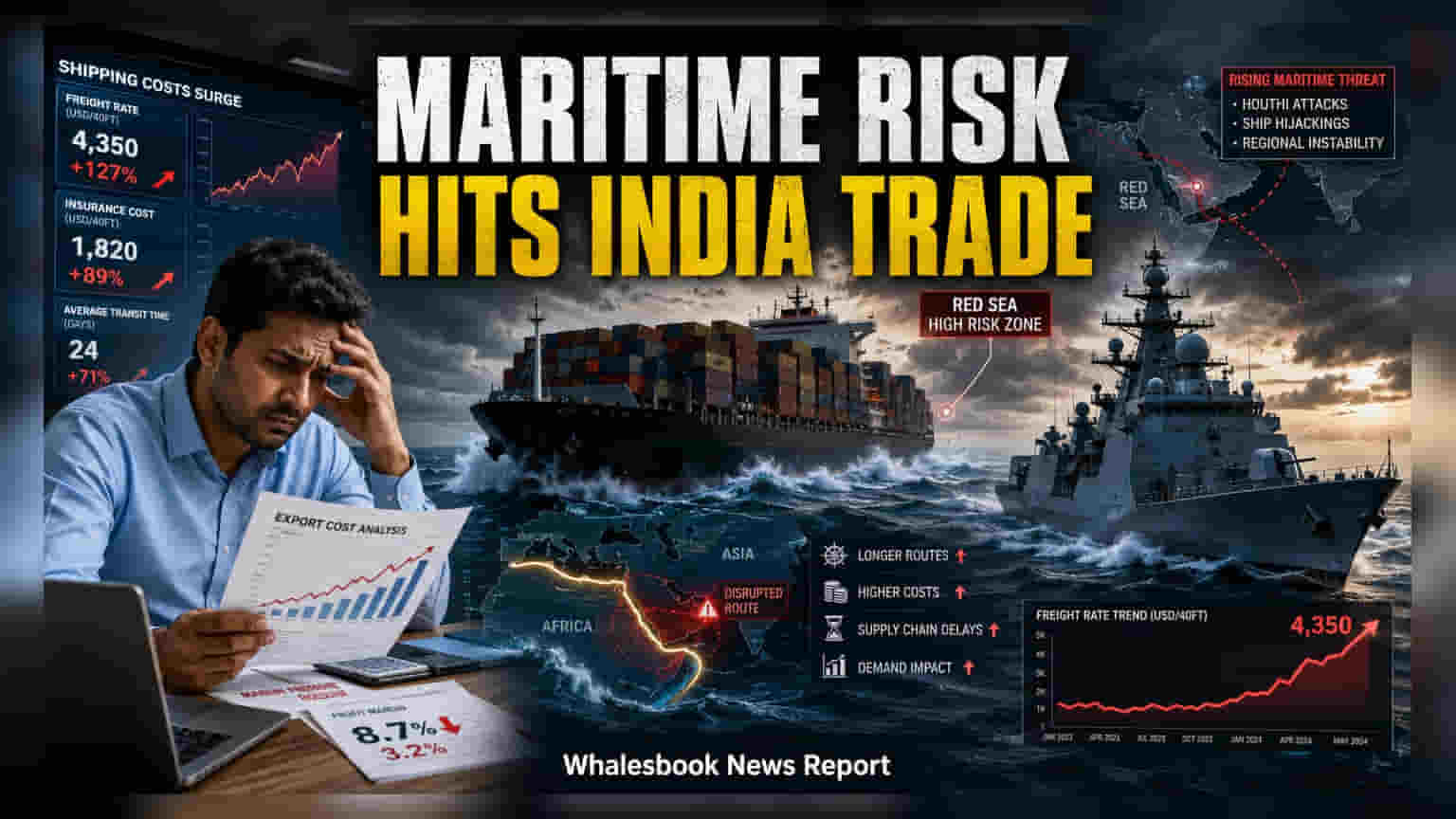
The Global Trade Research Institute (GTRI) has flagged persistent maritime instability as a structural risk for Indian trade. The ongoing Red Sea crisis has inflated freight and insurance costs, pressuring margins for exporters in sectors like textiles and engineering. Investors should monitor how export-oriented companies manage these sustained logistics headwinds and rising compliance scrutiny.
The Global Trade Research Institute (GTRI) has issued a clear warning that maritime insecurity, particularly in the Red Sea and surrounding regions, is no longer a temporary disruption but a permanent structural risk for global trade. With the crisis extending beyond 1,000 days, the shift of shipping traffic from the Suez Canal to the longer Cape of Good Hope route has fundamentally changed the logistics cost structure for Indian businesses.
For investors, the most immediate impact is the sustained elevation of operating costs. Freight rates currently remain approximately 25% to 40% higher than pre-crisis levels, and insurance premiums have risen by 15% to 20%. These expenses are particularly damaging to MSME exporters and companies in low-margin sectors, such as textiles, chemicals, engineering goods, and agricultural products. When these companies cannot pass on the higher shipping costs to their international buyers, the burden falls directly on their profit margins, leading to weaker quarterly performance.
Beyond just price inflation, the extended transit times create a significant working capital challenge. Because goods are spending 10 to 14 extra days on the water, companies face a longer gap between paying for raw materials and receiving payment from clients. This forces businesses to rely more on debt or cash reserves to keep operations running, which can put stress on balance sheets, especially in an environment where interest costs remain a factor. Investors should carefully analyze cash flow statements for exporters to see if working capital cycles are lengthening.
Adding to these logistical hurdles, the trade landscape is seeing increased regulatory pressure. Recent observations suggest that international bodies, including US authorities, are intensifying their scrutiny of global supply chains. There is growing focus on identifying and curbing "shadow trans-shipment" networks—where goods may be routed to bypass trade restrictions. For Indian companies, this implies a higher compliance burden, as they must ensure their supply chains are transparent and secure to avoid potential trade barriers, sanctions, or loss of market access.
Looking ahead, the resilience of export-focused firms will depend on their ability to adapt. Market participants should monitor management commentary during earnings calls for strategies related to logistics diversification and cost control. The ability of a company to protect its margins while navigating both high shipping inflation and tighter international compliance requirements will be the key test for the coming quarters. Development of independent trade corridors and government support for maritime infrastructure will also be critical themes to watch for the long-term health of the export sector.