

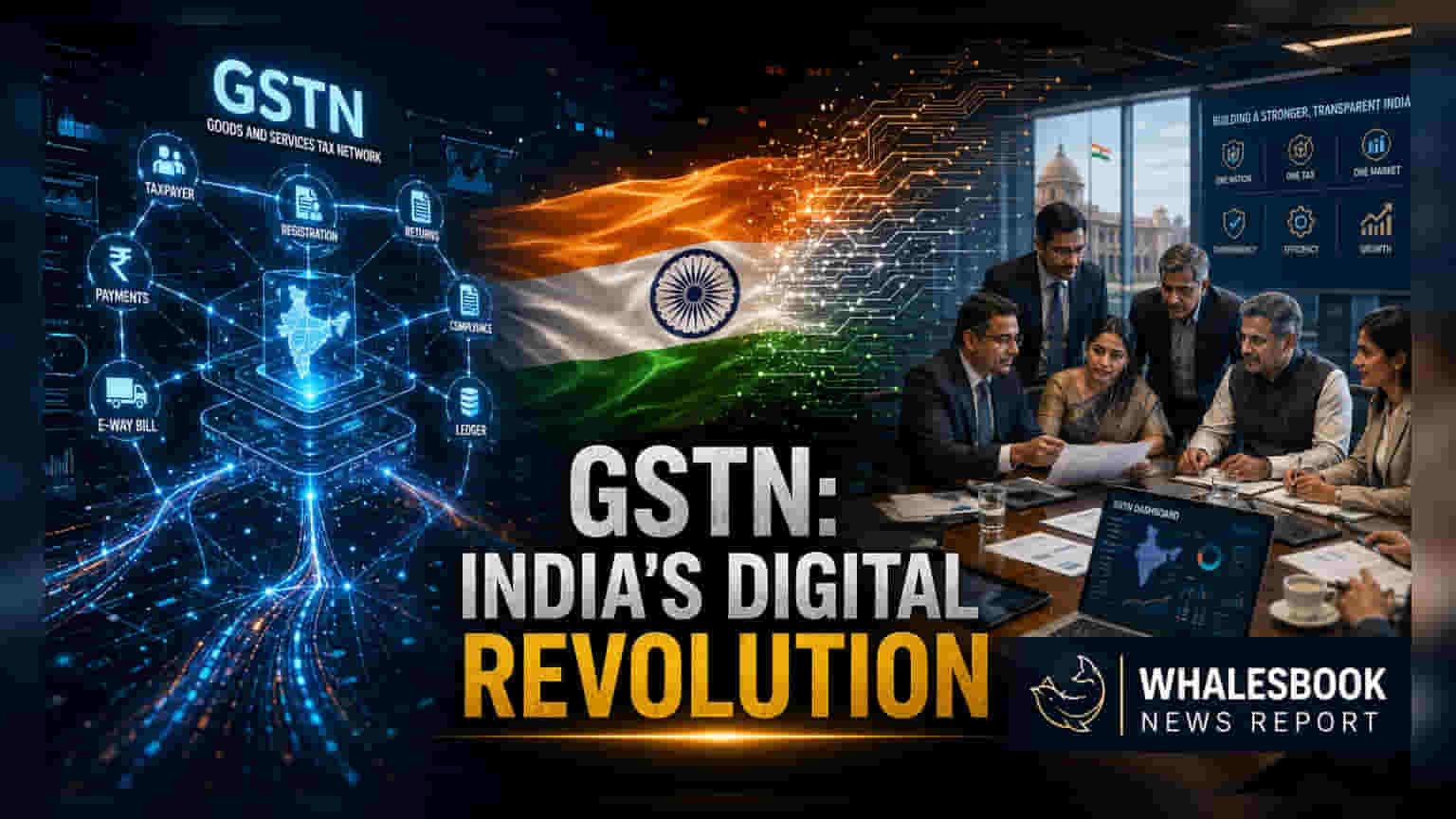
India's Goods and Services Tax Network now supports 1.65 crore active taxpayers, processing massive volumes of digital invoices and returns. This transformation into a major digital public infrastructure helps businesses by simplifying compliance and enabling better credit access through data integration. Investors should note how this ecosystem strengthens economic formalization and improves financial transparency across sectors.
The Goods and Services Tax Network (GSTN) has transitioned from a basic tax compliance portal into a massive digital public infrastructure, marking a major shift in how Indian businesses interact with the government. Over the past nine years, the platform has scaled to manage nearly 1.65 crore active taxpayers, handling approximately 1.8 crore returns every month. This digital framework is now central to the Indian economy, processing roughly 13 crore e-way bills and 26 crore e-invoice records, which collectively support monthly tax collections approaching ₹1.8 lakh crore.
Technological Resilience and Scale
The platform's ability to handle high transaction volumes relies on its microservices-based architecture. By using independent, API-connected modules, the system remains resilient even during peak usage periods. This technical design allows for rapid updates and the integration of new services, which is vital for maintaining uptime for millions of concurrent users. Through a Managed Service Provider model, the system balances private-sector technical efficiency with public-sector governance, ensuring that the platform can scale as the base of formal taxpayers grows.
Economic Impact and MSME Access
For investors and businesses, the most significant change is the platform's role beyond simple tax collection. GSTN has become an economic intelligence hub, providing real-time data on supply chains, production, and consumption trends. More importantly, its integration with the Reserve Bank of India's Account Aggregator framework allows the system to act as a Financial Information Provider. By sharing verified invoice-level data with banks and fintech platforms, GSTN is helping Micro, Small, and Medium Enterprises (MSMEs) build credit profiles based on actual transaction history rather than just collateral. This move toward digital-based lending can reduce borrowing costs and improve liquidity for smaller firms.
Future Monitoring for Investors
As GSTN integrates more advanced technologies like artificial intelligence and predictive analytics, the focus will likely shift toward improving data privacy and strengthening cybersecurity. For the broader market, the key monitorable will be the system's ability to maintain data integrity as it handles increasingly complex financial information. Future updates to watch include the rollout of enhanced taxpayer services, further integration with global financial standards, and the continued refinement of its role in facilitating credit flow to the formalizing sector. The evolution of this infrastructure serves as a proxy for the formalization of the Indian economy, which remains a long-term factor in assessing sector-wide business efficiency and credit risk.