

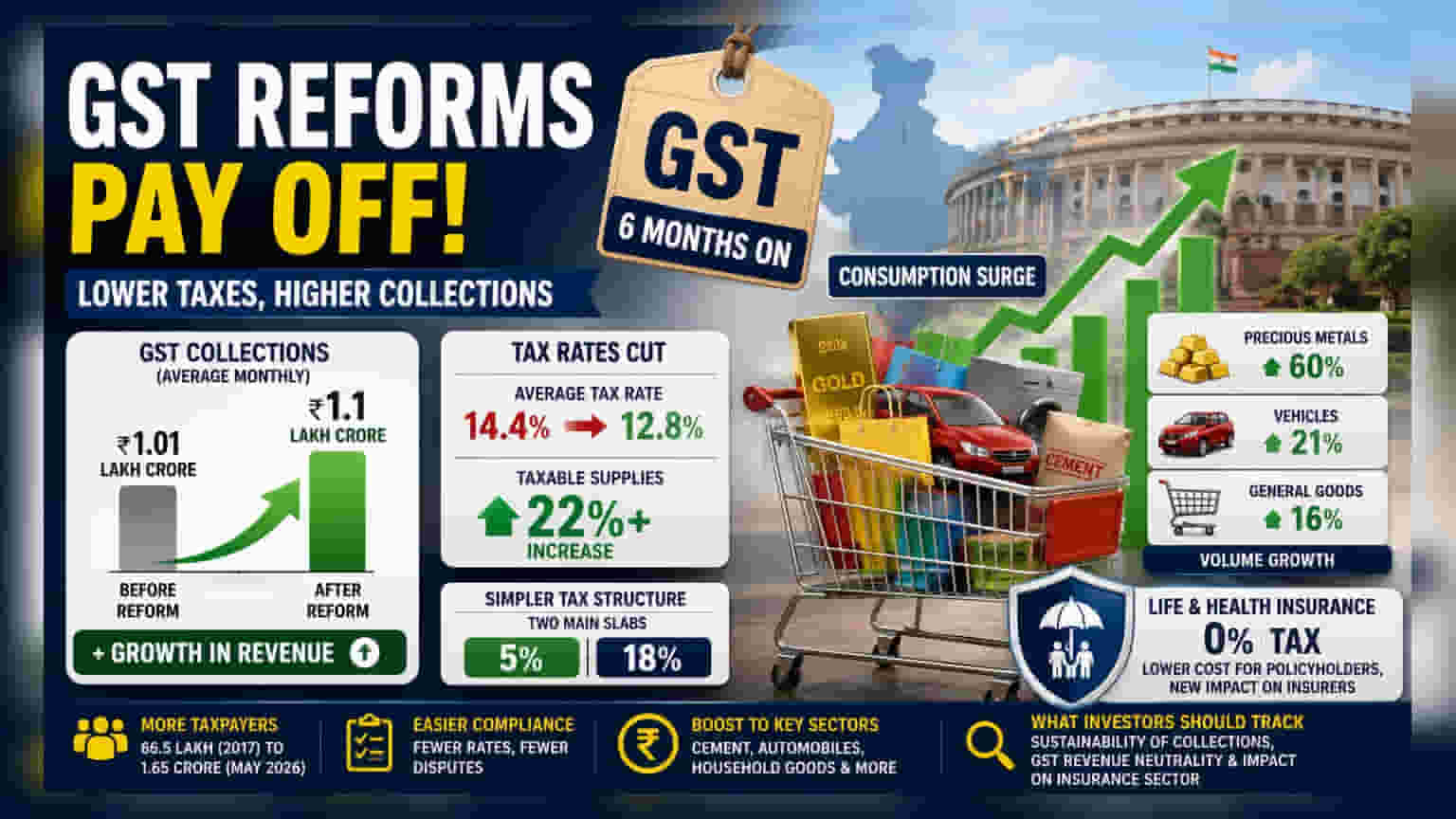
India’s decision to cut tax rates on 400 items six months ago has lifted monthly tax collections to ₹1.1 lakh crore, up from ₹1.01 lakh crore. Lower rates spurred a 22% increase in taxable supplies, with significant volume growth in vehicles and precious metals. However, the shift to a 0% tax rate on life and health insurance introduces a new revenue dynamic for that sector.
What Happened
Six months ago, the Indian government implemented a significant overhaul of the Goods and Services Tax (GST) system. Instead of focusing on keeping total tax revenue unchanged, the government lowered tax rates on approximately 400 items. The average tax rate across these goods was reduced from 14.4% to 12.8%. Despite the lower rates, the government reported that average monthly GST collections climbed to ₹1.1 lakh crore, an increase from the previous average of ₹1.01 lakh crore. This data suggests that lower prices encouraged more people to buy goods, which in turn increased the total tax collected.
Impact on Consumption
The policy shift focused on lowering the burden on the end consumer, which appears to have successfully stimulated demand. Taxable supplies—the total value of goods and services subject to tax—rose by over 22% following the rate changes. This increase in spending was not uniform across all sectors. Specifically, precious metals saw a volume increase of up to 60%, while the vehicle sector reported a 21% rise in sales. Other general goods also saw a 16% growth in volumes. This trend indicates that when taxes are reduced, consumers tend to increase their spending on both essential and discretionary items.
The Shift in Tax Structure
A key part of this reform was simplifying the tax structure into two primary slabs: 5% and 18%. By reducing the number of different tax rates and resolving previous classification disputes, the government aimed to make tax compliance easier for businesses. Beyond the immediate consumption boost, these structural changes appear to be broadening the tax base. The number of registered taxpayers has grown from 66.5 lakh in 2017 to 1.65 crore as of May 2026, creating a wider foundation for long-term revenue generation.
Sector-Specific Outcomes
While many sectors benefited from the surge in consumption, the financial services sector faces a different reality. The government moved life and health insurance products to a 0% tax rate. While this lowers costs for policyholders, it creates a unique challenge for insurance companies, as the change directly impacts how their revenue is reported and classified. Investors in the insurance sector may need to watch how this affects margins and top-line growth figures in upcoming quarterly results. Conversely, sectors like cement, automobiles, and household goods have seen a direct benefit from the increased consumer spending power.
What Investors Should Track
For investors, the key monitorable is whether this consumption trend is sustainable. While the initial surge in tax collections is positive, it remains to be seen if the increase in taxable supplies continues at this pace or if it was a one-time reaction to lower prices. Investors may also want to monitor the government's future commentary on GST revenue neutrality. If tax collections from consumption fail to offset the rate cuts in the long run, the government might reconsider the tax slabs for certain sectors. Additionally, monitoring the impact of the 0% tax rate on the insurance sector’s profitability remains an important task for those holding or analyzing insurance stocks.