

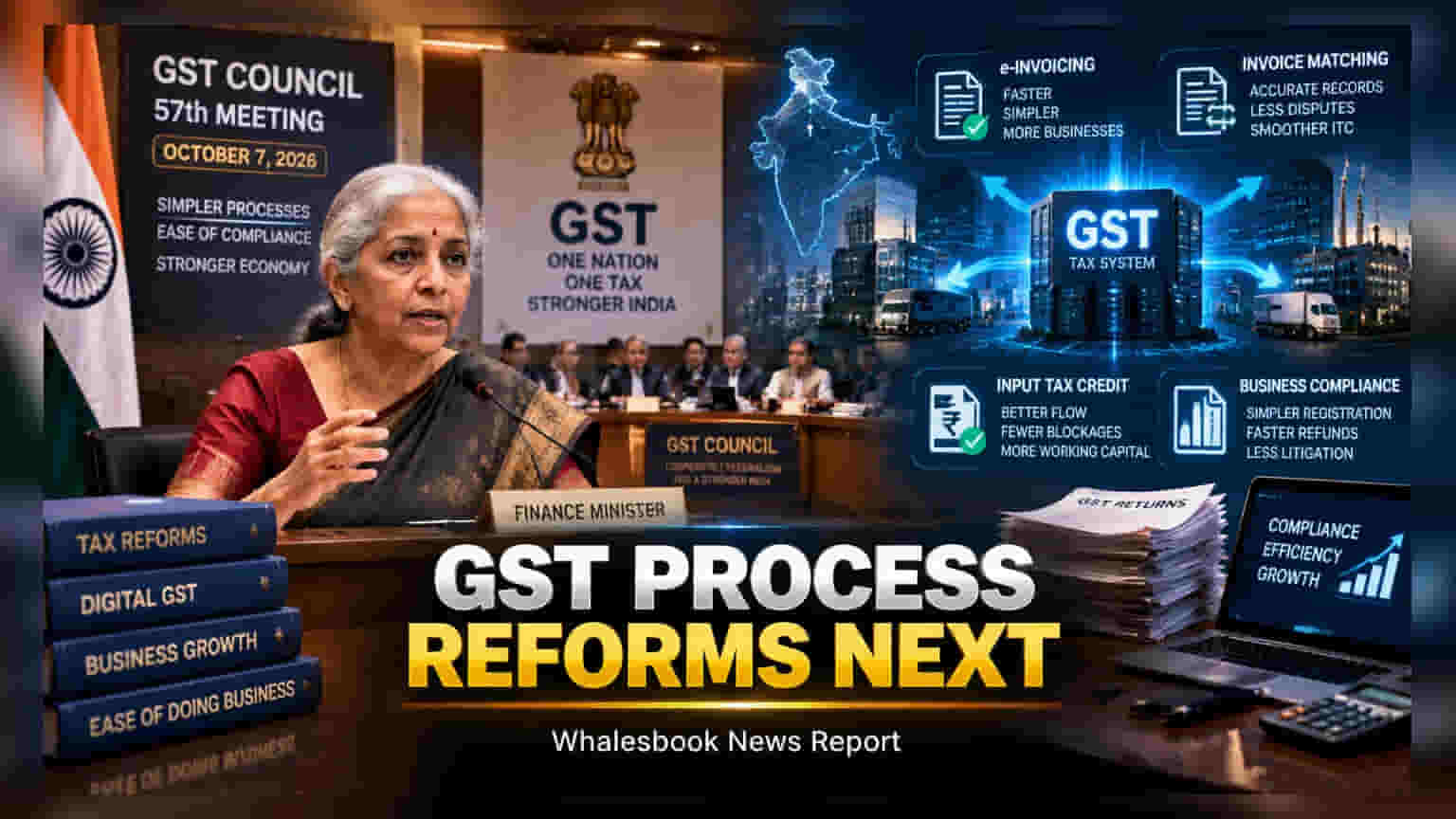
The 57th GST Council meeting, rescheduled to October 7, 2026, will prioritize process-led reforms over tax rate adjustments. This update is aimed at reducing compliance friction, specifically targeting improvements in input tax credit (ITC) rules, e-invoicing, and refund procedures. For businesses, these changes are expected to lower administrative costs and help manage working capital more efficiently.
The Goods and Services Tax (GST) Council has set October 7, 2026, as the new date for its 57th meeting, following a postponement necessitated by the 18th BRICS Leaders' Summit hosted in New Delhi. With tax rate rationalization taking center stage in previous sessions, the Council is now shifting its focus entirely toward system-wide process reforms, often characterized as the next phase of operational efficiency for the tax regime.
Prioritizing Operational Efficiency
Unlike previous meetings that centered on adjusting tax slabs, the upcoming session aims to resolve structural bottlenecks that affect how businesses interact with the tax portal. The government’s agenda includes simplifying registration, fine-tuning e-invoicing requirements, and streamlining the complex process of claiming refunds. By reducing these procedural hurdles, the Council hopes to alleviate the compliance burden that has historically consumed significant administrative time and resources for companies across all sectors.
The Impact of Input Tax Credit Rules
One of the most critical topics on the agenda is the management of Input Tax Credit (ITC). For many industries, mismatches between buyer and seller records—or strict eligibility rules—lead to blocked capital and persistent tax disputes. Businesses are closely tracking whether the Council will move to relax certain restrictions or automate the reconciliation process. If the Council introduces clearer guidelines or more flexible rules for ITC utilization, it could directly improve the cash flow position of manufacturing and service-oriented businesses that currently struggle with trapped working capital.
Reducing Litigation and Compliance Costs
The move toward process reform is largely aimed at minimizing the procedural disputes that often result in prolonged legal battles. Currently, even compliant companies face risks when technical glitches or minor reporting errors occur. A shift toward a more automated, predictable, and forgiving filing system could help reduce the volume of litigation, allowing companies to focus on core operations rather than constant regulatory navigation. Additionally, standardized digital reporting for cloud services and subscription-based models is expected to be part of the discussion to clear up long-standing classification uncertainties.
What Investors Should Monitor
The immediate value for market participants lies not in tax changes, but in how these reforms simplify the day-to-day operations of listed companies. Investors should track the specific outcomes of the October 7 meeting, particularly any formal guidelines regarding e-invoicing coverage and refund timelines. If the Council successfully implements these process improvements, it could lead to higher operational efficiency and reduced compliance overhead for companies, although the practical benefit will depend on how quickly and effectively these rules are integrated into the existing digital tax infrastructure.