 Whalesbook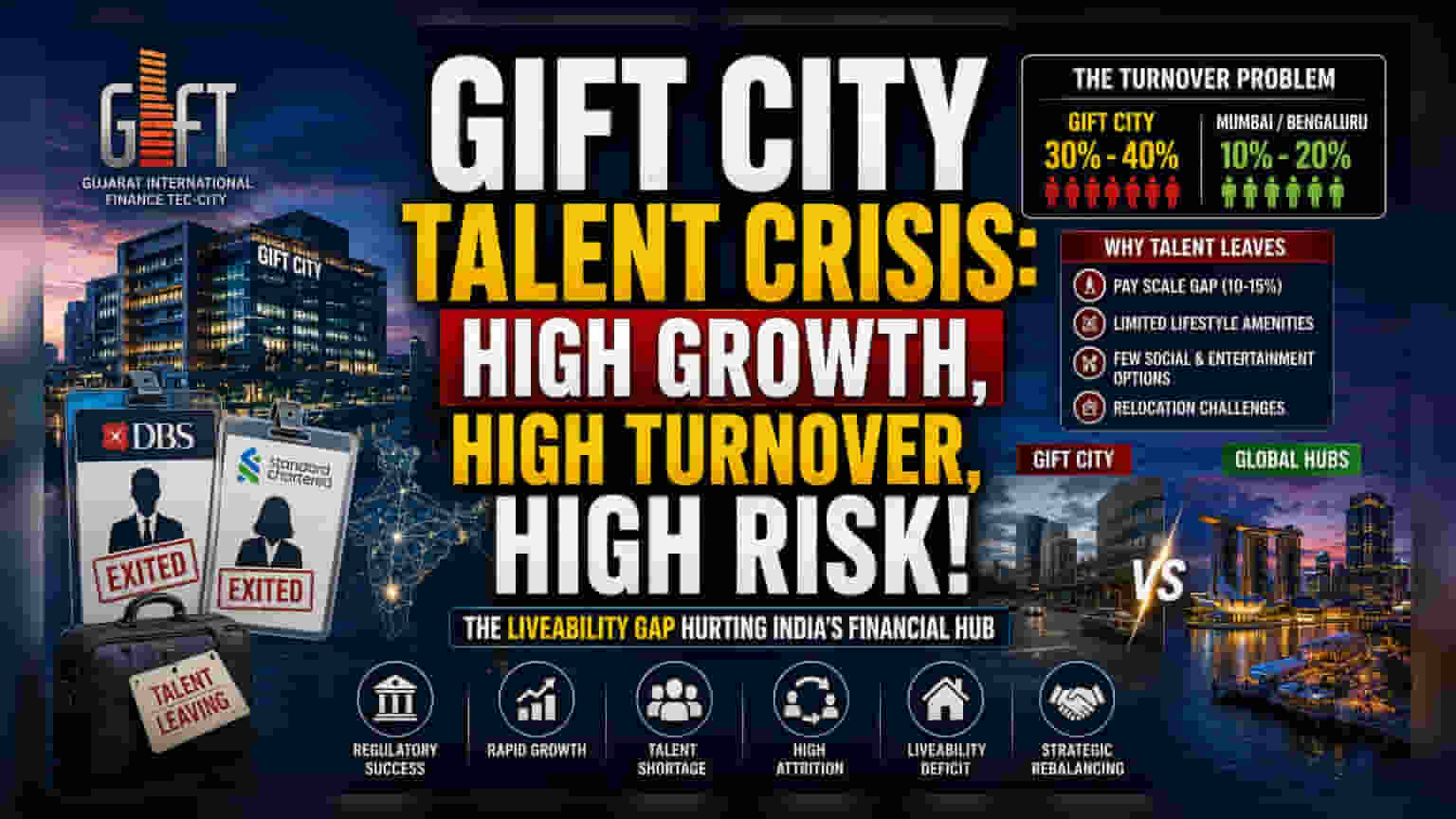


The Friction of Rapid Scaling
While India's GIFT City successfully positions itself as an emerging international financial hub, the operational reality on the ground reflects a stark mismatch between its regulatory successes and its human capital retention. The recent turnover of senior leadership at foreign bank branches—including DBS Bank and Standard Chartered—is not merely an isolated set of professional moves. It signals a structural challenge in an ecosystem that is expanding faster than its social and professional infrastructure can support.
The Talent Equilibrium Gap
Growth in the number of registered fund management entities is accelerating, yet the talent required to steward these assets remains scarce. Annual attrition rates for specialized financial roles within GIFT City’s Global Capability Centres have been reported as high as 30% to 40%, significantly eclipsing the 10% to 20% range common in metropolitan centers like Mumbai or Bengaluru. This high turnover is compounded by a persistent pay-scale gap, with compensation for specialized, high-level roles often trailing the benchmarks set by established Indian financial districts by 10% to 15%. Even with proactive efforts by regulators to host talent summits and foster industry-academia collaborations, the inability to provide a self-contained, high-quality living environment continues to force a reliance on daily commuters from Ahmedabad and Gandhinagar.
Risk Factors and The Bear Case
The most significant threat to GIFT City’s long-term viability as a premier global destination lies in its 'liveability' deficit. As competition for capital intensifies among Asian financial hubs like Singapore, Dubai, and Hong Kong, GIFT City’s inability to offer comparable lifestyle amenities—such as high-end entertainment, diverse social infrastructure, and urban vibrancy—remains a major point of friction. Senior executives are increasingly vocal about the difficulties of relocating experienced professionals to the area, citing lifestyle limitations as a primary deterrent. Without a rapid expansion of the social ecosystem, the hub risks becoming a transient base for institutional operations rather than a permanent home for the human talent that defines a true global financial center.
Future Outlook and Strategic Rebalancing
The government and regulatory bodies recognize these hurdles, with recent high-level reviews emphasizing the need for comprehensive 'liveability' plans. While the strategy of utilizing tax incentives and regulatory agility has proven effective in attracting bank offices and funds, the next phase of development requires a pivot toward urban development and talent attraction frameworks. The long-term success of the hub now hinges on its ability to evolve from a regulatory-first environment into a holistic financial ecosystem that can compete with the world's most established, talent-rich markets.