

Global Capability Centres (GCCs) in India added 200,000 net jobs last year, far surpassing traditional IT services firms. This shift toward high-value roles in AI and cloud signals a major change in the labor market. Investors should track how this talent war and rising wage bills may impact operational margins for traditional IT companies.
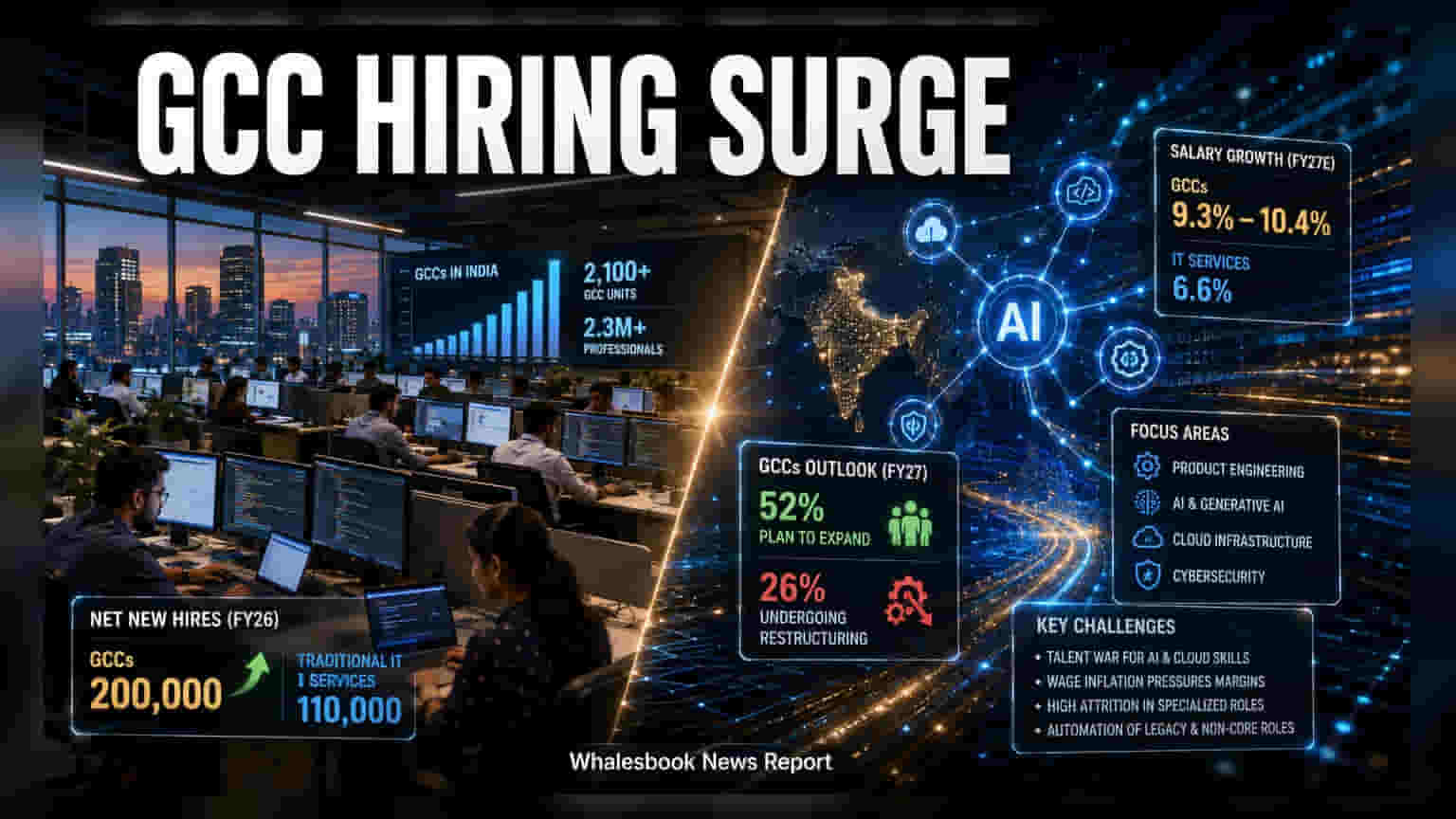
In a significant structural shift for India's technology sector, Global Capability Centres (GCCs) have emerged as the primary growth engine for new hiring. During the last fiscal year, these innovation hubs for multinational corporations added approximately 200,000 net employees, significantly outpacing the 110,000 jobs created by traditional IT services firms. This transition marks a departure from the historical model where IT service providers acted as the main source of mass employment in the country.
As of 2026, there are over 2,100 GCC units operating in India, collectively employing more than 2.3 million professionals. This expansion is driven by a strategic pivot toward high-value product engineering, Artificial Intelligence (AI), Generative AI, cloud infrastructure, and cybersecurity. Unlike the volume-based model of traditional IT, GCCs are focusing on specialized roles that require deeper domain knowledge and the ability to deliver specific product outcomes.
The divergence between these two segments is also visible in compensation trends. GCCs are currently driving wage growth, with projected salary increases tracking between 9.3% and 10.4% for the year. In contrast, traditional IT consulting and services firms are reporting an average increase of approximately 6.6%. This wage premium acts as a key indicator of the intense competition for specialized talent, as companies scramble to fill roles in emerging technologies where demand significantly outstrips supply.
However, this shift brings specific pressures for the broader tech ecosystem. While 52% of GCCs plan to continue expanding their workforce in the coming fiscal year, nearly 26% of these centers are concurrently undergoing restructuring. This involves downsizing roles centered on legacy, repetitive, or non-strategic tasks as they automate back-office functions. For investors, this creates a complex environment where the total volume of hiring is being balanced against aggressive automation and cost-optimization efforts.
Furthermore, the "talent war" for specialized AI and cloud professionals is driving up wage costs, which may continue to pressure operating margins across the technology sector. High attrition rates and the friction involved in recruiting for niche roles remain ongoing challenges. The clear gap between the skills required for modern AI-driven platforms and those honed within traditional IT outsourcing frameworks is making it increasingly difficult for service providers to retain top-tier talent without matching these higher wage expectations.
The key monitorable for investors will be how traditional IT services companies adapt their recruitment and operational strategies in response to this competition. Tracking wage inflation, attrition rates in specialized domains, and the pace of automation in non-core roles will be essential to understanding the margin trajectory of the Indian technology industry in the coming quarters.