 Whalesbook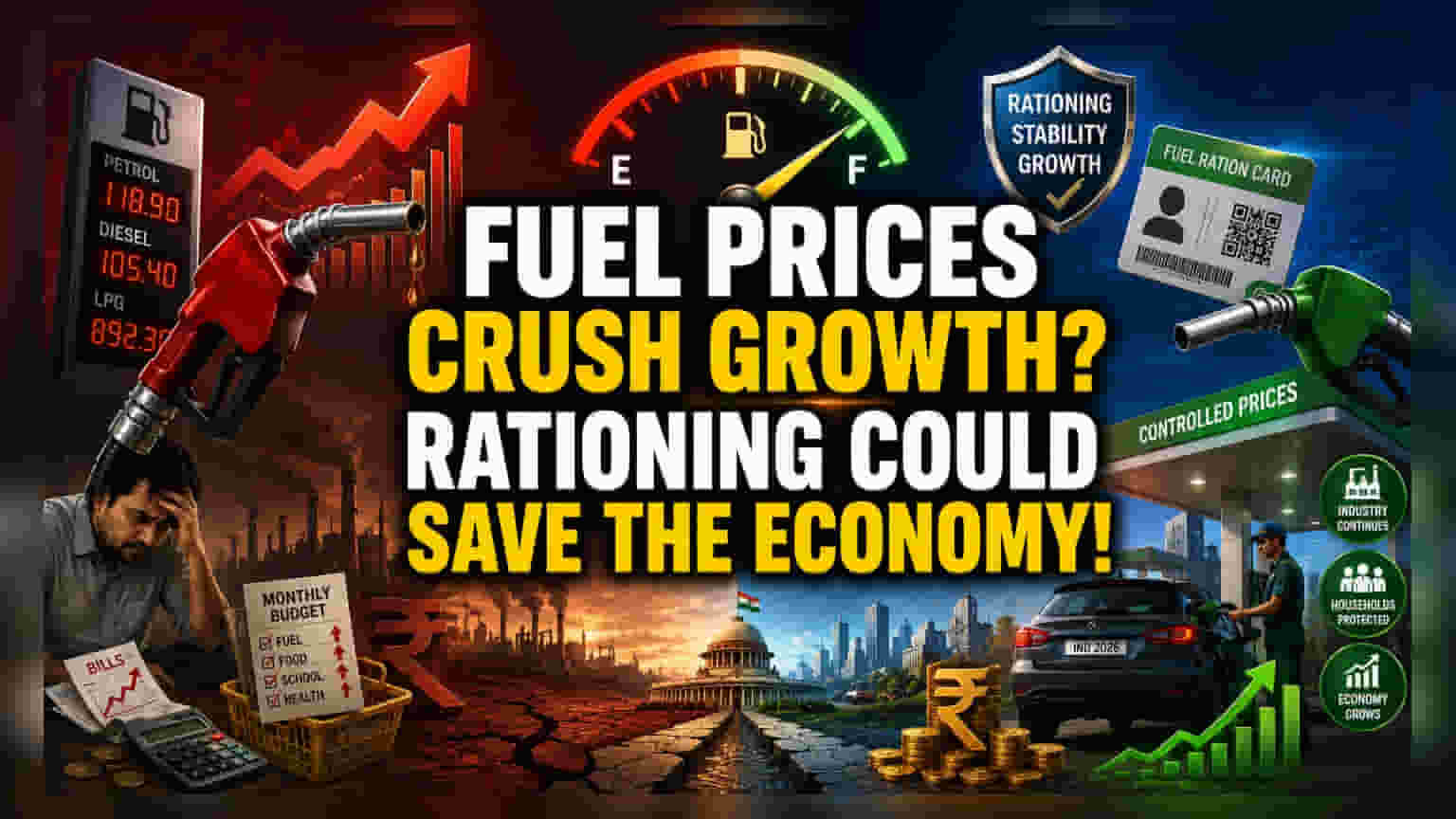


The Mechanism of Price-Induced Contraction
Mainstream policy often treats fuel price adjustments as a mechanical pass-through of global commodity fluctuations. However, this logic ignores the inherent price inelasticity of domestic petroleum demand. When costs for petrol and diesel climb, consumption does not drop in equal measure. Instead, households and firms reallocate capital to cover essential energy expenses, effectively taxing their own discretionary spending. This displacement of capital creates a vacuum in the broader economy, stifling demand for non-energy goods and ultimately depressing output and employment levels.
Rationing as a Fiscal Stabilizer
By decoupling fuel prices from global volatility through rationing, the state could technically preserve the purchasing power of the middle and lower-income cohorts. The administrative challenge lies in the dual-track system; rationing would target final consumption by high-net-worth individuals while maintaining steady input access for industrial production. By avoiding the immediate inflationary shock of retail price hikes, the economy maintains the velocity of money. This strategy requires a shift in fiscal posture, as the government would likely need to absorb upstream producer losses, potentially expanding the fiscal deficit to prevent a supply-side crunch.
The Forensic Bear Case: Structural Risks
While the expansionary theory holds mathematical appeal, it faces significant implementation hurdles that could undermine its efficacy. Reliance on fiscal deficits to cushion producers risks degrading the sovereign credit profile and invites long-term currency depreciation. Historical parallels, such as the 1970s oil shocks or localized rationing experiments, often struggle with the emergence of black markets and supply leakage. Furthermore, administrative overreach in rationing can create massive inefficiencies and corruption bottlenecks, which might outweigh the intended demand-side benefits. From a market perspective, if the state artificially suppresses prices, it masks true demand signals, potentially leading to long-term underinvestment in energy infrastructure and creating a deeper structural dependency on imported fuel that becomes even more difficult to manage when external shocks become persistent.
Future Outlook and Policy Divergence
Financial markets remain hypersensitive to how the government manages the nexus between the fiscal deficit and energy subsidies. Any move toward price control, even via rationing, will likely be viewed by institutional investors as a deviation from fiscal consolidation. As of mid-2026, the ongoing global energy transition complicates these calculations, as short-term fixes may delay necessary structural shifts toward energy efficiency. Analysts will be monitoring the upcoming budgetary sessions to see if the state prioritizes immediate inflation mitigation over long-term fiscal discipline.